商业地产数字化转型

Search documents
数字化运营核心:购物中心租金收费软件全解析
Sou Hu Cai Jing· 2026-01-08 14:30
Core Insights - The article emphasizes the importance of rent management efficiency in shopping centers as it directly impacts asset yield and tenant satisfaction [2] - Traditional management methods relying on Excel and manual calculations are inadequate for the complexities of multi-tenant operations, leading to the emergence of rental fee software that offers digital and automated solutions [2] Group 1: Key Functional Modules - The system features a "full-process closed-loop management" approach with five core functional modules, enabling comprehensive digital control from leasing to post-rental services [3] - A dynamic rent calculation engine supports various rental models, allowing for flexible adjustments based on sales data and seasonal factors, thus enhancing decision-making for rent adjustments [3] - The contract management module includes standardized templates and electronic signing capabilities, significantly reducing contract processing time by over 50% [3] Group 2: Major Use Cases - The software is highly adaptable and applicable across various commercial entities, addressing specific operational challenges [5] - For large shopping centers with over 200 tenants, the system improved rent calculation accuracy to 99.8%, resulting in a 12% increase in annual rental income and a 20% rise in tenant renewal rates [5] - In community commercial spaces, the software reduced rent collection periods from 45 days to 15 days, decreasing collection costs by 60% [5] Group 3: Core Advantages - The system significantly reduces costs and increases efficiency, with companies reporting over 30% savings in leasing management labor costs and an 80% improvement in financial processing efficiency [7] - Risk management is enhanced through features like contract clause verification and overdue rent alerts, leading to a reduction in overdue rates by over 50% [7] - Data-driven decision-making is facilitated by integrating data across the entire process, allowing for visual reports and heat maps that support strategic asset management [7]


表现力指数 • 2025年度商业地产表现
Sou Hu Cai Jing· 2025-11-13 06:39
Core Insights - The commercial real estate market is undergoing a deep adjustment period characterized by recovery and transformation, with ongoing downward pressure despite a recovering consumer market [1] - Companies are actively expanding financing channels, accelerating the implementation of public REITs for consumer infrastructure, and deepening digital transformation to enhance operational quality and consumer experience [1] - The market is expected to remain in a dynamic process influenced by multiple variables, requiring companies to be agile and resilient in their operations to navigate the new cycle [1] Industry Overview - The commercial real estate sector is experiencing a supply-demand imbalance, particularly in the commercial office segment, which has not yet been fundamentally resolved [1] - Investment confidence and development motivation among enterprises remain insufficient, indicating a cautious outlook for future investments [1] Company Strategies - Companies are responding to market challenges by innovating business models and enhancing operational quality to meet increasingly diverse consumer demands [1] - The "Performance Index • 2025 Commercial Real Estate Performance" report aims to provide market participants with practical references to explore certain development paths amid uncertainties [1] Performance Rankings - The report includes a ranking of companies based on various performance metrics, such as brand value, management capability, and innovation ability, showcasing the competitive landscape within the industry [2][5][7][9][10][12][19][30]





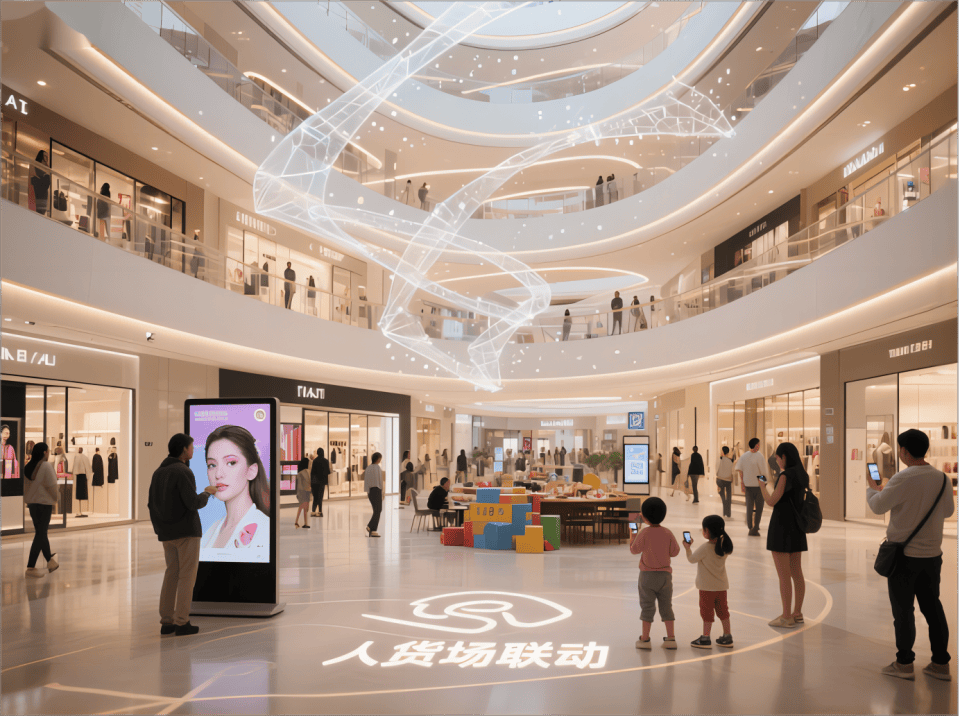
商业地产数字化突围:重构人、货、场的新逻辑
Sou Hu Cai Jing· 2025-09-01 09:45
Core Viewpoint - The digital transformation of shopping malls has shifted from an option to a necessity in the digital economy era, with Shenzhen Lianzhong Interactive Technology Co., Ltd. providing a comprehensive solution for commercial real estate companies to build core competitiveness in the new business era [1][4]. Group 1: Digital Transformation Methodology - The core of the digital transformation methodology includes three dimensions: digital infrastructure reconstruction, operational model innovation, and ecological value reshaping [3][4]. - Digital infrastructure reconstruction involves deploying membership management tools and digital systems to achieve business process digitization [3]. - Operational model innovation focuses on data-driven closed-loop management of shopping mall operations [3]. - Ecological value reshaping aims to construct new commercial ecosystems and value networks through digital transformation [3]. Group 2: Comprehensive Service System - The digital transformation solution is a complete service system that includes diagnostic consulting, solution design, system implementation, and operational optimization [3][6]. - The solution emphasizes the integration of digital systems during the transformation of shopping malls to ensure effectiveness and sustainability [3][6]. - It supports high customization to provide the most suitable digital transformation path based on different project characteristics, customer demographics, and development stages [3][6]. Group 3: Understanding Business Essence - Successful digital transformation relies not only on technical capabilities but also on understanding the essence of business and accumulating operational experience [6]. - Shenzhen Lianzhong Interactive leverages extensive experience in digitalizing commercial complexes to offer transformation solutions that align with digital trends while adhering to business fundamentals [6]. Group 4: Custom Solutions and Tools - The company aims to become a new infrastructure for brand digital transformation by developing proprietary tools and solutions such as "Y·FUN 3.0" and "In·mall Smart Mall" [7]. - It provides customized digital transformation solutions that empower enterprises through brand content upgrades, IP image creation, marketing tool enhancements, and user data management [7]. - The goal is to achieve product digitization, service online integration, and resource sharing, constructing an ecological marketing closed loop [7].