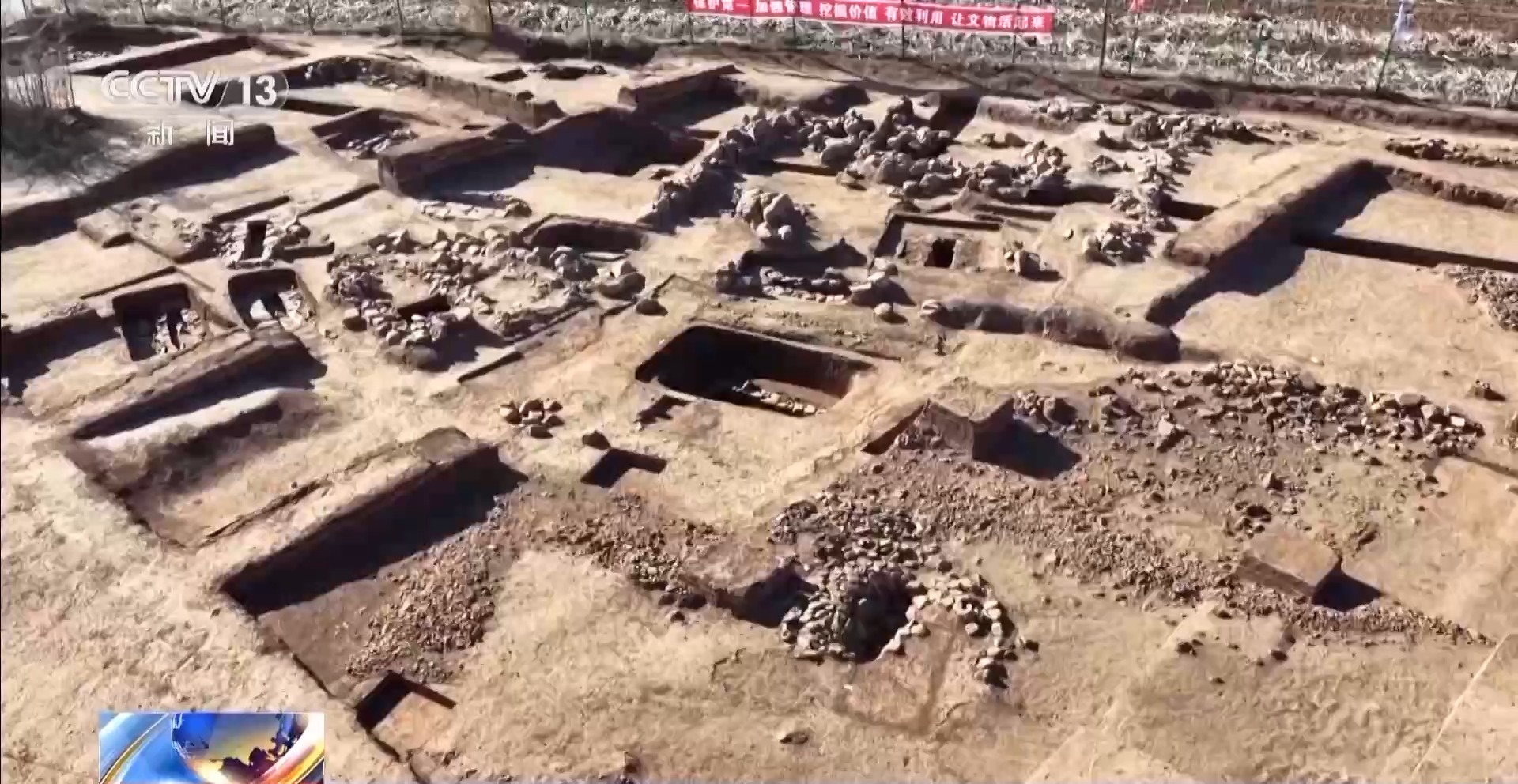
商代青铜文明

Search documents
黄土高原上的商代青铜文明(考古中国)
Ren Min Ri Bao· 2025-12-27 01:49
Core Viewpoint - The discovery of the Zhaigou site in Shaanxi Province has been recognized as a significant archaeological finding, showcasing the complexity and influence of Bronze Age civilization in the region, particularly in relation to the Shang Dynasty and its interactions with surrounding states [7][12]. Group 1: Archaeological Significance - The Zhaigou site is located in a historically rich area, approximately 10 kilometers from the Yellow River, characterized by a unique loess plateau landscape [7]. - The site has revealed a large, well-planned settlement that indicates a high level of social organization and labor investment, reflecting a powerful regional center during the Bronze Age [7][8]. - Archaeological efforts since the 1940s have uncovered over 500 Shang Dynasty bronze artifacts, highlighting the area's cultural significance and the presence of over 60 known states during the Shang period [8]. Group 2: Findings and Artifacts - The site features a massive rammed earth structure and a complex of burial sites, including the largest and most significant Shang noble tombs discovered outside the capital Yin [10][11]. - A total of 42 ceramic molds and other metallurgical remains have been found, indicating a nearly complete bronze production chain, showcasing advanced bronze casting techniques [10]. - The discovery of a double-yoke chariot, the earliest known example in China, pushes back the timeline of such vehicles by approximately 1,000 years, demonstrating the cultural exchange between the Central Plains and the northwest [11]. Group 3: Cultural and Political Implications - The findings at Zhaigou provide critical evidence of the complex social structures and advanced technologies present in the region during the late Shang period, challenging previous understandings of the area's historical development [12]. - The site illustrates the intricate political landscape between the Shang Dynasty and surrounding states, emphasizing the dynamic interactions and cultural exchanges that shaped early Chinese civilization [12].

视频丨中华文明源头新发现 5000多年前红山文化并未消失
Yang Shi Xin Wen· 2025-12-17 06:37
Group 1: Key Findings on Hongshan Culture - The recent archaeological findings indicate that the Hongshan culture, which dates back over 5,000 years, did not disappear but rather expanded westward and southward, integrating its ritual systems into the broader narrative of Chinese civilization's origins [1][9] - Significant discoveries were made at the Niuhualiang site in Liaoning, which is recognized as the largest ceremonial center of the Hongshan culture, featuring a combination of ritual structures similar to those found in historical capitals [2] - New artifacts, including ceramic figurines found in tombs at the Dongshantou site, provide new insights into the functions of such objects, suggesting a connection to beliefs and ritual activities [4][6] Group 2: Findings on Zhaigou Site - The Zhaigou site in Shaanxi has been confirmed as a regional center of bronze civilization during the late Shang Dynasty, covering an area of approximately 3 million square meters [10] - Artifacts from the Zhaigou site, including various ceramic molds and over 200 items from tombs, exhibit intricate designs and similarities to those found in the Yinxu site, indicating advanced bronze casting technology [12][14] - The discovery of over 40 chariots at the Zhaigou site, including the earliest known double-yoke chariot, pushes back the history of double-yoke chariots in China by about 1,000 years, providing clues about the origins of chariot technology [16]