
商品出口增长

Search documents
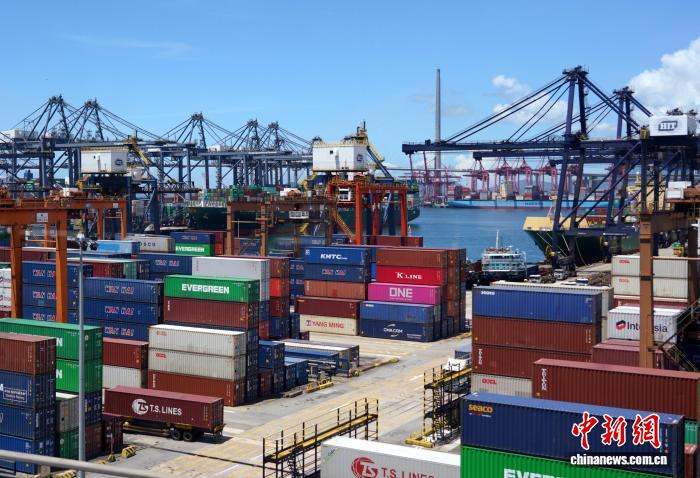
(机遇香港)香港9月商品整体出口货值同比升16.1%
Zhong Guo Xin Wen Wang· 2025-10-27 12:18
Core Insights - Hong Kong's overall merchandise export value in September 2025 reached HKD 462.3 billion, marking a year-on-year increase of 16.1% [1][3] Export Performance - Exports to Asia increased by 18.3% year-on-year, with significant growth observed in several key markets: Vietnam (up 50.9%), Malaysia (up 40%), Taiwan (up 31.9%), India (up 19.5%), and mainland China (up 16.7%) [1][3] - Notable increases were also recorded in exports to other regions, particularly Switzerland (up 138.5%) and Germany (up 27.6%) [1][3] Economic Context - The rise in exports is attributed to accelerated growth in exports to mainland China and efforts by exporters to explore new markets in Asia [3] - The Hong Kong government anticipates that ongoing global economic expansion will continue to support the performance of merchandise trade, alongside enhanced economic ties with various markets [3]

乌拉圭9月商品出口同比增长5%
Shang Wu Bu Wang Zhan· 2025-10-11 16:23
Core Insights - Uruguay's commodity exports in September reached $1.242 billion, marking a 5% year-on-year increase [2] Export Performance - Beef remains the largest export product, with an export value of $230 million, reflecting a 42% increase year-on-year [2] - Soybeans are the second-largest export, generating $200 million, which is a 22% increase [2] - Pulp ranks third, with an export value of $195 million, showing a 26% decline year-on-year [2] Market Dynamics - China continues to be the largest export market, with exports amounting to $380 million in September, a 17% increase, accounting for 31% of total exports [2] - Soybean exports to China reached $173 million, representing a significant 53% increase [2] - Brazil is the second-largest export destination, with exports totaling $160 million, down 10% year-on-year [2] Cumulative Export Data - For the period from January to September 2025, total commodity exports (including free trade zones) reached $10.245 billion, reflecting a 5% year-on-year growth [2]