啤白协同

Search documents
直击华润啤酒业绩会:啤酒要创新、白酒要稳固
Guo Ji Jin Rong Bao· 2026-03-24 14:57
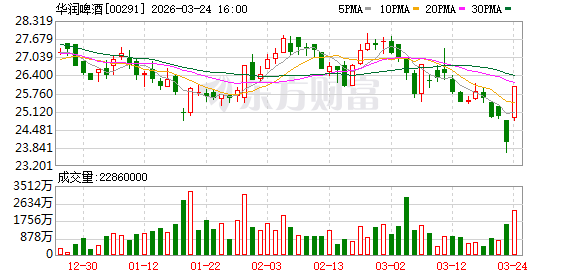
Core Viewpoint - China Resources Beer reported a decline in revenue and net profit for 2025, primarily due to goodwill impairment in its liquor business, but showed growth in its beer segment driven by high-end product sales [4][5]. Beer Business Performance - The beer segment achieved sales of 11.03 million kiloliters, a slight increase of 1.4% year-on-year, with a gross margin improvement of 1.4 percentage points to 42.5% [5]. - High-end beer products saw significant growth, with premium and above beer sales increasing by mid to high single digits, accounting for nearly 25% of total sales [5]. - Notable brands like "Heineken" and "Snow" recorded substantial growth, with "Snow" achieving nearly 60% growth and "Red Duke" doubling its sales compared to the previous year [5][6]. - The company plans to continue its high-end strategy while extending focus to mid-tier products, adapting to a more balanced market structure [5][6]. Liquor Business Challenges - The liquor segment faced a revenue decline of approximately 30.77%, with a significant goodwill impairment of about 2.88 billion yuan [9][10]. - Management acknowledged unexpected difficulties in the liquor sector, attributing the impairment to macroeconomic factors and industry cycles [8][10]. - The company is implementing measures to stabilize prices and improve cost-effectiveness, including controlling expenses and adjusting profit-sharing models with distributors [11]. Strategic Initiatives - The company is actively working to fill gaps in emerging business areas, particularly in online sales and instant retail, which have seen over 50% annual growth [6]. - Plans to "revive" local brands through innovative strategies are underway, targeting specific markets with tailored products [6]. - International expansion is a priority, focusing on markets that are culturally and politically favorable, leveraging partnerships to minimize risks [7]. Future Outlook - The company anticipates that by the end of the 14th Five-Year Plan (2030), the market share of mid-tier and above products could exceed one-third of total beer sales [6]. - The liquor business aims to enhance efficiency and optimize product structure, focusing on high-margin products while phasing out lower-margin SKUs [10][11].


失手金沙,华润啤酒董事长离场
阿尔法工场研究院· 2025-07-03 11:16
Core Viewpoint - The departure of Hou Xiaohai, the chairman of China Resources Beer, raises concerns about the potential impairment of goodwill from the acquisition of the金沙 brand, which has seen significant declines in revenue and profit since the acquisition [4][7][20]. Group 1: Leadership Changes - On June 27, China Resources Beer announced the resignation of chairman Hou Xiaohai, who also stepped down from various committees [4]. - Hou's departure is speculated to be linked to the controversial acquisition of金沙, which had a valuation of 123 billion RMB [5][17]. - Following Hou's exit, the role of chairman is now held by the current president, Zhao Chunwu [11]. Group 2: Financial Performance and Concerns - The金沙 brand's revenue dropped from 36.4 billion RMB in 2021 to 21.5 billion RMB in 2024, a decline of 41% [20]. - The EBITDA for金沙 in 2024 was reported at 8.47 billion RMB, down from 13.15 billion RMB in 2021, indicating a near halving of profit [20]. - Concerns arise regarding the 74 billion RMB goodwill from the acquisition and whether it will be impaired, impacting overall performance [7][9]. Group 3: Strategic Missteps - The acquisition of金沙 is viewed as a significant misstep, as it involved a high valuation for a third-tier brand in a declining market [22][16]. - The strategy of diversifying into a different category (from beer to liquor) is criticized, as it is generally seen as a risky move in the consumer industry [46]. - The success of China Resources Beer in the beer market led to overconfidence, resulting in the underestimation of challenges in the liquor sector [25][29]. Group 4: Market Dynamics - The white liquor market is characterized by strong brand loyalty, which contrasts with the beer market where price and distribution are more critical [38][39]. - The perception of "啤白协同" (beer and liquor synergy) is deemed a misconception, particularly in the context of market realities [45]. - The historical performance of汾酒, which saw significant growth after China Resources' investment, may have misled Hou into believing that similar strategies would work in the liquor market [31][32].