国家主权和利益维护

Search documents
稀土断供213吨重创日本;高市早苗接到死亡通知:血债必须清算!
Sou Hu Cai Jing· 2026-01-20 06:45
Core Viewpoint - Japan is facing a crisis due to its heavy reliance on Chinese rare earth exports, which have significantly decreased, threatening its advanced manufacturing sector and military capabilities [1][3][21]. Group 1: Economic Impact - China's rare earth exports to Japan dropped by 213 tons in December, leading to critical shortages for companies like Mitsubishi Heavy Industries, which now has only 15 days of alloy powder inventory left [1][5]. - Japan's dependency on Chinese rare earths exceeds 70%, with nearly 100% reliance in heavy rare earths, highlighting the vulnerability of its high-end manufacturing industry [3][21]. - The procurement cycle for neodymium-iron-boron magnets has extended from 1-2 months to 3-4 months, directly impacting the operational readiness of Japan's main fighter jets [11][29]. Group 2: Supply Chain and Regulatory Changes - The Chinese government has mandated that all companies exporting rare earths to Japan must provide detailed information about the entire supply chain, including potential resale to the U.S. [7][9]. - A "rare earth fingerprint" tracking system has been implemented, allowing China to monitor the flow of rare earths and impose severe penalties for any violations, which complicates procurement for Japanese firms [9][21]. Group 3: Geopolitical Tensions - China's maritime patrols near the Diaoyu Islands have intensified, with a recent 29-hour operation demonstrating a show of force against Japan [15][21]. - Japan's government is increasing its defense budget and engaging in military collaborations with the Philippines, indicating a strategic pivot in response to perceived threats from China [15][25]. - The diplomatic landscape is strained, with Japan's provocative statements regarding Taiwan and historical grievances exacerbating tensions with China [19][23][30]. Group 4: Historical Context and Future Outlook - China's recent statements emphasize the need for historical accountability regarding Japan's militaristic past, framing current tensions within a broader historical narrative [23][34]. - The economic repercussions for Japan are severe, with a potential GDP loss of 0.43% due to supply chain disruptions, further complicating its economic recovery [29][30]. - Japan's attempts to balance relations with the U.S. while confronting China may lead to further economic and diplomatic challenges, as it navigates a precarious geopolitical landscape [30][32].



俄罗斯强烈敦促:立即释放马杜罗
Xin Lang Cai Jing· 2026-01-03 16:08
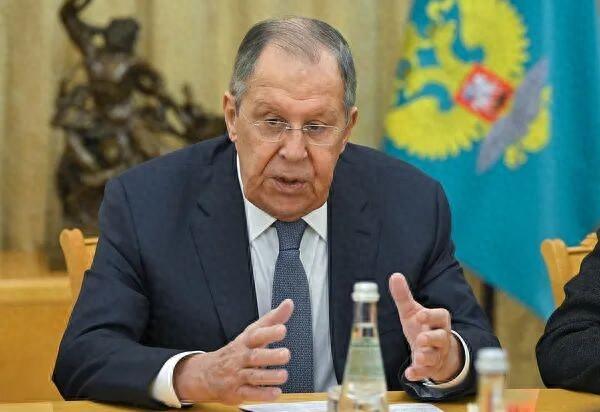
Core Viewpoint - Russia continues to support Venezuela in maintaining its sovereignty and interests amid external aggression, emphasizing the importance of dialogue to resolve tensions [1][3]. Group 1: Russia's Position - Russian Foreign Minister Lavrov expressed solidarity with the Venezuelan people against armed aggression and reiterated Russia's commitment to support Venezuela's sovereignty [1]. - Russia calls for the prevention of further escalation of the situation and seeks to strengthen the comprehensive strategic partnership with Venezuela [3]. Group 2: U.S. Involvement - The Russian Foreign Ministry issued a statement claiming that Venezuelan President Maduro and his wife have been controlled and removed by the U.S., urging the U.S. to reconsider its stance and release the democratically elected president [3]. - Russia emphasizes the need to create conditions for dialogue to address any issues between the U.S. and Venezuela [3].