国家战略定力

Search documents
欧美加税拦不住!中国外贸狂收45万亿,新三样出口暴涨27%
Sou Hu Cai Jing· 2026-01-24 23:49
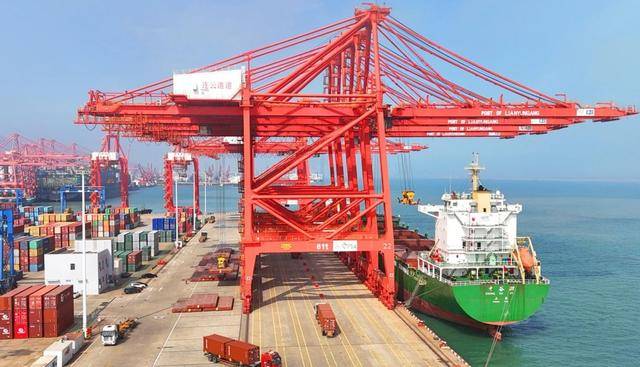
Core Insights - The total import and export value of China reached 45.47 trillion yuan in 2025, marking a 3.8% year-on-year increase, comparable to Germany's annual GDP [1] - Despite increased tariffs on Chinese electric vehicles by the EU (up to 45.3%) and stricter policies from the US, exports of new energy vehicles surged by 27.1%, indicating a significant transformation in China's foreign trade landscape [3][5] Trade Dynamics - ASEAN has become China's largest trading partner for three consecutive years, with trade volume with Belt and Road countries accounting for 51.9% of total trade, amounting to 23.6 trillion yuan, growing 2.5 percentage points faster than overall foreign trade [5][7] - China's trade partners now include over 240 countries and regions, with trade volume increasing in more than 190 of these markets, demonstrating resilience against tariff barriers [7][9] Export Strategies - The shift in export strategy from merely processing fees to establishing industry standards is evident, with Chinese companies now exporting complete energy solutions rather than just products [10][12] - In 2025, the export of self-owned brands grew by 12.9%, with market share increasing by 1.4 percentage points, showcasing the strength of China's manufacturing capabilities [14] Industry Strengths - China's complete supply chain advantage in the electric vehicle sector, from lithium mining to battery manufacturing and vehicle assembly, allows for rapid iteration and cost reduction [18][20] - The domestic market of 1.4 billion people serves as a significant accelerator for product scaling, enabling companies like CATL to dominate the global market [20][22] Long-term Strategies - The Chinese government has maintained a long-term commitment to industries like solar energy and electric vehicles, resulting in global leadership in production and cost efficiency [22][24] - The cancellation of export tax rebates in the solar industry reflects its strength and independence from subsidies, allowing for greater market share acquisition [14][28] Societal Impact - The growth in high-tech product exports (up 13.2% year-on-year) is creating numerous high-paying jobs, particularly in R&D and supply chain management [26] - The transformation in the perception of Chinese products, particularly electric vehicles, signifies a shift in national confidence and global standing [29][31]

美国等不及要谈?特朗普主动派人打来电话,中方通告字少事大
Sou Hu Cai Jing· 2025-06-06 04:52
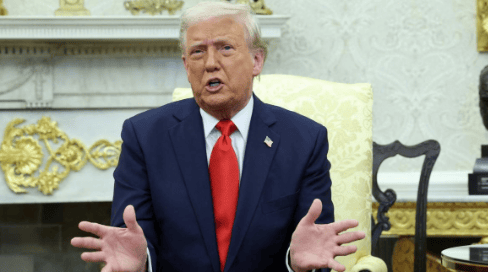
Core Viewpoint - The recent high-level phone call between China and the U.S. reflects ongoing diplomatic tensions and strategic maneuvering, with the U.S. adopting a more conciliatory tone while China maintains a firm stance [1][6]. Group 1: U.S. Actions and Policies - The U.S. has increased tariffs on China to 145%, including a 20% "fentanyl tax" and 125% punitive tariffs, aiming to pressure China on trade issues [1]. - Despite the aggressive tariff policies, the U.S. has expressed a desire for dialogue, indicating that U.S.-China relations are "crucial" and suggesting a comprehensive deal that includes increasing U.S. exports to China and addressing fentanyl trafficking [1][6]. - The U.S. has faced challenges in its domestic economy, with rising interest payments on debt due to Federal Reserve rate hikes, leading to a fiscal deficit nearing $2 trillion [4]. Group 2: China's Response and Strategy - China has responded to U.S. overtures with restraint, rejecting multiple requests for high-level talks and emphasizing a need for balanced and respectful communication [3][7]. - The Chinese government has shown a willingness to engage with pragmatic individuals while firmly rejecting pressure tactics from the U.S. [7]. - China's economic resilience and potential for internal circulation are highlighted, suggesting that U.S. tariffs will not significantly undermine China's growth [9][10]. Group 3: International Context - The international landscape is shifting, with the EU refusing to join an anti-China coalition and many countries increasing investments in China, indicating a growing preference for cooperation with China over the U.S. [4]. - The phone call between U.S. and Chinese officials, along with France's outreach to China, signifies a potential thaw in relations, contrasting with the previous U.S. approach of isolation [6]. Group 4: Future Outlook - The future of U.S.-China relations hinges on the U.S. recognizing its issues and engaging with China on an equal and respectful basis [10]. - China's strategic patience and commitment to its national interests suggest that it will not yield to external pressures, maintaining a firm stance in negotiations [10].