
国际专上教育枢纽

Search documents
拓展大湾区生源,逾50所香港名校下月组团赴深
Di Yi Cai Jing· 2025-10-24 08:14
Core Insights - Hong Kong is the only city globally with five universities ranked among the world's top 100 [1][2] - The Hong Kong government aims to establish the city as an international higher education hub and promote the "Study in Hong Kong" brand [2] Group 1: Higher Education Initiatives - The Hong Kong government has proposed multiple measures to enhance its status as an international higher education hub, including increasing the cap on non-local students for funded courses [2] - The 2025 Education Expo in Shenzhen will feature 15 Hong Kong higher education institutions and aims to attract over 20,000 professional visitors, with 70% being K12 students' parents [1] Group 2: Educational Development and Collaboration - The Education Expo is supported by the Guangdong Provincial Education Department, Shenzhen Education Bureau, and the Hong Kong Education Bureau, aiming to create the largest educational exchange platform in the Greater Bay Area [1] - Hong Kong's education system is recognized globally, ranking second in the education sector according to the 2025 World Competitiveness Yearbook by the International Institute for Management Development [1]
李家超:加速建设“北都大学城” 推广“留学香港”品牌
Xin Hua Wang· 2025-09-18 02:52
Core Points - The Chief Executive of Hong Kong, John Lee, presented his fourth policy address, emphasizing the acceleration of the "Northern University Town" project and promoting the "Study in Hong Kong" brand to develop Hong Kong as an international higher education hub and a gathering place for high-end talent [1][2] Group 1: Education Development - Hong Kong aims to enhance local education standards and cultivate diverse talents with rich knowledge and capabilities [1] - The Hong Kong Diploma of Secondary Education (DSE) is recognized by over 1,100 universities worldwide, and the government plans to increase its international recognition [1] - The government will attract more international quality teachers and students, support the development of international schools, and continuously improve teacher professionalism and curriculum quality [1] Group 2: Higher Education Policies - Starting from the 2026/27 academic year, the cap on non-local self-financed students in subsidized higher education institutions will increase from 40% to 50% [1] - The cap for self-financed students in excess of funded research programs will rise from 100% to 120% [1] - The government will also increase the supply of student accommodation [1] Group 3: International Collaboration - The Education Bureau will establish a "Study in Hong Kong Task Force" to collaborate with various institutions to promote higher education in Hong Kong and attract more international research talent and students [2] - The government will advance the development of applied science universities and establish mutual recognition with mainland vocational colleges, creating a platform for exchanges in the Guangdong-Hong Kong-Macao Greater Bay Area [2]
李家超:将增加资助专上院校非本地生自费就学人数上限
Zhong Guo Xin Wen Wang· 2025-09-17 07:32
Group 1 - The Chief Executive of Hong Kong, John Lee, announced an increase in the cap on the number of non-local students studying at subsidized higher education institutions to 50% of local student quotas starting from the 2026/2027 academic year [1] - The cap for self-financed students in research programs at subsidized institutions will also rise to 120% [1] - Hong Kong is positioned as a global education hub with five universities ranked among the top 100 in the world, and the government aims to promote the "Study in Hong Kong" brand [3] Group 2 - The Hong Kong government plans to enhance the international recognition of the Hong Kong Diploma of Secondary Education (DSE), which is acknowledged by over 1,100 universities worldwide [3] - Initiatives will be launched to attract more international research talent and students, including a promotional campaign led by the Education Bureau [3] - The government is committed to developing a diverse and competitive education system, emphasizing the quality of primary and secondary education in Hong Kong [3]

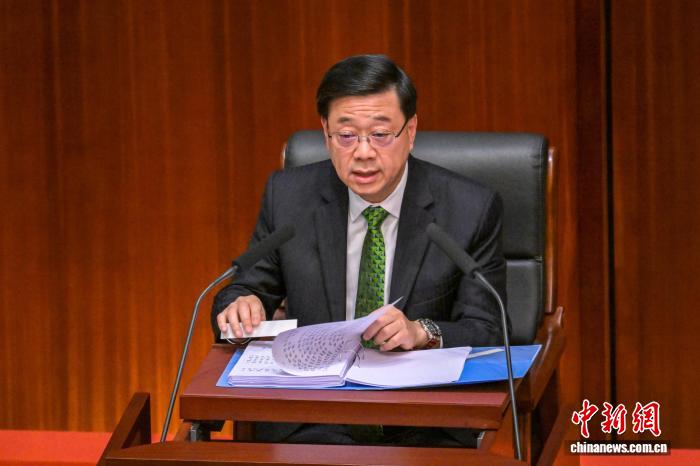
香港政务司陈国基:新一份《施政报告》为香港提出清晰路径 创造经济发展新机遇
Zhi Tong Cai Jing· 2025-09-17 06:56
Core Insights - The new Policy Address aims to promote high-quality economic development and improve the well-being of citizens in Hong Kong, providing a clear path and specific action plans for long-term prosperity and happiness [1] Group 1: Economic Development - The Policy Address focuses on two main pillars: economic development and improving people's livelihoods, with a strong commitment to reform and progress through institutional innovation and policy breakthroughs [1] - A dedicated chapter on accelerating the development of the Northern Metropolis is included, emphasizing its role as a key engine for future economic growth and technological innovation [2] - Measures to simplify administrative procedures and promote market participation in the Northern Metropolis development are outlined, with the Chief Executive personally leading the Northern Metropolis Development Committee [2] Group 2: Technological Advancement - The report highlights the importance of developing the artificial intelligence (AI) industry, announcing measures to further promote AI and data science, and attract local and international talent [2] - The establishment of an AI Efficiency Enhancement Group is announced to drive technological innovation within government departments [2] Group 3: Governance and Education - Strengthening the governance system is a key focus, with the introduction of a responsibility system for department heads to enhance accountability and improve overall government efficiency [3] - The report aims to position Hong Kong as an international education hub by implementing measures to attract global talent and increase student accommodation [3] Group 4: Social Welfare - The Policy Address emphasizes building a caring and inclusive society, with measures to improve living standards, enhance grassroots healthcare, and support labor welfare [3] - A "precision poverty alleviation" strategy is continued, targeting resources to the most in-need groups through various community initiatives [3] Group 5: Comprehensive Development - The report proposes a series of short, medium, and long-term measures across various sectors, including industrial development, maintaining international status, innovative technology, and cultural tourism [3]
“哈佛事件”之后,香港高校已发出36份“转校”录取通知书
第一财经· 2025-07-02 15:51
Core Viewpoint - The pressure from the U.S. government on Harvard University may indirectly support Hong Kong's development as an international higher education hub [1] Group 1: Impact of U.S. Policies on Hong Kong Education - As of June 26, Hong Kong's eight public universities received approximately 850 inquiries related to overseas higher education policy changes, with 36 admission offers sent out [1] - The University of Hong Kong issued the most admission offers (16), followed by Hong Kong University of Science and Technology (15), and Hong Kong Chinese University and Lingnan University (3 and 2 respectively) [1] - The uncertainty in the U.S. has led to around 300 inquiries from American students, including transfer applications from Harvard students [1] Group 2: Hong Kong Universities' Response - Hong Kong universities, particularly the Hong Kong University of Science and Technology, are actively welcoming international students from Harvard, prioritizing their applications and providing support for credit transfers, visa assistance, and accommodation [2] - Hong Kong City University announced it would offer various support measures, including special scholarships and co-supervision from original PhD advisors [2] - The unique advantages of Hong Kong, such as its English-taught environment and open academic atmosphere, are attracting international students [2] Group 3: Increasing Demand for Non-local Students - The application rate for non-local students at Hong Kong universities has been rising, with the proportion of non-local student admissions set to increase from 20% to 40% starting from the 2024/2025 academic year [3] - The number of non-local student applications has reached a record high, particularly from regions outside of Mainland China, Taiwan, and Macau [3] - The Chief Executive of Hong Kong has indicated a willingness to further increase the admission quota for non-local students if necessary, emphasizing Hong Kong's openness to international students facing discrimination in the U.S. [3] Group 4: Government Initiatives - The Hong Kong government has been actively implementing policies to promote the city as an international higher education hub, including increasing the quota for non-local students and developing the "Northern Metropolis University Education City" [3] - The planned area for the "Northern Metropolis University Education City" is set to reach 90 hectares [3]

“哈佛事件”之后,香港高校已发出36份“转校”录取通知书
Di Yi Cai Jing· 2025-07-02 15:13
Core Viewpoint - The number of overseas students applying to Hong Kong universities has significantly increased this year, partly due to the pressures faced by Harvard University from the U.S. government, which has indirectly benefited Hong Kong's international higher education ambitions [1][2]. Group 1: Overseas Student Applications - As of June 26, Hong Kong's eight public universities received approximately 850 inquiries related to the sudden changes in overseas higher education policies, with 36 admission offers already sent out [1]. - The University of Hong Kong issued the most admission offers, totaling 16, followed by the Hong Kong University of Science and Technology with 15 offers, and the Chinese University of Hong Kong and Lingnan University with 3 and 2 offers, respectively [1]. - The University of Hong Kong reported around 300 inquiries from American students, including over 100 transfer applications, particularly from Harvard students [1]. Group 2: Institutional Responses - Hong Kong universities, including the Hong Kong University of Science and Technology and City University, are actively welcoming international students from Harvard, prioritizing their admission applications, credit transfers, visa assistance, and accommodation arrangements [2]. - City University announced the provision of various support measures, including special scholarships and inviting original PhD supervisors to co-supervise students [2]. Group 3: Government Initiatives - The Hong Kong government is focused on enhancing its status as an international higher education hub, with plans to increase the non-local student admission ratio from 20% to 40% starting from the 2024/2025 academic year [2]. - The Chief Executive of Hong Kong, John Lee, indicated that the government would consider further increasing the non-local student admission cap if necessary, emphasizing Hong Kong's openness to students facing discrimination in the U.S. [3]. - Recent government initiatives include increasing the quota for non-local students, developing the "Northern Metropolis University Education City," and expanding the "Belt and Road Scholarship" program [3].