北部都会区

Search documents
如何看香港2026-27财年供地计划
2026-03-04 14:17
Summary of Key Points from the Conference Call Industry Overview - The conference call discusses the Hong Kong real estate market, specifically focusing on the land supply plan for the fiscal year 2026-27, which is projected to generate HKD 18 billion in land revenue, a historical low, accounting for only 2%-3% of total fiscal revenue, down over 90% from peak levels [1][3] Core Insights and Arguments - **Land Supply and Revenue**: The planned supply of private residential units is set to increase marginally to 22,600 units, but historical achievement rates are only 70%-80%, suggesting actual supply may be around 17,000 units [1][12] - **Market Dynamics**: The residential market is entering a de-stocking phase with annual sales around 22,000 units, exceeding supply levels. The CCL index has shown the largest monthly increase since 2023, indicating potential for exceeding land revenue targets in 2026 [1][10] - **Government Strategy**: The land supply structure is shifting towards government-led initiatives, with over 50% of supply coming from the Northern Metropolis area. There will be a continued halt on pure commercial land supply to alleviate high vacancy rates in office spaces [1][15] - **Tax Implications**: The increase in stamp duty for luxury properties (over HKD 100 million) to 6.5% is expected to contribute HKD 1 billion in tax revenue, but its impact on market activity is anticipated to be limited due to the small transaction volume (0.3%) [1][5] Additional Important Content - **Fiscal Challenges**: Since 2022, land revenue has declined significantly due to a downturn in the property market and cautious investment from developers. This has led to a tightening fiscal situation, with the budget surplus decreasing from approximately HKD 1 trillion in 2018 to around HKD 600-700 billion [3][4] - **Supply and Demand Analysis**: The supply for the fiscal year 2025 was at a historical low, with total supply around 13,070 units. The government emphasizes a cautious approach to land sales based on market conditions [8][12] - **Student Housing Initiatives**: The budget includes plans for three student housing sites to address the growing demand from non-local students, with an estimated 35,000 additional students expected over the next two years [13][14] - **Public Housing Goals**: The government aims to supply approximately 196,000 public housing units over the next five years, representing an 80% increase compared to the previous five-year period [14] - **Investment Strategies**: The investment focus is shifting towards private residential developers over commercial operators, with recommendations to look for undervalued stocks and smaller developers with high elasticity in the Hong Kong stock market [17] This summary encapsulates the key points discussed in the conference call, highlighting the current state and future outlook of the Hong Kong real estate market, along with strategic insights for investors.
香港传真|港府下财年住宅潜在供应22580伙 创近8年新高
Xin Lang Cai Jing· 2026-02-27 18:27
Core Viewpoint - The Hong Kong government announced a land sale plan for the fiscal year 2026-27, aiming to provide a total of 22,580 residential units, marking a 60% year-on-year increase and the highest in nearly eight years [1] Group 1: Land Supply and Development - The plan includes nine residential plots, with three located in the Hung Shui Kiu area providing 3,120 units [1] - The new land supply includes plots in Ho Man Tin, Sha Tin, and other areas, contributing a total of 6,650 units [1] - The government is transitioning previously designated government, community, or commercial land into residential use, indicating a diverse range of options for the market [1] Group 2: Future Land Supply and Market Outlook - The upcoming East Tung Chung site is expected to provide approximately 990 units and is strategically located near the future East Tung Chung Station, with no government facility construction requirements imposed [2] - The government anticipates that about 70% of the potential land supply for the next fiscal year will be government-led, with a total of 98,000 units planned over the next five years, primarily from the Northern Metropolis area [2] - The real estate market is showing signs of recovery, with recent land sales reflecting stable and even rising transaction volumes [2] Group 3: Commercial Land and Tendering Process - The government will not sell general commercial land in the upcoming budget but is exploring flexible uses for commercial land, including potential development for student dormitories [3] - The Urban Renewal Authority is enhancing its tendering process, which includes stricter pre-qualification criteria for consultants and contractors [3] - The government plans to allocate HKD 300 million to support the enhanced tendering service, with specific measures to be reported to the Legislative Council by May [3]
毕马威香港《财政预算案》前瞻:建议优化家族办公室税务优惠制度 扩大投资范畴至数码资产及贵金属
智通财经网· 2026-02-11 08:39
Group 1 - KPMG's report suggests a series of comprehensive recommendations to enhance Hong Kong's competitiveness and ensure long-term fiscal stability, focusing on attracting multinational companies to establish regional headquarters in Hong Kong [1] - The report recommends tax incentives for qualified profits obtained by regional headquarters to stimulate local economic activity, promote high-end employment, and drive industrial upgrades [1] - For family offices, KPMG proposes optimizing the existing tax incentive system to include digital assets and precious metals, making it more attractive and effective [1] Group 2 - The development of the "Northern Metropolis" is highlighted as a crucial part of Hong Kong's future development blueprint, with proposals for "super deductions" for R&D companies in the Greater Bay Area to enhance cross-border innovation [2] - KPMG estimates a significant improvement in the fiscal deficit for the 2025-26 fiscal year, projecting a deficit of approximately HKD 11.2 billion, compared to the government's original budget of HKD 67 billion [2] - The report indicates that as of March 2023, fiscal reserves are expected to be around HKD 643 billion, maintaining a healthy level, with stamp duty revenue exceeding expectations by approximately HKD 45 billion, contributing positively to the fiscal outlook [2] Group 3 - KPMG emphasizes three priority areas for Hong Kong's development: stimulating business opportunities, fostering new industries for sustainable development, and caring for citizens to build better communities [3] - Recommendations include optimizing the tax system to attract multinational and outbound mainland enterprises, aligning with national and local development plans [3] - Additional measures proposed include tax exemptions for families employing domestic workers, increasing the mortgage interest deduction limit, and expanding the scope of tax exemptions for supporting parents and grandparents residing in the Greater Bay Area [3]
香港投资署:2025年共协助560间海外及内地企业在港开设或扩展业务 数目创新高
Zhi Tong Cai Jing· 2026-01-26 02:34
Group 1 - The Hong Kong Investment Promotion Agency (IPA) assisted 560 overseas and mainland enterprises to establish or expand their businesses in Hong Kong in 2025, marking an increase of over 4% compared to 2024, and setting a new record [1] - These enterprises are estimated to bring nearly HKD 69.4 billion in investment to Hong Kong, representing a growth of approximately 2% from 2024, and are expected to create 10,748 new jobs across various sectors in their first year of operation [1] - Approximately 20% of the new jobs will be in management or professional levels, with a growth of over 57% compared to 2024 [1] Group 2 - The Secretary for Commerce and Economic Development expressed satisfaction with the IPA's achievements, highlighting the record number of companies and startups in Hong Kong, which reflects strong global investor confidence [2] - Hong Kong's unique advantages under the "one country, two systems" framework and its role as a business and investment hub are emphasized, particularly in relation to the Greater Bay Area development and the Belt and Road Initiative [2] - The IPA received 2,852 applications under the new Capital Investment Entrant Scheme, expected to bring over HKD 85.5 billion in investment by the end of 2025 [3] Group 3 - The IPA aims to align with the national 14th Five-Year Plan and strengthen collaboration with other cities in the Greater Bay Area, while also focusing on attracting high-growth potential enterprises to Hong Kong [3] - The agency plans to leverage tailored incentive policies to enhance Hong Kong's role as a cross-border collaboration platform [3]
香港总商会提呈建议书 倡把握AI热潮、招商引资、推动北都发展等
智通财经网· 2026-01-19 12:13
Group 1 - The Hong Kong General Chamber of Commerce has submitted a series of recommendations to the government regarding the upcoming budget, focusing on public finance management, attracting investment, enhancing financial market competitiveness, leveraging the Greater Bay Area, and preparing for an aging population [1] - The Chamber suggests that the government provide tax incentives to employers, such as a 120% tax deduction on AI-related training expenses and a maximum subsidy of 5,000 HKD for AI training course fees through the Continuing Education Fund [1] - The recommendations also include funding support for businesses to responsibly adopt AI, simplifying application processes, and encouraging the purchase of software, hardware, high-performance AI tools, and cloud computing resources [1] Group 2 - Regarding the silver economy, the Chamber proposes splitting the current 5% mandatory MPF contributions into two parts: 4% to continue going into the MPF and 1% to be allocated for a medical insurance savings fund to help citizens prepare for future medical needs [2] - The Chamber recommends promoting telemedicine and electronic prescriptions to enhance efficiency and service quality [2] - To meet the needs for elder-friendly housing, the government is encouraged to develop policies that promote the construction of senior housing, such as providing additional plot ratios and waiving land premium fees [2]
李家超:更好统筹发展和安全 主动融入和服务国家发展大局
智通财经网· 2026-01-14 06:00
Core Viewpoint - The Hong Kong government, led by Chief Executive John Lee, emphasizes the need for collaboration between the executive and legislative branches to address immediate issues such as post-fire support and reconstruction, while also focusing on long-term economic development and social welfare initiatives [1][2][4]. Group 1: Legislative and Executive Cooperation - The government aims to integrate and serve the national development agenda, aligning with the "14th Five-Year Plan" and enhancing Hong Kong's international competitiveness [1][3]. - There is a call for legislators to adhere to the Legislative Council's code of conduct, prioritizing national and societal interests over personal political gains [3][4]. - The government stresses the importance of balancing micro and macro interests in policy analysis, considering various systemic relationships [3][4]. Group 2: Post-Fire Support and Reconstruction - Immediate actions include addressing the aftermath of the fire at Hongfu Garden, with a focus on systematic reforms to prevent future tragedies [2][5]. - The government has established multiple working groups to coordinate emergency support, including financial aid and temporary housing for affected residents [5][6]. - A fund of HKD 4.3 billion has been raised to assist victims, with various forms of financial support being provided [6][9]. Group 3: Accountability and Systemic Reform - An independent committee has been formed to investigate the fire's causes and ensure accountability, with a commitment to reforming existing systems to prevent recurrence [7][9]. - The government is implementing targeted improvement measures across various sectors, including fire safety and building regulations, to enhance oversight and accountability [8][10]. - There is a strong emphasis on the need for systemic reforms to address long-standing issues revealed by the fire incident [9][10].
陈茂波:香港新一份财政预算案将于2月25日发表
Zhi Tong Cai Jing· 2026-01-11 07:43
Group 1 - The Hong Kong government is set to release a new budget on February 25, which is expected to show a recovery in operating surplus due to increased overall revenue from a thriving financial market, including stamp duty [1] - The financial sector, which accounts for 26% of Hong Kong's GDP, has shown strong performance, leading to greater market demand and positive expectations for the industry [1] - The trade sector, contributing 15% to Hong Kong's GDP, also supported the economy last year due to strong exports, while major events attracted more tourists, enhancing market sentiment [1] Group 2 - The Hong Kong government plans to increase investment in public works, which will result in a capital account deficit for the current year [2] - The government intends to utilize market forces, including moderate bond issuance, to support infrastructure development [2] - The ratio of the government's outstanding debt to GDP is approximately 12%, which is considered healthy on an international scale [2]
香港新一份财政预算案将于2月25日发表
Zhong Guo Xin Wen Wang· 2026-01-11 07:09
Group 1 - The new fiscal budget for Hong Kong will be announced on February 25, benefiting from a robust financial market and increased overall revenue, including stamp duty, allowing the government to restore operating surplus earlier than expected [1][3] - The financial sector, which accounts for 26% of Hong Kong's GDP, showed strong performance last year, leading to greater market demand and positive expectations for the industry [3] - The trade sector, contributing 15% to the GDP, also supported the economy due to strong exports, while major events attracted more tourists, enhancing the market atmosphere [3] Group 2 - The government has implemented a strengthened fiscal consolidation plan, achieving some success in controlling expenditure growth, although overall spending continues to rise, with education, healthcare, and social welfare accounting for nearly 60% of government expenditure [3] - The government plans to invest in future developments, particularly in the Northern Metropolis area, despite recording a deficit in the capital account due to increased investment in public works [3][4] - The ratio of the government's outstanding debt to GDP is approximately 12%, which is considered very healthy on an international scale [4]

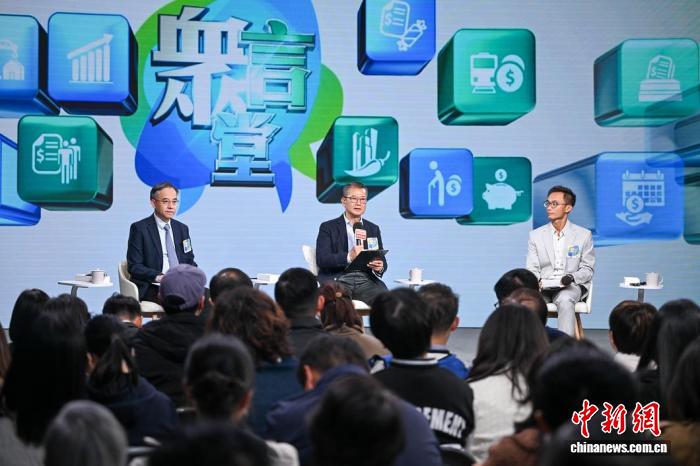
陈茂波称香港今年IPO融资规模很可能超越2025年
Jin Rong Jie· 2026-01-07 23:52
Group 1 - The core viewpoint of the article indicates that Hong Kong's IPO market is likely to surpass last year's fundraising amount due to geopolitical factors prompting Chinese companies to shift from U.S. listings to Hong Kong [1] - The Hong Kong Stock Exchange will consult the market regarding the shortening of the settlement cycle to "T+1" in the first half of this year [1] - There is a very low risk of large-scale defaults among small to medium-sized developers in Hong Kong, which will not jeopardize the financial stability of the region [1] Group 2 - The Hong Kong government is in discussions with leading enterprises to encourage them to establish operations in the Northern Metropolis area, with potential concessions on land prices [1] - In response to international geopolitical turmoil, it was noted that Hong Kong's investment in Venezuela is very minimal [1]
香港新房价格全解析:2026年最新各区上车盘与豪宅行情
Sou Hu Cai Jing· 2026-01-05 11:05
Core Insights - The article discusses the evolving landscape of Hong Kong's new housing market in 2026, highlighting the distinction between "entry-level" properties and luxury real estate, and the implications for both first-time buyers and investors [1][3][6]. Group 1: Definition of Market Segments - "Entry-level" properties in Hong Kong are defined as residential units priced between 8 million to 12 million HKD, typically ranging from 300 to 500 square feet, and are often located in new or emerging areas [3]. - The luxury market is characterized by properties priced over 50 million or 100 million HKD, focusing on location, views, amenities, privacy, and brand value, with traditional luxury areas like The Peak and new high-end developments in areas like Kai Tak [3]. Group 2: Market Conditions in 2026 - The Hong Kong housing market in 2026 is entering a "new normal," influenced by changes in interest rates, demographic shifts, land supply policies, and external economic factors, leading to a more fundamental and demand-driven market [6]. - Developers are expected to adopt more flexible pricing strategies and innovative product designs to attract buyers, as the market moves away from rapid price increases [6]. Group 3: Regional Market Analysis - **Hong Kong Island**: Traditional luxury areas maintain high prices, with new developments in places like Quarry Bay offering relatively lower entry prices around 22,000 to 28,000 HKD per square foot [9][11]. - **Kowloon**: A mix of entry-level and luxury options, with new developments in Kai Tak offering entry prices of 18,000 to 24,000 HKD per square foot, while luxury units may exceed 35,000 HKD [12]. - **New Territories and Outlying Islands**: Areas like Tai Po and Yuen Long are popular for first-time buyers, with prices ranging from 4 million to 8 million HKD for smaller units, and potential growth in the Northern Metropolis area [13]. Group 4: Strategies for Buyers - First-time buyers are advised to clarify their budget and needs, focusing on emerging areas where prices are more affordable, and to consider government housing schemes for better value [19][20]. - Luxury buyers should prioritize location and views, consider the reputation of developers, and account for high holding costs associated with luxury properties [21][22].