国际沟通

Search documents
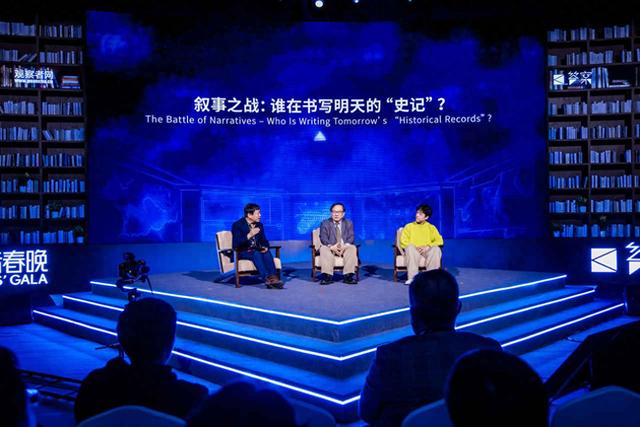
2026答案秀·思想者春晚| 高志凯、竹内亮、胡锡进:从电动汽车到麻辣烫,我们如何在国际舞台打破“中国哈哈镜”
Xin Lang Cai Jing· 2026-01-27 06:29
Core Viewpoint - The discussion emphasizes the importance of effectively communicating China's narrative to the world amidst evolving global geopolitical dynamics and challenges in international discourse [1]. Group 1: Communication Challenges - There is a significant gap between foreign perceptions of China and its actual developments, often influenced by outdated views and ideological biases [3][5]. - Many individuals in Japan, for instance, lack a true understanding of China, with estimates suggesting that around 80% are unaware of its real situation [3][5]. - The Western media's portrayal of China is often biased, with a substantial portion of reporting aimed at discrediting the country rather than providing an objective view [5]. Group 2: Strategies for Effective Communication - To improve the global narrative about China, it is essential to engage in effective communication tailored to different audiences, including Western nations and developing countries [7]. - The importance of understanding one's own achievements and identity is highlighted as a prerequisite for telling China's story effectively [7][19]. - The narrative should not only focus on China's strengths but also present a complex and realistic picture of the country, countering the oversimplified negative portrayals often found in Western media [24][25]. Group 3: Industry and Brand Perception - The rise of Chinese electric vehicle brands, such as BYD, signifies a shift in global automotive leadership, with BYD surpassing Tesla in sales, reflecting a significant change in international brand perception [12][13][16]. - The discussion points out that many people from various countries recognize the strength of Chinese electric vehicles, while Japanese perceptions remain less informed [20]. - The narrative around China's technological advancements, particularly in electric vehicles, is crucial for reshaping foreign opinions and fostering a more favorable view of Chinese brands [12][16].