地球内部结构研究

Search documents
瞰前沿·大国重器丨在海底捡“特产” 给地球做CT
Ren Min Ri Bao· 2026-01-31 05:24
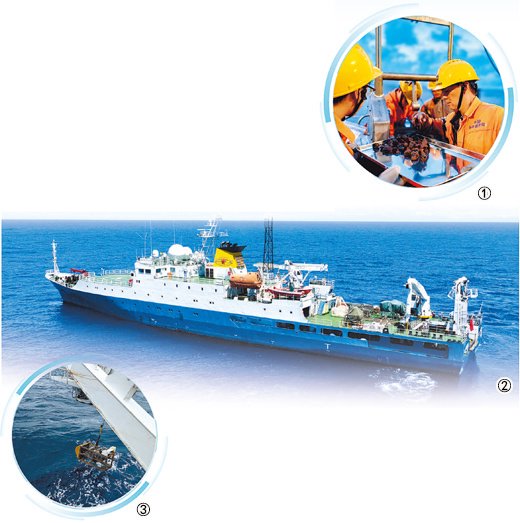
Core Insights - The "Marine Geological No. 6" research vessel successfully returned from a 95-day expedition in the Pacific, uncovering significant scientific findings, including polymetallic nodules that have been dormant for 30 million years [1][3]. Group 1: Research Achievements - The expedition utilized a combination of self-developed deep-sea remotely operated vehicles and autonomous underwater robots for high-precision sampling and data collection, marking a significant advancement in deep-sea exploration technology [3][4]. - The polymetallic nodules discovered are rich in metals such as cobalt, nickel, copper, and manganese, which are crucial for enhancing mineral resource security. These nodules grow extremely slowly, taking millions of years to form, and provide insights into historical oceanic environmental changes [4][5]. - The research team conducted a deep-sea electromagnetic profile measurement, achieving a record depth of 7,663 meters, which allowed for a detailed understanding of the Earth's internal structure and dynamics [5][7]. Group 2: Implications for Future Research - The findings from the expedition will support future ocean drilling projects, with plans for the advanced "Dream" drilling vessel to conduct exploratory drilling in the South China Sea [8][9]. - The research also highlights the potential of deep-sea biological resources, such as unique enzymes and compounds from deep-sea organisms, which could have applications in medicine and biotechnology [8]. - The ongoing exploration aims to address fundamental questions about life origins, climate evolution, and the role of the ocean in global material cycles, indicating a continuous commitment to deep-sea research [9].
在海底捡“特产”!看看“海洋地质六号”带回了啥?
Xin Lang Cai Jing· 2026-01-31 05:00
Core Insights - The "Marine Geological No. 6" research vessel has successfully completed a 95-day expedition in the Pacific Ocean, covering 12,673 nautical miles, and has returned with significant scientific findings, including polymetallic nodules that have been resting on the seabed for 30 million years [8][9][10] - The expedition utilized advanced technology, including a self-developed deep-sea remotely operated vehicle and an autonomous underwater robot, to conduct high-precision sampling and video recording at depths of up to 4,900 meters [9][10] - The research has implications for understanding deep-sea environmental changes over millions of years and offers insights into global climate change [10][12] Research Achievements - The expedition collected polymetallic nodules, which are rich in metals such as cobalt, nickel, copper, and manganese, and are considered important for enhancing mineral resource security [10][11] - A significant achievement was the electromagnetic profile measurement at a depth of 7,663 meters, setting a record for the deepest measurement in China, which provides insights into the Earth's internal structure and plate tectonics [11][12] - The research team successfully identified a "cold-hot confrontation" zone approximately 50 kilometers below the seabed, revealing critical information about the geological layers beneath the ocean floor [11][12] Biological Discoveries - The expedition also focused on deep-sea biological resources, discovering unique microorganisms and deep-sea corals that have potential applications in biomedicine and food processing [12][13] - The deep-sea corals serve as indicators of ancient marine climates, while deep-sea sponges may contain compounds that could lead to breakthroughs in disease treatment [12][13] - The data collected will support future ocean drilling projects aimed at uncovering answers related to the origins of life and climate evolution [13]