地磁能发电

Search documents
刘文华宣布“地磁能发电”2026年量产:取用地球磁场,电力将不再稀缺
Xin Lang Cai Jing· 2025-12-09 09:42
Core Viewpoint - The conference serves as the global debut for the promotion of "geomagnetic energy generation" by the company, highlighting its potential to revolutionize energy supply across various celestial bodies and applications [3][7]. Group 1: Event Overview - The "2025 (23rd) China Entrepreneur Influence Entrepreneur Annual Conference" is hosted by China Entrepreneur Magazine from December 5 to 7 in Beijing, with the theme "Emergence·Infinity - Co-creating New Forms of Intelligent Business" [1][5]. Group 2: Geomagnetic Energy Generation - Liu Wenhua, the founder and chairman of Datong World Magnetic Electric Technology, explains that geomagnetic energy generation utilizes the Earth's magnetic field energy for electricity production, similar to how hydropower and solar energy work [3][7]. - Geomagnetic energy generation can produce electricity wherever there is a magnetic field, including on the Moon and Mars, with the Moon's magnetic field energy density being 1/6 that of Earth's, while Mars has a significantly stronger magnetic field [3][7]. - The introduction of geomagnetic energy generation is expected to eliminate power supply issues for advanced technologies such as big data and artificial intelligence, allowing devices like robots and electric vehicles to operate without concerns about battery life [3][7]. Group 3: Production Timeline - The company plans to begin mass production of geomagnetic energy generation technology in 2026 [4][8].

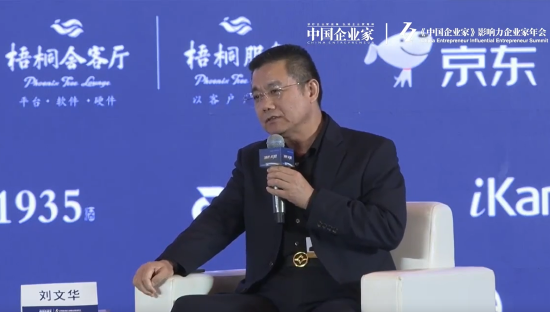
大同世界磁电科技刘文华:全球首发“地磁能发电”技术,机器人、汽车再不用担心续航里程问题
Xin Lang Cai Jing· 2025-12-09 09:37
Core Viewpoint - The conference serves as the global debut for the promotion of "geomagnetic energy generation" by the company, highlighting its potential to revolutionize energy supply across various celestial bodies and applications [3][7]. Group 1: Event Overview - The "2025 (23rd) China Entrepreneur Influence Entrepreneur Annual Conference" is hosted by China Entrepreneur Magazine from December 5 to 7 in Beijing, with the theme "Emergence·Infinity - Co-creating New Forms of Intelligent Business" [5]. - Liu Wenhua, founder and chairman of Datong World Magnetic Electric Technology, attended and delivered a speech at the conference [5]. Group 2: Geomagnetic Energy Generation - Liu Wenhua introduced "geomagnetic energy generation," explaining it as harnessing the energy from the Earth's magnetic field, similar to how hydropower utilizes water and solar power utilizes light [3][7]. - The technology can generate electricity wherever there is a magnetic field, including on the Moon and Mars, with the Moon's magnetic field energy density being 1/6 that of Earth's, while Mars has a significantly stronger magnetic field [3][7]. - This innovation aims to address the energy shortages faced by data-driven technologies and artificial intelligence, suggesting that with geomagnetic energy, power supply will no longer be a limitation for robots, autonomous vehicles, and other technologies [3][7]. Group 3: Production Timeline - Liu Wenhua announced that "geomagnetic energy generation" is expected to begin mass production in 2026 [4][8].

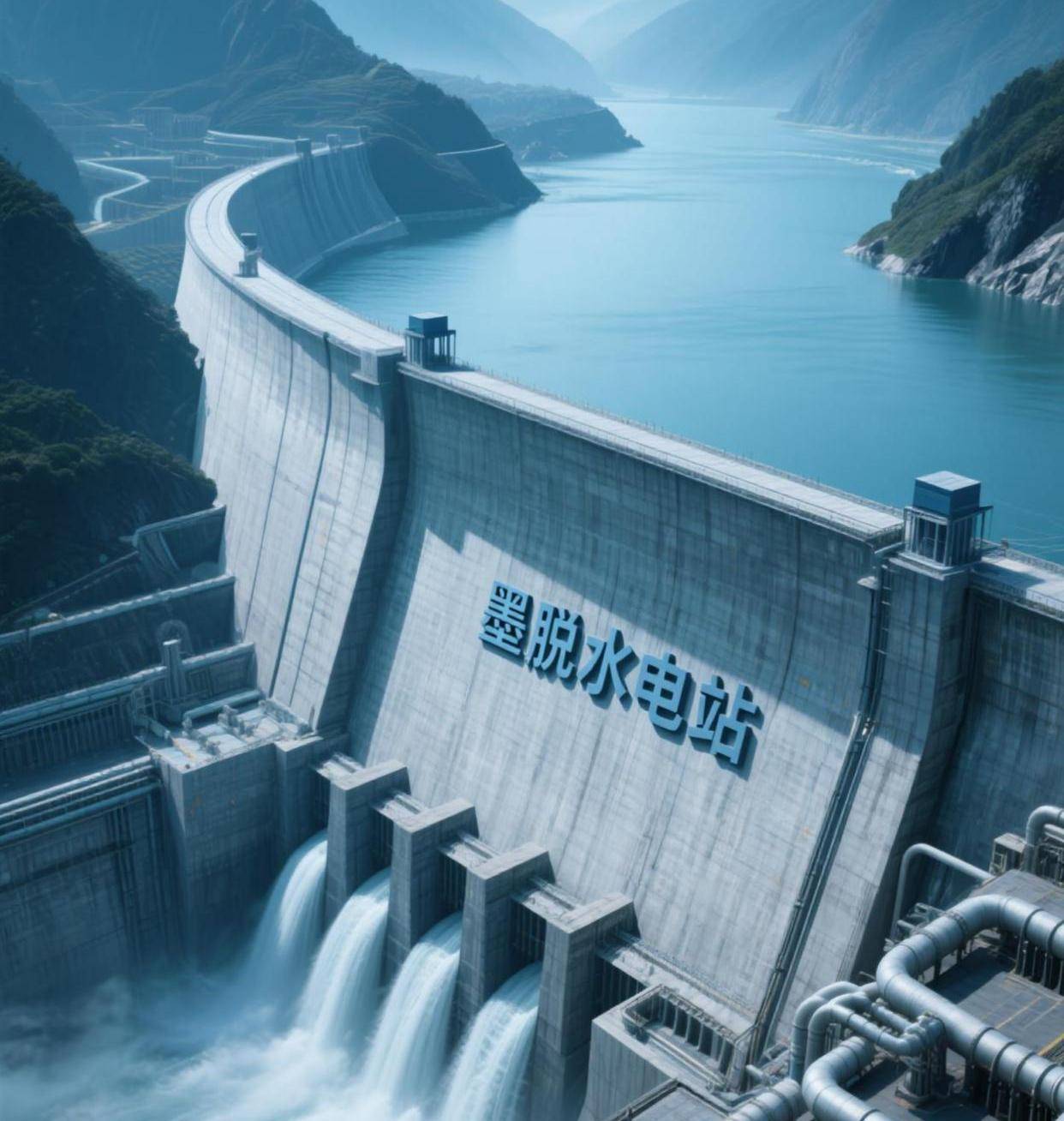
万亿级水电工程震撼世界,双碳目标迎来最强助攻!
Sou Hu Cai Jing· 2025-08-18 08:36
Group 1 - The establishment of China Yajiang Group and the commencement of the Yarlung Tsangpo River downstream hydropower project signify a new phase in China's clean energy strategy, with an expected annual power generation exceeding 300 billion kilowatt-hours, equivalent to a reduction of approximately 100 million tons of standard coal consumption and a decrease of 250 million tons of CO2 emissions, making it a key pillar for achieving the "dual carbon" goals [1][3] - China Yajiang Group aims to integrate top domestic hydropower construction capabilities, focusing on the development of hydropower resources in the Yarlung Tsangpo River downstream, optimizing the energy structure in the southwest region, and promoting hydropower technology innovation [3][4] - Hydropower is playing an irreplaceable role in achieving the "dual carbon" goals, with China's annual hydropower generation surpassing 1.3 trillion kilowatt-hours, leading to a reduction of 400 million tons of coal consumption and 1 billion tons of CO2 emissions annually, with these figures continuing to grow [4][6] Group 2 - The green value of hydropower is highlighted by its unparalleled emission reduction benefits, with a million-kilowatt hydropower station saving approximately 3 million tons of standard coal and reducing CO2 emissions by 7 million tons annually; the Three Gorges Project has cumulatively generated over 1.5 trillion kilowatt-hours of electricity, equivalent to a reduction of about 1.2 billion tons of CO2 emissions [6] - Modern hydropower projects prioritize ecological protection, implementing facilities for ecological flow release and fish breeding, achieving a balance between power generation and ecological preservation [6][8] - Rural small hydropower stations, numbering 47,000 nationwide, play a crucial role in providing stable electricity to remote areas, reducing firewood consumption by approximately 10 million cubic meters annually, thus protecting valuable forest resources [6] Group 3 - Despite the advantages, hydropower development faces challenges such as ecological protection and the saturation of quality hydropower resources; achieving the carbon peak by 2030 and carbon neutrality by 2060 requires exploring new clean energy technologies like geomagnetic energy [8][12] - Geomagnetic energy generation technology offers three main advantages: all-weather power generation, absolute cleanliness with zero emissions, and the ability to harness energy from any location, from the equator to the poles [12]