
地质灾害风险

Search documents
两部门发布2026年2月份全国自然灾害风险形势
Zhong Guo Xin Wen Wang· 2026-02-09 08:29
Core Viewpoint - The National Disaster Reduction and Relief Committee and the Ministry of Emergency Management have assessed the natural disaster risk situation for February 2026, highlighting various risks across different regions of China, including low-temperature snow and ice, forest fire hazards, geological disaster risks, and drought conditions [1][2]. Group 1: Low-Temperature Snow and Ice Risks - In February, four cold air processes are expected to impact China, leading to lower temperatures and increased precipitation in Northeast, central and eastern Inner Mongolia, and northern North China, resulting in heightened risks of low-temperature rain, snow, ice, and snow disasters [1]. - Rivers such as the Heilongjiang, Nenjiang, and Songhua are still in the freezing period, while the Yellow River's frozen sections are expected to start thawing in late February [1]. Group 2: Forest Fire Risks - The risk of forest fires is expected to be high in several regions, including western Beijing, western Hebei, eastern Shanxi, and most parts of Fujian, Jiangxi, and Guangdong, with some areas experiencing extremely high fire risk levels [2]. - Specific regions such as southern Fujian, southern Jiangxi, and western Sichuan are noted for particularly high fire risk during certain periods [2]. Group 3: Geological Disaster Risks - Geological disaster risks are elevated in areas including northeastern Beijing, northern and western Hebei, and various parts of Sichuan and Yunnan, indicating a significant potential for geological hazards in these regions [2]. Group 4: Drought Risks - Since mid-January, meteorological drought conditions have been developing in southeastern East China and eastern South China, with some reservoirs in Jiangxi and Fujian showing lower water levels compared to historical averages [2]. - In February, higher temperatures and continued low precipitation in southeastern East China and southwestern regions may exacerbate drought conditions [2].
两部门发布2026年1月份全国自然灾害风险形势
Yang Shi Wang· 2026-01-09 02:45
Core Insights - The National Disaster Reduction and Relief Committee and the Ministry of Emergency Management have assessed the natural disaster risk situation for January 2026, indicating various regional risks across China [1][2] Group 1: Low Temperature and Snow Disaster Risks - In January, there will be three cold air processes affecting China, with moderate to weak intensity, leading to higher risks of low temperature and snow disasters in northeastern regions, northeastern Inner Mongolia, and western Xinjiang [1] - These areas are expected to experience temperatures lower than the historical average for the same period, along with increased precipitation [1] Group 2: Forest and Grassland Fire Risks - High forest fire risk levels are anticipated in southern Zhejiang, southern Anhui, most of Fujian, most of Jiangxi, southern Hubei, most of Hunan, most of Guangdong, most of Guangxi, western and northern Hainan, western Sichuan, southern Guizhou, most of Yunnan, and eastern Tibet [2] - Specific areas within these regions may experience extremely high fire risk levels during certain periods [2] - Grassland fire risks are notably high in western Sichuan and eastern and southern Tibet [2] Group 3: Geological Disaster Risks - Geological disaster risks are expected to be high in northwestern Hunan, northern Guangxi, eastern Chongqing, northern Sichuan, southwestern Shaanxi, southern Gansu, and eastern Qinghai [2] Group 4: Marine Disaster Risks - The coastal waters of China are projected to experience 4 to 5 occurrences of hazardous wave events in January [2] - Ice conditions in the Bohai Sea and northern Yellow Sea are expected to be lighter than usual, with the maximum floating ice range in Liaodong Bay estimated at 45 to 55 nautical miles, and ice thickness ranging from 10 to 15 centimeters, with a maximum of 25 centimeters [2]
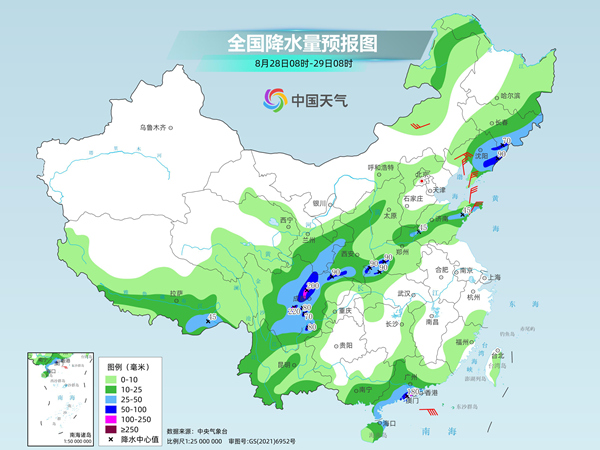
今天东北华南等地将现较强降雨 大范围高温仍将持续
Yang Shi Wang· 2025-08-28 01:17
Group 1 - Heavy rainfall in northern China is moving towards the northeast, with significant rainfall recorded in various regions including Beijing, Tianjin, and Hebei [2][4] - The Central Meteorological Observatory predicts that today, areas such as eastern Jilin, central and eastern Liaoning, and parts of Sichuan will experience heavy rainfall, with localized areas facing severe downpours [2][4] - A tropical disturbance in the South China Sea is expected to strengthen and bring heavy rainfall to the southern coastal regions over the next two days [2][6] Group 2 - High temperatures will persist across a wide range of areas including the Yellow River basin, Jiangnan, and parts of Sichuan, with some regions like Chongqing and eastern Hunan potentially reaching temperatures around 40°C [7] - A temporary reduction in high temperatures is expected from August 30 to early September, with cities like Hefei, Wuhan, and Nanjing likely to see a break from the heat [7] - Despite the temporary relief, areas in Jiangnan and southern regions may continue to experience high temperatures, with Nanchang expected to remain hot for the next week [7]

海南,台风一级预警!多地有山洪和地质灾害风险
Zheng Quan Shi Bao· 2025-08-24 03:37
Core Viewpoint - Hainan Province has upgraded its typhoon warning to Level 1 due to Typhoon "Jianyu," which is expected to make landfall on the southern coast of Hainan Island, bringing severe weather conditions [1] Group 1: Typhoon Information - Typhoon "Jianyu" is currently located approximately 200 kilometers southeast of Sanya, with maximum wind speeds of 38 meters per second [1] - The typhoon is expected to strengthen and approach the southern coast of Hainan Island, with landfall anticipated between Lingshui and Ledong [1] - Wind speeds are projected to reach 40-45 meters per second upon landfall, categorizing it as a strong typhoon [1] Group 2: Rainfall and Flooding Risks - Heavy rainfall is expected across various regions in Hainan, with some areas forecasted to receive between 250-350 millimeters, and localized areas exceeding 400 millimeters [1] - Specific cities such as Qionghai, Wanning, and Sanya are highlighted for significant rainfall, with risks of mountain floods and geological disasters [2][3] Group 3: Geological Disaster Warnings - An orange alert for mountain flood disaster risk has been issued for several cities, indicating a high likelihood of such events [3] - Geological disaster risks are categorized into different warning levels, with specific areas identified as having a high risk of rainfall-induced geological disasters [4][5][7]
国家防灾减灾救灾委员会办公室、应急管理部发布8月份全国自然灾害风险形势
Yang Shi Wang· 2025-08-06 08:43
Summary of Key Points Core Viewpoint - The National Disaster Reduction Committee and various ministries have assessed the natural disaster risk situation in China for August 2025, indicating high risks of floods, typhoons, forest fires, geological disasters, and droughts across multiple regions. Flood and Storm Risk - In August, significant rainfall is expected in regions including North China, Northeast China, East China, South China, and Southwest China, leading to a high risk of floods and severe weather events such as thunderstorms and hail. Major rivers like the Daqing River and the Liao River may experience significant flooding [1][2] Typhoon Risk - An estimated 4-5 typhoons may form in the Northwest Pacific and South China Sea, with 2-3 potentially impacting coastal areas of China. This is close to the average for this time of year, with one typhoon expected to affect areas north of the Yangtze River [2] Forest Fire Risk - High lightning activity in regions such as Daxing'anling and Northern Xinjiang increases the risk of forest fires. Certain areas in Inner Mongolia, Heilongjiang, and Hubei are classified as having a higher risk of forest fires, while the overall grassland fire risk remains low [2] Geological Disaster Risk - High geological disaster risks are anticipated in various regions, including parts of Beijing, Hebei, Shanxi, and Yunnan. Specific areas in Western Yunnan are noted for particularly high risks of geological disasters [2][3] High Temperature and Drought Risk - Areas such as Inner Mongolia, Hubei, and Sichuan are experiencing drought conditions. In August, regions like Hubei and Sichuan are expected to have below-average rainfall, with increased days of high temperatures (≥35°C) compared to historical averages, leading to a heightened risk of drought [3]
台风“韦帕”即将过境老挝,中老铁路将于7月23日全线停运旅客列车
news flash· 2025-07-22 10:36
Core Viewpoint - The Chinese Embassy in Laos issued a safety reminder regarding Typhoon "Vipa" which is expected to bring severe winds and heavy rainfall, significantly increasing the risk of geological disasters in Laos [1] Group 1: Weather Impact - The Laos meteorological department predicts that Typhoon "Vipa" will cause serious strong winds and heavy rainfall [1] - The risk of geological disasters such as landslides and mudslides is significantly heightened due to the typhoon [1] Group 2: Transportation Disruptions - The China-Laos Railway will suspend passenger train services across the entire line starting July 23 [1] Group 3: Safety Recommendations - Chinese citizens in Laos are advised to stay updated with local media for weather information and potential changes [1] - It is recommended to plan trips carefully and avoid unnecessary outings during the typhoon [1] - Precautions should be taken against falling objects and branches, and driving in poor road conditions, especially in mountainous areas, should be avoided [1] - High-risk activities such as boating, climbing, rafting, and hot air ballooning should be avoided [1] Group 4: Emergency Contacts - The Chinese Embassy and Consulate in Laos provided various emergency contact numbers for assistance, including local police and medical emergency services [1]
今起河南将迎强降水 夏播作物喝上“解渴水” 低洼农田需警惕
He Nan Ri Bao· 2025-06-17 23:25
Summary of Key Points Core Viewpoint - The upcoming heavy rainfall in Henan province is expected to alleviate drought conditions while also posing risks of flooding in low-lying agricultural areas [1][3]. Group 1: Rainfall Forecast - From June 18 to June 21, Henan will experience significant rainfall, with maximum hourly rainfall reaching between 50 mm to 80 mm [1][2]. - The cumulative rainfall is projected to be between 70 mm to 160 mm in the eastern and southern regions, with localized areas receiving up to 300 mm [2]. Group 2: Agricultural Impact - The rainfall is anticipated to relieve drought conditions in northern, central, and eastern Henan, benefiting the growth of summer crops [3]. - As of June 16, 49% of soil moisture measurement stations in the province indicated drought conditions, particularly in northern, western, central, and eastern Henan [3]. Group 3: Flooding Risks - Prolonged and heavy rainfall in eastern and southern Henan may lead to flooding in low-lying agricultural fields, potentially damaging crops [4]. - The Ministry of Agriculture and the China Meteorological Administration have issued warnings regarding the risk of flooding in areas with high rainfall intensity [4]. Group 4: Safety Measures - Experts recommend preemptive measures such as clearing drainage channels to mitigate flooding risks and ensuring timely removal of standing water post-rainfall [5]. - The heavy rainfall and associated severe weather may also impact transportation and outdoor activities, necessitating enhanced safety management [5].
广东逾百个镇街暴雨 深圳大量航班延误
Zhong Guo Xin Wen Wang· 2025-05-06 12:09
Group 1 - Guangdong province experienced heavy rainfall from May 5 to May 6, with 118 towns affected by rainstorms and the maximum rainfall reaching 226.4 mm [1][2] - The meteorological department reported that 17 towns recorded over 100 mm of rain, while 101 towns recorded between 50 mm and 100 mm [2] - The rainfall has led to a high risk of geological disasters in areas such as Jiangmen, Yangjiang, and Qingyuan, with a risk level of three [1] Group 2 - Shenzhen airport faced significant flight delays due to thunderstorms, with a yellow alert for widespread flight delays issued by China Southern Airlines [1] - In Foshan, heavy rainfall was recorded, with over 90 mm in just three hours in the Nanhai District, prompting an upgrade of the rainstorm warning from orange to red [1][2] - The meteorological forecast indicates further thunderstorms and potential heavy rain in the coming days, with a new round of rainfall expected from May 9 to May 10 [2]