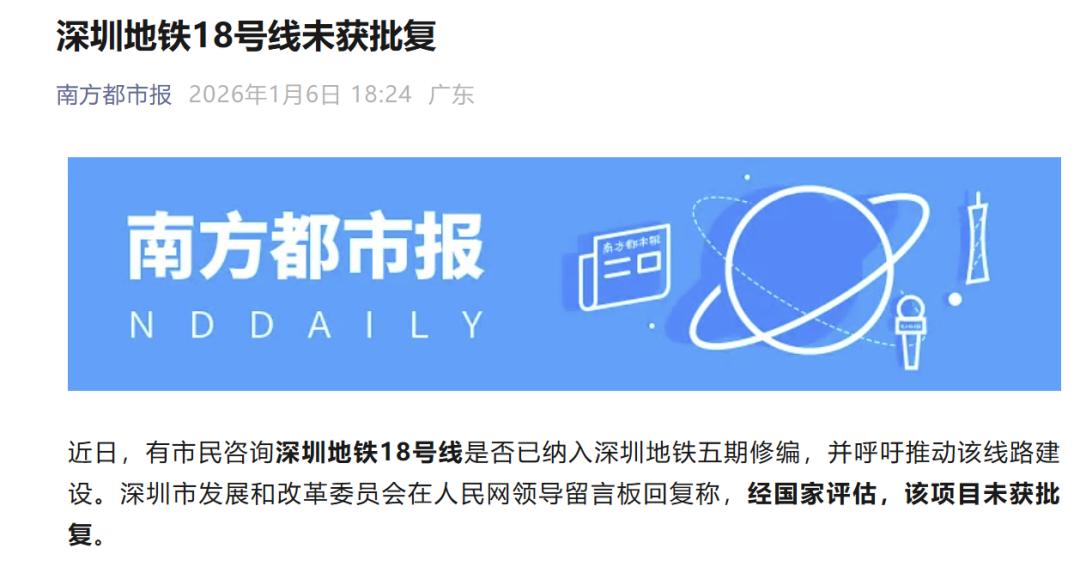
地铁审批收紧

Search documents
一线城市地铁申请被驳回,未建线路重新审!杭州地铁五期最新进度!
Sou Hu Cai Jing· 2026-01-28 07:44
Core Viewpoint - The approval process for subway projects in major cities in China, including Shenzhen and Hangzhou, is tightening, with several projects being rejected or paused due to new stringent criteria set by the government [1][4][12]. Group 1: Shenzhen Subway Developments - Shenzhen's subway line 18 has not been approved for inclusion in the fifth phase of planning, and the construction of the eastern extension of line 14 has been halted [1]. - Despite Shenzhen's high passenger intensity of 1.46 million trips per kilometer per day, the approval for new projects remains under scrutiny [7][8]. Group 2: National Trends in Subway Approvals - Nationwide, cities like Ningbo and Luoyang have faced similar rejections for new subway projects due to insufficient passenger flow and other financial criteria [3][4]. - The 2018 policy from the State Council set strict thresholds for subway project approvals, including a minimum public finance budget of 30 billion yuan, a GDP of 300 billion yuan, and a resident population of over 3 million [3]. Group 3: Hangzhou Subway Planning - Hangzhou has initiated research for its fifth phase of subway planning, which will adhere to the new quantitative and qualitative requirements set by the national government [10][11]. - The approval for Hangzhou's fifth phase will only proceed once the fourth phase projects have completed at least 70% of their total investment [10][11]. Group 4: Financial Viability of Subway Systems - A report indicated that out of 28 cities with operational subways, 26 are currently operating at a loss, highlighting the financial challenges faced by subway systems across the country [4].

深圳、佛山……多个城市面临地铁审批收紧
Sou Hu Cai Jing· 2026-01-21 06:58
Core Viewpoint - The recent tightening of subway approvals in Shenzhen and Foshan signals a broader trend across China, indicating a shift from "scale expansion" to "efficiency prioritization" in urban rail transit projects [1][8]. Group 1: Shenzhen and Foshan Developments - Shenzhen's subway line 18, a crucial 63-kilometer line connecting five districts, has not received approval from the National Development and Reform Commission (NDRC) [2][5]. - The construction of Shenzhen's 14th line extension to Huizhou has been paused due to Huizhou not meeting national requirements for urban rail transit [4]. - Foshan's subway lines 2 and 11, which were previously approved, now require re-evaluation under current policies, highlighting the retrospective nature of the approval process [5][8]. Group 2: National Trends in Subway Approvals - The tightening of subway approvals is not isolated to Shenzhen and Foshan but reflects a nationwide trend, with many cities facing challenges in their subway planning and construction [8][10]. - Ningbo, for instance, was informed that its fourth-phase subway planning could not proceed due to insufficient passenger flow, with current metrics showing a daily passenger intensity of 0.46 per kilometer, below the required threshold of 0.7 [8][10]. Group 3: Financial and Operational Challenges - Many cities are experiencing financial difficulties due to the high costs associated with subway construction and operation, with 26 out of 28 cities reporting losses in 2024 after accounting for government subsidies [11][13]. - The average construction cost for a subway line exceeds 600 million yuan per kilometer, and operational expenses often surpass ticket revenue, necessitating reliance on government funding [11][13]. Group 4: Policy Implications and Future Outlook - The approval process for new subway projects is becoming increasingly stringent, with new criteria focusing on fiscal capacity, population density, and actual passenger demand to prevent resource wastage and debt risks [19][18]. - The era of rapid subway expansion is coming to an end, with future approvals emphasizing the need for alignment between demand and efficiency rather than mere mileage [19][18].
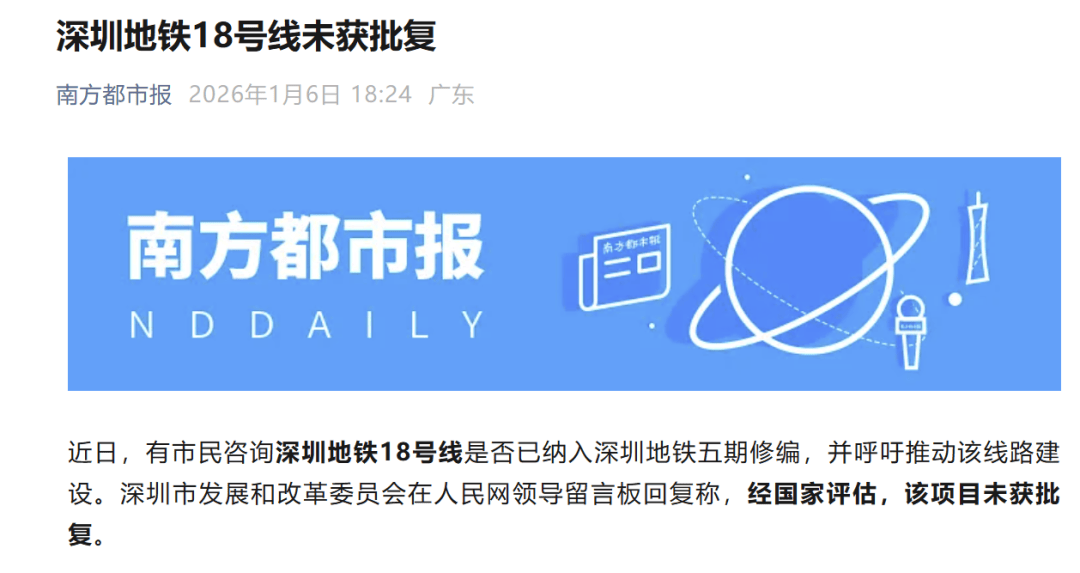
中国多个城市,地铁审批收紧了?
3 6 Ke· 2026-01-21 02:41
Group 1 - The recent official responses from Shenzhen and Foshan regarding subway approvals indicate a tightening of approval processes for new subway projects [1][2] - Shenzhen's subway line 18, a crucial 63-kilometer line connecting five districts, has not received approval despite its significance for urban development [2][5] - The construction of Shenzhen's 14th line extension to Huizhou has been paused due to Huizhou not meeting national requirements for urban rail transit [5] Group 2 - Foshan's subway lines 2 and 11, previously approved in 2021, now require re-evaluation under current policies, highlighting the retrospective nature of the approval process [5][7] - The tightening of subway approvals is not isolated to Shenzhen and Foshan but reflects a nationwide trend towards prioritizing efficiency over expansion in urban rail projects [7][9] - In 2025, cities like Ningbo and Luoyang faced similar issues, with Ningbo's fourth-phase planning being denied due to insufficient passenger flow, and Luoyang's second phase not meeting application criteria [7][9] Group 3 - The financial burden of subway construction and operation is significant, with 26 out of 28 cities reporting losses in 2024, indicating a reliance on government subsidies [9][13] - National data shows that only 18 out of 54 cities meet the minimum passenger flow requirement of 0.7 passengers per kilometer per day, leading to concerns about resource wastage [9][13] - The approval criteria for new subway projects have become stricter, requiring cities to meet thresholds for public finance, GDP, and population, alongside passenger flow metrics [13][14] Group 4 - The shift in subway project approvals signifies the end of the rapid expansion era, with future approvals focusing on matching demand and efficiency rather than mere construction [13][14] - Cities are encouraged to optimize existing subway operations and improve passenger flow rather than solely pursuing rankings based on subway mileage [14]