城区智驾

Search documents
东风全新奕派008伪装车现身,消息称会升级800V平台和城区智驾;特斯拉美国停止一次性购买FSD选项丨汽车交通日报
创业邦· 2026-02-15 10:57
Group 1 - Tesla will stop offering the one-time purchase option for Full Self-Driving (FSD) in the U.S. after February 14, transitioning to a subscription model priced at $99 per month or $999 per year, with the one-time purchase option of $8,000 being permanently canceled [2] - In Australia and New Zealand, Tesla will also cease the one-time purchase option for FSD starting March 31, 2026, while in China, the company still offers two types of driving assistance services that differ from the U.S. FSD policy, allowing one-time purchases for certain packages [2] - The automotive market in China is experiencing strong growth driven by national promotional policies, with a notable increase in manufacturer sales in January, despite a decrease in retail sales due to reduced policy support compared to previous years [2] Group 2 - The new Dongfeng Yipai 008 test vehicle has been spotted, featuring a collaboration between Dongfeng and Huawei, and is expected to upgrade to an 800V platform and urban intelligent driving capabilities [2]



长假八天,智驾进入“大乱斗”
3 6 Ke· 2025-10-16 01:01
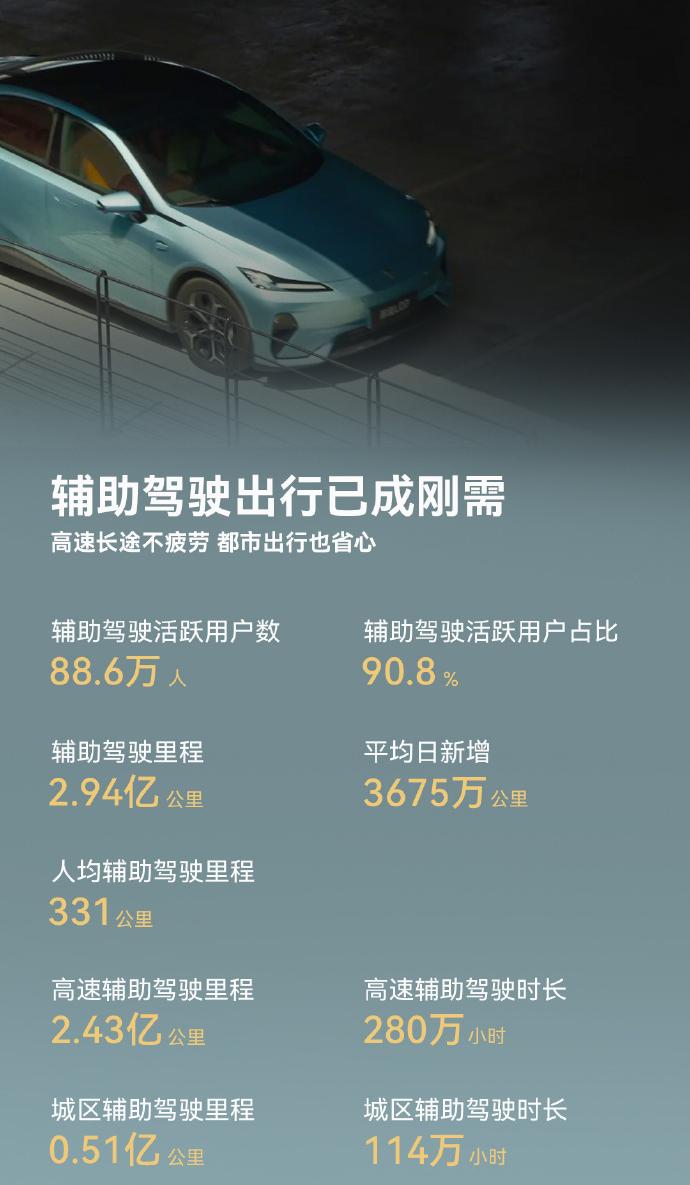
Core Insights - The recent National Day holiday saw a significant increase in traffic, with an average of 12.5 million new energy vehicles on the road daily, marking a 30% increase year-on-year and a 70% increase compared to regular days [2] - Unlike previous years where companies showcased their intelligent driving (智驾) capabilities during the holiday, this year saw a notable silence from major brands, with only Huawei and Xiaomi releasing relevant reports [3][4] - Major personnel changes occurred in the intelligent driving teams of companies like Xiaopeng and NIO, indicating a shift in strategy from the "Intelligent Driving Year" to a "Universal Intelligent Driving Year" [4][5] Industry Trends - The transition from "Intelligent Driving Year" to "Universal Intelligent Driving Year" suggests a focus on technological advancements rather than mere market penetration [5] - Data from Huawei indicates that during the recent holiday, their intelligent driving models achieved a total driving distance of 294 million kilometers, with 90.8% of users actively utilizing the assisted driving feature [6][8] - The challenge for new energy vehicle companies lies in achieving reliable L3 and L4 level intelligent driving in urban environments, as opposed to highways where conditions are more favorable [8][10] Technological Developments - The limitations of traditional end-to-end models have prompted a demand for innovative approaches in intelligent driving technology [10][11] - Three evolutionary strategies have emerged among leading brands: the "Improvement School" represented by Momenta, focusing on enhancing learning processes; the "Practical School" represented by Li Auto and Xiaopeng, emphasizing optimization of driving details; and the "World Model" (WA) approach, which simulates a virtual world for learning [11][13][17] - The WA model, which aims to provide a deeper understanding of driving logic, is seen as a more advanced but costly alternative to the VLA model, which is already integrated into products like Li Auto's i8 and Xiaopeng's G7 Ultra [21][17] Competitive Landscape - The intelligent driving sector is entering a more competitive phase, likened to a knockout tournament where brands must demonstrate their technological capabilities and ecosystem collaboration [22][24] - Smaller companies face significant challenges due to high costs and the need for integrated capabilities, with many struggling to keep up with the leading players [24][26] - The long-term outlook suggests that while VLA and WA represent different approaches, both are essential for the future of intelligent driving, with companies like Xiaopeng betting on both strategies to attract users and investors [26]