端到端模式

Search documents
对话AAC × Dispelix | 以量产能力为导向,端到端模式揭开波导产业下半场
Xin Lang Cai Jing· 2026-02-03 12:53
Core Insights - AAC's acquisition of Finnish waveguide manufacturer Dispelix marks a significant event in the AR industry, indicating accelerated development and a new phase for the waveguide sector [1][22] - The partnership aims to create a comprehensive end-to-end solution in waveguide technology, combining AAC's manufacturing capabilities with Dispelix's design expertise [12][33] Group 1: Company Overview - AAC is a major player in the smart device perception and interaction technology sector, with strong capabilities in "sound, light, electricity, and touch" [3][24] - Dispelix, founded in 2015, is a pioneer in the diffraction waveguide field, known for its single-chip full-color waveguide design and large-scale manufacturing processes [3][24] Group 2: Product Innovations - At SPIE 2026, AAC showcased a 50° silicon carbide waveguide module with 1500 nits brightness and a weight of just over 3g, highlighting advancements in waveguide materials [4][25] - The silicon carbide waveguide offers advantages such as higher refractive index, better rainbow pattern control, and reduced weight compared to glass-based waveguides [6][27] Group 3: Market Trends - The AR industry is on the brink of explosive growth, with IDC predicting a compound annual growth rate of over 55% for global AR terminal markets from 2026 to 2030 [10][31] - Current market challenges are shifting from technical limitations to the need for scalable production and reliable manufacturing processes [10][31] Group 4: Strategic Direction - The end-to-end model adopted by AAC and Dispelix aims to enhance efficiency and meet future large-scale delivery demands, moving away from the previous fabless model that struggled with production integration [12][33] - AAC has achieved stable monthly deliveries of K-level single-chip full-color waveguides with an 80% production yield, significantly outperforming industry standards [36][38] Group 5: Long-term Vision - The collaboration between AAC and Dispelix is built on years of partnership and shared technical expertise, positioning them to rapidly bring new designs and products to market with lower R&D costs and higher yield rates [38][39] - Both companies emphasize their commitment to advancing the AR industry and contributing to the development of innovative optical technologies [41]



市值缩水640亿港元,“水果第一股”年底退市
Jing Ji Guan Cha Wang· 2025-12-26 01:45
Core Viewpoint - Hong Jiu Fruit (06689.HK), known as the "first stock of fruit," is facing delisting due to failure to disclose financial reports on time, resulting in a market value loss of HKD 64 billion [1][3]. Company Overview - Hong Jiu Fruit was founded in 2002 by Deng Hong Jiu, who started selling fruit in Chongqing and later expanded the business significantly [1][2]. - The company went public on the Hong Kong Stock Exchange in 2022, achieving sales revenue of over RMB 15 billion, a 46.7% year-on-year increase, and was recognized as the largest fruit distributor in China [2]. Financial Issues - The company was suspended from trading on March 20, 2024, due to the inability to disclose its 2023 financial report, with KPMG questioning the legitimacy of significant prepayments to new suppliers [3][4]. - As of the last trading day, the stock price had dropped over 95% from its IPO price, leading to a market capitalization of HKD 28 billion, down from a peak of HKD 670 billion [4]. Legal and Operational Challenges - The company is under investigation for economic crimes, including loan fraud and issuing false VAT invoices, with several executives facing criminal charges [3][5]. - Despite attempts to restructure and seek strategic investors, internal governance issues and financial irregularities have hindered recovery efforts [5]. Industry Context - The fruit distribution market is undergoing significant changes, with a shift towards high-cost efficiency products, impacting companies like Hong Jiu Fruit that relied on a high-cost supply chain model [5]. - Competitors like Baiguoyuan are adapting by closing inefficient stores and focusing on high-margin products, indicating a broader industry transformation [5].
对话小马智行彭军:Robotaxi九年,曾经想过失败
汽车商业评论· 2025-11-11 23:08
Core Viewpoint - The article discusses the advancements and challenges in the autonomous driving industry, particularly focusing on the company Xiaoma Zhixing and its CEO Peng Jun's insights on the future of Robotaxi and the competitive landscape in China [4][6][7]. Group 1: Company Overview - Xiaoma Zhixing is preparing for its secondary listing on the Hong Kong Stock Exchange, following its initial public offering on NASDAQ in November 2024, with a focus on the Chinese market [6][7]. - The company has established a Robotaxi fleet of over 720 vehicles and is positioned to capitalize on the expected boom in autonomous driving technology by 2025 [6][7]. - CEO Peng Jun emphasizes the importance of Asian investors' understanding and recognition for the company's long-term development [10]. Group 2: Industry Insights - The year 2025 is anticipated to be a pivotal year for the commercialization of Robotaxi, driven by supportive policies and market conditions in China [6][7]. - The competitive landscape includes companies like Waymo and Tesla, with Xiaoma Zhixing claiming a significant cost advantage over its competitors [36]. - The article highlights the distinction between Level 2 (L2) and Level 4 (L4) autonomous driving, with Xiaoma Zhixing focusing on L4 capabilities, which require different optimization goals compared to L2 systems [11][12]. Group 3: Technology and Development - Peng Jun argues that the complexity of autonomous driving technology is high, and the path to achieving L4 capabilities is not straightforward [7][11]. - The company prioritizes safety and redundancy in its systems, which differs from L2 systems that rely on human drivers for safety [12][25]. - The article discusses the misconception that more data equates to better intelligence in autonomous systems, emphasizing the importance of quality over quantity in data collection [19][20]. Group 4: Future Outlook - The company aims to scale its fleet to approximately 50,000 vehicles, with a focus on establishing a robust operational framework [36][39]. - The potential for collaboration with traditional car manufacturers is acknowledged, but the complexity of the autonomous driving market may limit the number of successful competitors [42]. - The article concludes with a vision of a future where Robotaxi services could significantly reduce the need for private car ownership, reflecting changing consumer preferences [43][46].

长假八天,智驾进入“大乱斗”
3 6 Ke· 2025-10-16 01:01
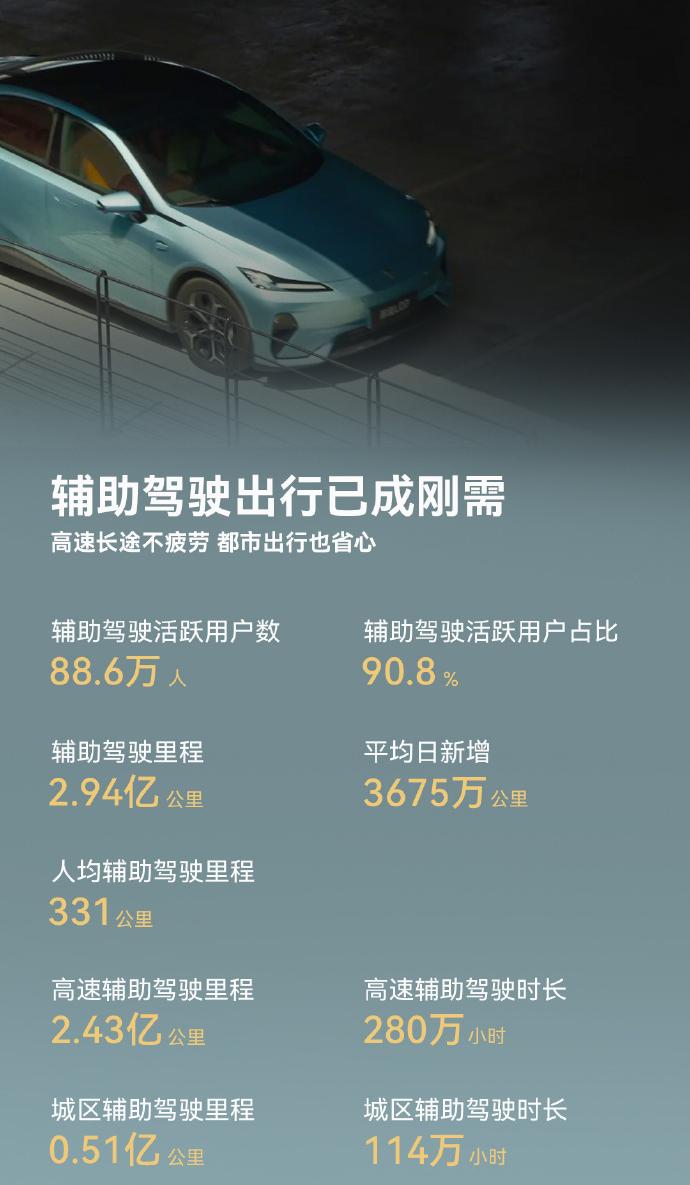
Core Insights - The recent National Day holiday saw a significant increase in traffic, with an average of 12.5 million new energy vehicles on the road daily, marking a 30% increase year-on-year and a 70% increase compared to regular days [2] - Unlike previous years where companies showcased their intelligent driving (智驾) capabilities during the holiday, this year saw a notable silence from major brands, with only Huawei and Xiaomi releasing relevant reports [3][4] - Major personnel changes occurred in the intelligent driving teams of companies like Xiaopeng and NIO, indicating a shift in strategy from the "Intelligent Driving Year" to a "Universal Intelligent Driving Year" [4][5] Industry Trends - The transition from "Intelligent Driving Year" to "Universal Intelligent Driving Year" suggests a focus on technological advancements rather than mere market penetration [5] - Data from Huawei indicates that during the recent holiday, their intelligent driving models achieved a total driving distance of 294 million kilometers, with 90.8% of users actively utilizing the assisted driving feature [6][8] - The challenge for new energy vehicle companies lies in achieving reliable L3 and L4 level intelligent driving in urban environments, as opposed to highways where conditions are more favorable [8][10] Technological Developments - The limitations of traditional end-to-end models have prompted a demand for innovative approaches in intelligent driving technology [10][11] - Three evolutionary strategies have emerged among leading brands: the "Improvement School" represented by Momenta, focusing on enhancing learning processes; the "Practical School" represented by Li Auto and Xiaopeng, emphasizing optimization of driving details; and the "World Model" (WA) approach, which simulates a virtual world for learning [11][13][17] - The WA model, which aims to provide a deeper understanding of driving logic, is seen as a more advanced but costly alternative to the VLA model, which is already integrated into products like Li Auto's i8 and Xiaopeng's G7 Ultra [21][17] Competitive Landscape - The intelligent driving sector is entering a more competitive phase, likened to a knockout tournament where brands must demonstrate their technological capabilities and ecosystem collaboration [22][24] - Smaller companies face significant challenges due to high costs and the need for integrated capabilities, with many struggling to keep up with the leading players [24][26] - The long-term outlook suggests that while VLA and WA represent different approaches, both are essential for the future of intelligent driving, with companies like Xiaopeng betting on both strategies to attract users and investors [26]