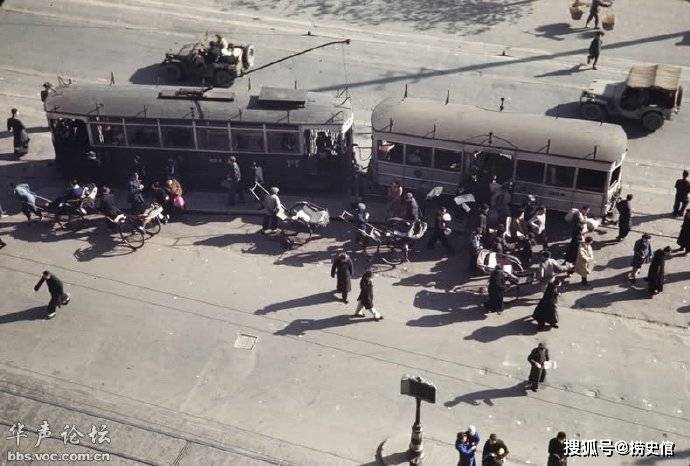
城市繁荣

Search documents
看了这组老照片你会知道,三十年代是老上海最繁华时期,敢与纽约和伦敦类比
Sou Hu Cai Jing· 2025-12-06 23:53
Economic and Industrial Development - In 1933, Shanghai's industrial output reached 730 million silver dollars, accounting for 66% of the total output of the 12 major industrial cities in China, significantly surpassing cities like Tianjin [1] - Shanghai was the largest gold trading center in Asia, with an active securities market ranked third internationally, following London and New York [1] Commercial Prosperity - Commercial streets like Nanjing Road were filled with shops, showcasing international brand advertisements, reflecting a growing consumer awareness [1] - The Bund and Nanjing Road were illuminated with neon lights at night, with nightclubs becoming popular gathering places for the elite [1] Architectural and Infrastructure Advancements - Shanghai saw the construction of many modern buildings, such as the International Hotel, completed in 1934, which remained the tallest building in Shanghai for 48 years [1] - The Bund's international architectural ensemble became a symbol of modern Shanghai [1] Population Growth - By 1931, Shanghai's population reached 3.11 million, ranking first in China and fifth globally; by the eve of the war in 1937, the population exceeded 3.75 million, driven by the influx of rural migrants attracted by modern industry and commerce [1] - The net population growth was approximately 120,000 to 130,000 people annually, indicating the city's strong appeal [1] Cultural Intersection - Shanghai served as a hub for the convergence of Eastern and Western civilizations, with the presence of foreign concessions introducing Western urban forms while retaining local cultural elements [2] - The city's vibrant life included traditional activities like temple fairs and modern entertainment venues, showcasing a rich cultural tapestry [2] International Recognition - Shanghai's prosperity was often compared to that of New York or London, with foreign visitors and literature referring to it as "Asia's first metropolis" [2] - The Japanese referred to Shanghai as "Magic City," emphasizing its modern characteristics [2] Social Disparities - Despite the overall prosperity in the 1930s, significant social inequalities existed, with stark contrasts between the lives of the impoverished laborers and the affluent upper class [2] - This disparity highlighted the social contradictions inherent in the urbanization process during that period [2]