基金业绩比较基准调整

Search documents
“盲盒”基金异象频出 业绩比较基准正待精准校表
Zheng Quan Shi Bao· 2025-12-14 18:29
Core Viewpoint - The recent surge in consumer-themed funds amidst a tech stock rally has raised questions about the underlying assets held by these funds, leading to a significant deviation from their performance benchmarks [1][2]. Group 1: Fund Performance and Style Drift - Some funds have shown performance that diverges significantly from their benchmarks, with consumer funds rising alongside tech stocks, creating confusion among investors about their actual holdings [1]. - A specific consumer fund, Guorong Rongxin Consumer Select A, experienced a 10% increase on December 8, despite the consumer sector declining, highlighting the unusual performance patterns [2]. - The fund's holdings shifted dramatically from consumer stocks like Wuliangye and Midea Group to tech stocks such as CATL and GoerTek within a single quarter, indicating a potential style drift [3]. Group 2: Regulatory Response - In response to the ongoing style drift, regulatory bodies have introduced measures to enforce stricter adherence to performance benchmarks, including the establishment of benchmark libraries and performance assessment guidelines [1][6]. - The China Securities Regulatory Commission (CSRC) has proposed new guidelines that link fund manager compensation to performance relative to benchmarks, aiming to enhance accountability [6]. - Fund companies are now required to submit plans for revising their performance benchmarks to align with actual investment strategies, reflecting a shift towards more accurate performance measurement [7]. Group 3: Industry Trends - The trend of style drift is not isolated, with multiple public funds exhibiting similar behavior, such as the Jin Xin Intelligent China 2025 Mixed Fund, which has heavily invested in financial stocks despite its stated focus on intelligent enterprises [4][5]. - Some funds have begun to correct their investment strategies, moving back towards their original themes, as seen with the "Health Life" fund, which has shifted from heavy investments in metals and military stocks to healthcare and consumer stocks [5]. - The industry is witnessing a push towards the normalization of performance benchmarks, with expectations that a significant number of equity public funds will need to adjust their benchmarks by mid-2026 [6].
基金业绩和薪酬挂钩新举措:若低于业绩比较基准10个百分点,基金经理要降薪
Mei Ri Jing Ji Xin Wen· 2025-05-07 15:20
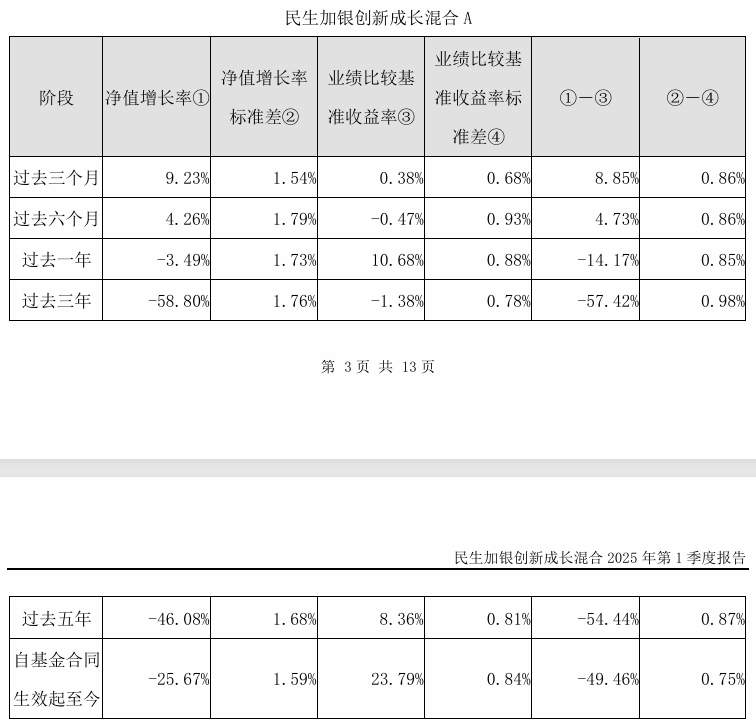
Core Viewpoint - The China Securities Regulatory Commission (CSRC) has issued an action plan to promote the high-quality development of public funds, proposing 25 measures, including significant salary reductions for fund managers whose products underperform their benchmarks by more than 10 percentage points over three years [1][3]. Group 1: Fund Performance and Manager Accountability - A notable number of funds have underperformed their benchmarks over the past three to five years, with some lagging by over 50 percentage points [1][3]. - For instance, the Minsheng Jianyin Innovation Growth Mixed Fund has a three-year net value growth rate of -58.8%, compared to its benchmark's -1.38%, indicating a performance gap exceeding 50 percentage points [3]. - Similarly, the Dongwu Double Triangle Fund has a five-year net value growth rate of -52.09%, while its benchmark grew by 0.76%, also reflecting a significant underperformance [4]. Group 2: Consequences for Fund Managers - Fund managers of products that fail to meet performance standards may face salary adjustments, reassignments, or even termination [2][5]. - Funds that have been underperforming for three years may also face liquidation, especially if the current fund manager has not been in charge for the full three years [5][7]. - The Changsheng Advanced Manufacturing Fund, for example, has a three-year net value growth rate of -51.71%, with its benchmark yielding 6.03%, putting it at risk of being liquidated due to low asset value [5][6]. Group 3: Adjustments in Performance Benchmarks - The new measures may lead to fund managers being more cautious in setting performance benchmarks, as many funds have already begun to adjust their benchmarks [8][9]. - For example, the CITIC Prudential New Sharp Mixed Fund changed its benchmark from a fixed deposit rate to a combination of equity and bond indices, indicating a shift in strategy [9]. - Other funds, such as the Fuyong Value Selection Mixed Fund, have also altered their benchmarks to reflect a more conservative investment approach [9].