
夏粮丰收

Search documents
保农资 忙春管:春耕备耕扎实有序推进 夯实夏粮丰收基础
Yang Shi Wang· 2026-02-27 09:38
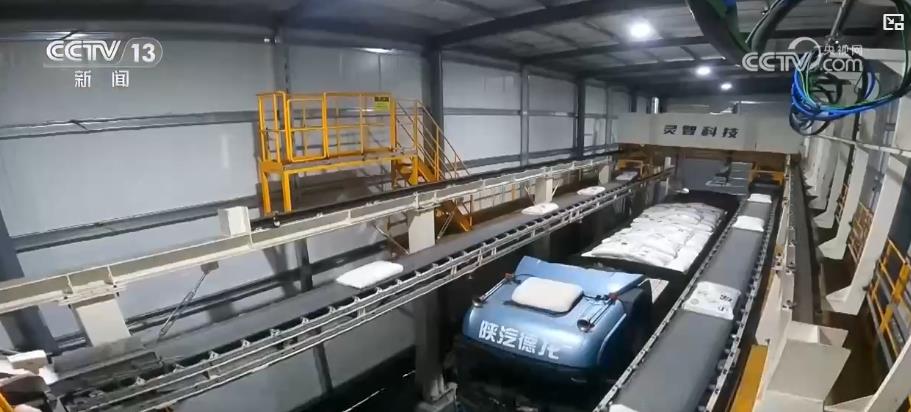
Group 1 - The agricultural production enterprises in Manas County, Xinjiang, are operating at full capacity to ensure the production of agricultural materials for the spring farming season [1] - The local railway department has established a "green channel" for the transportation of agricultural materials, prioritizing loading and transportation to ensure smooth logistics [3] - In Anhui Province, over 43.5 million mu of wheat has entered the greening period, prompting local authorities to enhance field management to promote seedling growth for a successful summer harvest [3] Group 2 - In Suzhou City, Anhui Province, agricultural machinery is actively engaged in spring management operations, including the application of pesticides on weaker seedling areas [4] - Professional aerial spraying teams are taking advantage of favorable weather to conduct precise management of second and third-class seedlings in villages [4] - In Xiaoxian, Anhui Province, 1.3 million mu of wheat is also entering a critical management period, with the use of drones and large agricultural machinery for fertilization and pest control [4]

奋战140天 保夏粮丰收
Zheng Zhou Ri Bao· 2026-02-27 00:57
Core Viewpoint - The Henan Provincial Department of Agriculture and Rural Affairs has launched a 140-day action plan to enhance spring management for wheat and rapeseed, aiming to ensure a bountiful summer grain and oil harvest, which is crucial for national food security [1]. Group 1: Current Agricultural Challenges - The action plan addresses three main challenges: the need to strengthen weak seedlings, the high risk of disasters, and the significance of achieving a good harvest in the context of the 14th Five-Year Plan [1]. - As of the end of January, only 59.3% of wheat seedlings were classified as strong, which is below the normal and previous year's levels, indicating a complex situation for spring transformation [1]. - Meteorological forecasts predict potential adverse weather conditions, including strong cold spells and droughts, which could impact crop health and yield [1]. Group 2: Core Tasks of the Action Plan - The action plan outlines five core tasks: promoting seedling growth, pest and disease control, disaster risk reduction, increasing yield per unit area, and regulating agricultural inputs [2]. - Specific measures include targeted fertilizer and water management, monitoring and controlling diseases like wheat rust, and enhancing irrigation infrastructure [2]. - The plan emphasizes the importance of high-yield demonstration areas for wheat, aiming to improve overall productivity through advanced irrigation techniques [2]. Group 3: Implementation Requirements - To ensure effective execution, the action plan specifies four implementation requirements: increasing agricultural situation assessments, providing technical guidance, enhancing training and publicity, and ensuring timely financial support [3]. - Local agricultural systems are urged to recognize the urgency of the farming season and to implement key technical measures to support seedling growth [3]. - The plan stresses continuous support until the summer harvest is completed, highlighting the commitment to contribute to national food security [3].
总产量352.4亿斤 安徽夏粮再获丰收
Xin Hua Wang· 2025-08-12 06:30
Core Viewpoint - Anhui Province has achieved a summer grain production of 35.24 billion jin, an increase of 0.5 billion jin year-on-year, attributed to increased planting area and stable yield [1] Group 1: Production and Yield - The total summer grain planting area in Anhui Province for 2025 is projected to be 43.326 million mu, an increase of 175,000 mu compared to the previous year, marking five consecutive years of growth in planting area [1] - The summer grain yield per mu in 2025 is expected to be 406.7 kg, a decrease of 1.03 kg from the previous year, indicating relative stability in yield [1] Group 2: Agricultural Practices and Policies - Anhui Province has implemented strict farmland protection and usage control, promoting high-standard farmland construction and exploring the potential for winter idle land cultivation in hilly areas [1] - Measures such as stabilizing grain subsidies and improving agricultural insurance policies have effectively encouraged farmers to engage in grain production [1] Group 3: Weather and Environmental Factors - During the summer grain production period, apart from drought conditions, pest and disease issues were significantly lighter, contributing to overall production stability [1] - Active water management and artificial rainfall efforts were undertaken in drought-affected areas, ensuring effective irrigation and mitigating drought impacts [1] - The weather during the harvest period was predominantly clear, with no occurrences of adverse weather events that could negatively affect wheat yields [1]