防灾减灾

Search documents
中国气象数据服务惠及全球153个国家和地区
Zhong Guo Xin Wen Wang· 2026-02-28 03:14
Core Viewpoint - China's meteorological data services have reached 153 countries and regions, significantly contributing to climate change research, agricultural adaptation, disaster warning systems, AI meteorological model training, and energy forecasting since the release of the "International Sharing Directory of China's Climate Data Products" in September last year [1]. Group 1: Data Sharing and Usage - Since the release of the climate data products directory, there have been nearly 4.16 million visits from foreign users, indicating a strong international interest in China's meteorological data [1]. - By 2025, China is expected to share approximately 23.5TB of data annually through GTS/WIS, and around 320TB through WIS2.0, enhancing global data accessibility [2]. - The CMACast system will provide 136.6TB of data annually to users in 17 countries, including Mongolia and the Maldives, showcasing China's commitment to international data sharing [2]. Group 2: Infrastructure and Support - China has established a robust infrastructure for data sharing, including GTS, WIS2.0, CMACast, and overseas cloud nodes, facilitating efficient cross-border transmission of meteorological data [2]. - The overseas cloud nodes in Singapore and Cairo are part of a warning network covering climate-vulnerable areas along the Belt and Road Initiative, enhancing regional disaster preparedness [2]. Group 3: International Collaboration - The Chinese Meteorological Administration (CMA) has been actively involved in international meteorological governance and cooperation, fostering partnerships with major global meteorological organizations [3]. - The collaboration with the European Organisation for the Exploitation of Meteorological Satellites (EUMETSAT) has been ongoing for over 20 years, exemplifying mutual benefits in satellite observation, data exchange, and service applications [3]. - The European Centre for Medium-Range Weather Forecasts (ECMWF) has recognized the partnership with CMA as beneficial for improving best practices and enhancing professional capabilities [3]. Group 4: Future Directions - The CMA plans to continue systematic and large-scale data sharing, transforming China's observational and forecasting data into reliable international public goods to support global climate change responses and sustainable development [4].
中国气象数据服务惠及全球153个国家和地区 应用于气候变化研究、农业、灾害防御等多领域
Xin Lang Cai Jing· 2026-02-27 14:18
Core Insights - Since the release of the "International Sharing Directory of China's Climate Data Products" in September last year, the dataset has attracted nearly 4.16 million visits from foreign users, being widely applied in climate change research, agricultural climate adaptation, disaster warning system development, AI meteorological model training, and energy forecasting [1] Group 1: Data Sharing and Global Impact - The China Meteorological Administration (CMA) has strengthened data sharing, providing high-quality meteorological data services to 153 countries and regions, supporting international research and disaster prevention practices [1][2] - By 2025, China is expected to share approximately 23.5TB of data annually through GTS/WIS, 320TB through WIS2.0, and 136.6TB per user to 17 countries via CMACast, significantly enhancing global data service access [2] - The global data service is projected to reach 5.17 million visits and 38.9TB of data downloads in 2025, expanding coverage to South Asia, Southeast Asia, the South Pacific, and Africa, supporting meteorological operations in over ten countries [2] Group 2: International Collaboration and Technological Development - The English version of the China Meteorological Data Network and the Fengyun Satellite Remote Sensing Data Service Network have been providing convenient data sharing services, receiving widespread acclaim from international users for their stability and user-friendliness [3] - The CMA has actively participated in international meteorological governance and cooperation, deepening partnerships with major global meteorological organizations, exemplified by over 20 years of collaboration with EUMETSAT [3] - The collaboration with ECMWF has been recognized as mutually beneficial, enhancing data sharing and improving best practices and professional capabilities [3] Group 3: Future Directions - The CMA plans to continue systematic and large-scale data openness and sharing, transforming China's observational, forecasting, and Fengyun satellite data into reliable international public goods to contribute to global climate change response, disaster reduction capabilities, and sustainable development [4]
奋战140天 保夏粮丰收
Zheng Zhou Ri Bao· 2026-02-27 00:57
Core Viewpoint - The Henan Provincial Department of Agriculture and Rural Affairs has launched a 140-day action plan to enhance spring management for wheat and rapeseed, aiming to ensure a bountiful summer grain and oil harvest, which is crucial for national food security [1]. Group 1: Current Agricultural Challenges - The action plan addresses three main challenges: the need to strengthen weak seedlings, the high risk of disasters, and the significance of achieving a good harvest in the context of the 14th Five-Year Plan [1]. - As of the end of January, only 59.3% of wheat seedlings were classified as strong, which is below the normal and previous year's levels, indicating a complex situation for spring transformation [1]. - Meteorological forecasts predict potential adverse weather conditions, including strong cold spells and droughts, which could impact crop health and yield [1]. Group 2: Core Tasks of the Action Plan - The action plan outlines five core tasks: promoting seedling growth, pest and disease control, disaster risk reduction, increasing yield per unit area, and regulating agricultural inputs [2]. - Specific measures include targeted fertilizer and water management, monitoring and controlling diseases like wheat rust, and enhancing irrigation infrastructure [2]. - The plan emphasizes the importance of high-yield demonstration areas for wheat, aiming to improve overall productivity through advanced irrigation techniques [2]. Group 3: Implementation Requirements - To ensure effective execution, the action plan specifies four implementation requirements: increasing agricultural situation assessments, providing technical guidance, enhancing training and publicity, and ensuring timely financial support [3]. - Local agricultural systems are urged to recognize the urgency of the farming season and to implement key technical measures to support seedling growth [3]. - The plan stresses continuous support until the summer harvest is completed, highlighting the commitment to contribute to national food security [3].
以专业匠心守护城市未来
Xin Lang Cai Jing· 2026-02-09 22:25
Group 1 - The core idea of the article revolves around the proposals made by Fu Zhibin, a member of the Beijing Municipal Political Consultative Conference, focusing on urban safety and sustainable development [2][3] - Fu Zhibin's proposal for a digital "one map" of Beijing's underground pipeline network aims to enhance the comprehensive management capabilities of urban infrastructure, addressing safety concerns due to scattered data [3][4] - The Beijing government has recognized the importance of urban infrastructure by committing to update and renovate 1,000 kilometers of old pipelines by 2026, reflecting the implementation of Fu's professional suggestions [3] Group 2 - Fu Zhibin emphasizes the need for a systematic approach to urban geological safety and disaster prevention, advocating for the use of existing geological survey data to improve urban resilience [4] - His proposals also highlight the necessity of comprehensive urban inspections during city renewal projects to ensure that improvements are effective and beneficial [4] - Fu Zhibin's focus on the impact of rising groundwater levels on urban safety has become a significant topic for the Beijing Municipal Political Consultative Conference, indicating a growing awareness of this issue [5]
守牢国家粮食安全底线 强调“三个一起抓”
Yang Shi Xin Wen Ke Hu Duan· 2026-02-04 04:34
Group 1 - The central government's focus this year is on ensuring national food security, emphasizing the need to simultaneously enhance production capacity, ecological production, and increase both yield and income [1] - The target for grain production is to maintain stability at around 1.4 trillion jin, with efforts to improve both the quantity and quality of agricultural products [2] - There is a push for agricultural capacity enhancement through the implementation of a new round of actions aimed at solidifying the foundation of food production, leveraging both arable land and technological advancements [2] Group 2 - The strategy includes optimizing planting structures and regional layouts to improve the quality of grain varieties and ensure they meet market demands [2] - Strengthening disaster prevention and mitigation measures is crucial, with a focus on enhancing monitoring, irrigation infrastructure, and emergency response systems to better cope with extreme weather [2]
四川交出亮眼“平安答卷”
Xin Lang Cai Jing· 2026-01-20 19:54
Core Insights - The article highlights the significant improvements in disaster management and safety measures in Sichuan Province, aiming for a reduction in production safety accidents and disaster-related fatalities by 2025 [4][5]. Group 1: Safety Management Improvements - By 2025, Sichuan aims to reduce production safety accidents and fatalities by 15.0% and 14.5% respectively, surpassing the national average [4]. - The province has identified 25,318 issues and 5,350 major hazards through expert inspections in key industries, laying a solid foundation for safety [5]. Group 2: Community Involvement and Reporting - Sichuan is extending safety hazard reporting rewards to internal company structures, with 300,700 enterprises establishing internal reporting systems, leading to over 487,000 reported hazards and rewards totaling 27.176 million yuan [5]. Group 3: Technological Integration in Disaster Management - The province has implemented nine demonstration projects focusing on key areas like mountain floods and forest fires, utilizing advanced technologies such as satellite remote sensing and drones for disaster monitoring and response [6][7]. - Real-time data capabilities have been established, allowing for rapid assessment and response to disasters within 30 minutes of reporting [6]. Group 4: Strengthening Grassroots Emergency Response - Sichuan has formed over 34,000 emergency response teams, ensuring a quick response time of within one hour at the county level and half an hour at the town level during disasters [7]. - The integration of "smart emergency" technologies has improved efficiency in disaster management, with specialized drones enhancing monitoring capabilities [7][8]. Group 5: Communication Infrastructure for Emergency Response - The establishment of 219 emergency communication teams has ensured coverage across 183 counties, with satellite communication capabilities enhancing grassroots emergency response [8].


四川多措并举防范化解安全风险 2025年生产安全事故数同比下降15%
Si Chuan Ri Bao· 2026-01-20 00:13
Core Insights - Sichuan province has achieved a significant reduction in production safety accidents and fatalities, with a year-on-year decrease of 15% in accident numbers and 14.5% in deaths by 2025, alongside 105 successful disaster avoidance cases recognized by national authorities [2] Group 1: Professional Governance - Sichuan has implemented a three-year action plan focused on safety production, targeting key sectors such as hazardous chemicals and mining, resulting in the establishment of 22 provincial professional committees and expert teams [2] - The initiative has identified 25,000 issues and 5,350 major hazards through direct engagement with enterprises, providing clear guidelines for local enforcement and self-inspection [2] - A whistleblower system has been adopted, with 300,700 enterprises establishing internal reporting mechanisms, leading to over 487,000 reported hazards and rewards totaling 27.176 million yuan [2] Group 2: Technological Empowerment - Sichuan has collaborated with research institutions to tackle disasters like mountain floods and forest fires, launching nine technical demonstration projects that have been effectively applied in real situations [3] - In the response to the "8·10" mudslide in Shimen, professionals were able to collect environmental data within 30 minutes, assess the situation in two hours, and produce a risk evaluation report in five hours, significantly enhancing response efficiency [3] - During a landslide in Xuyong County, the use of slope radar and 3D visualization systems allowed for precise identification of hazards, facilitating the safe evacuation of 117 residents without casualties [3] Group 3: Grassroots Emergency Management - In July 2025, Sichuan issued guidelines to enhance grassroots emergency management capabilities, establishing a "six guarantees" goal for town-level emergency management and promoting standardized construction [3] - The province has built a comprehensive emergency rescue team system, with over 34,000 teams formed, ensuring a one-hour emergency response in counties and a half-hour response in towns [3] - Communication support teams have been established, with 219 teams and satellite communication stations set up in 57 key towns, ensuring full satellite phone coverage in villages to maintain communication under extreme conditions [3] Group 4: Public Awareness and Education - Sichuan has moved away from traditional safety promotion methods, creating immersive experiences during national safety events to engage the public [4] - Initiatives include the "Safety Train" on Chengdu Metro Line 7, which serves as a mobile safety education platform, and safety culture competitions among 47 benchmark enterprises [4] - The province has also developed original IP content like the 3D animation "Shu Xiao An" and various online materials to promote safety awareness, fostering a culture where everyone is involved in safety and emergency preparedness [4]

我国中东部地区遭遇今年以来最大范围雨雪天气 各地各部门全力保障生产生活秩序
Yang Guang Wang· 2026-01-18 00:16
Group 1 - The central eastern region of China is experiencing the largest rain and snow weather event of the year, leading to significant temperature drops and complex precipitation types, prompting various departments to take measures to ensure production and daily life order [1] - In Urumqi, snow removal operations were initiated with 351 snow-clearing vehicles and over 2,300 personnel deployed, successfully transporting over 500 tons of accumulated snow [1] - In Wusu City, livestock farmers reinforced their facilities and prepared sufficient feed to safeguard livestock production, while the local agricultural bureau increased the frequency of veterinary services and provided 24-hour consultation to minimize the impact of the cold wave [1] Group 2 - Starting from January 18, Henan Province is set to face widespread low-temperature rain, snow, and freezing weather, prompting agricultural experts to guide farmers in preparing their crops, particularly in greenhouses [2] - In Jinan, the city management department has preemptively organized personnel, vehicles, and materials for snow removal across 136 main roads and high-traffic areas, ensuring tailored snow removal plans are in place [2] - The National Disaster Reduction and Relief Committee and the Ministry of Emergency Management held a joint meeting to assess the development of low-temperature rain and snow, deploying work teams to assist in Henan [3]
迭代破局!“新技术+AI内核” 硬核科技筑牢防灾减灾防线
Yang Shi Wang· 2026-01-11 03:38
Core Viewpoint - Extreme weather events have become a significant risk affecting people's production and daily life, with challenges in precise forecasting due to their sudden and destructive nature [1] Group 1: Technological Advancements - The National Satellite Meteorological Center, in collaboration with multiple organizations, has developed a deep diffusion model for Fengyun meteorological satellite data, extending the effective forecasting duration for severe convective weather to 4 hours [3][10] - This breakthrough technology is entirely domestically developed, overcoming challenges in predicting severe convective weather [3][8] - The core algorithm of this technology has undergone three generations of updates, significantly improving forecasting accuracy and effective warning time [8][10] Group 2: Forecasting Capabilities - The deep diffusion model can cover an area of 20 million square kilometers, generating high-resolution convective forecasts every 15 minutes for the next 4 hours [10] - The model demonstrates stable forecasting capabilities across different spatial scales and seasons, providing crucial technical support for precise early warning of severe convective weather [10][20] Group 3: Applications and Impact - The advancement in forecasting time allows for proactive measures in urban emergency response, giving critical preparation time for infrastructure protection [22] - In agriculture, the extended warning time enables farmers to take necessary actions such as reinforcing greenhouses and harvesting mature crops [24][29] - The technology transforms "passive emergency time" into "active preparation time," enhancing disaster prevention and mitigation capabilities across various sectors [29]
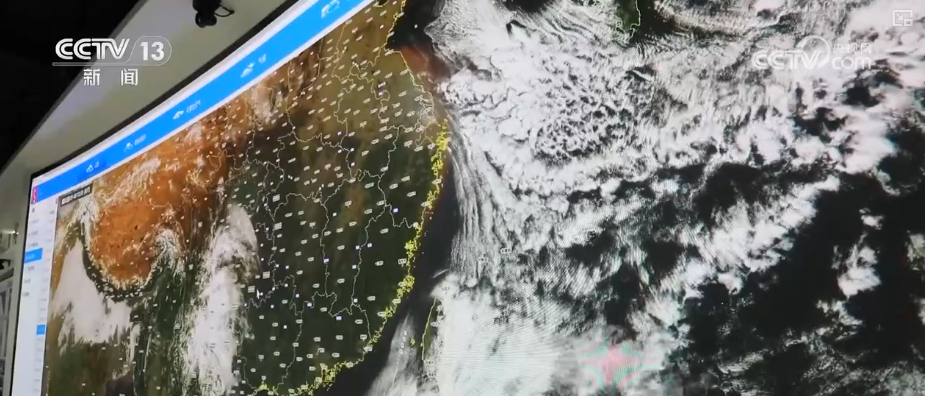
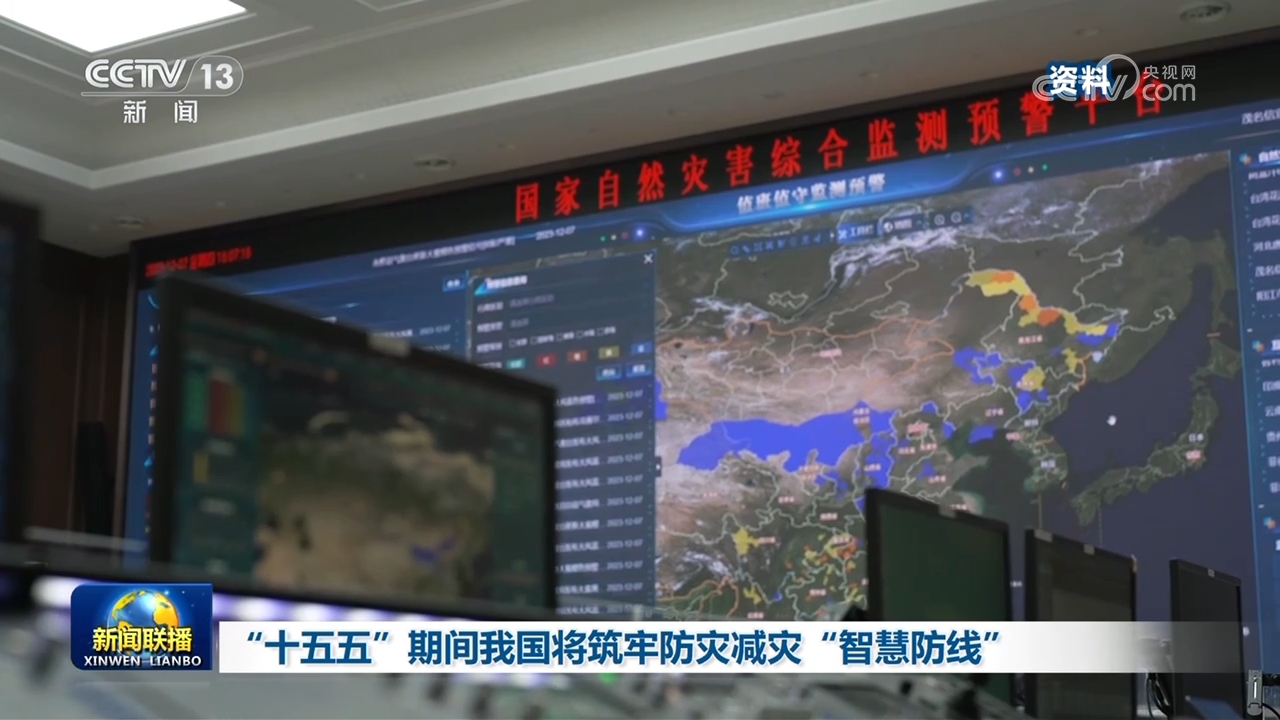
“十五五”期间我国将筑牢防灾减灾“智慧防线”
Yang Shi Wang· 2026-01-10 12:48
Group 1 - The core viewpoint of the article emphasizes China's commitment to transforming public safety governance towards proactive prevention during the "14th Five-Year Plan" period, achieving significant reductions in disaster-related metrics [1] - During the "14th Five-Year Plan" period, the average number of people affected by disasters decreased by 36.0%, the number of deaths and missing persons due to disasters decreased by 22.9%, and the direct economic losses from disasters as a percentage of GDP decreased by 39.0% compared to the previous five years [1] Group 2 - In the "15th Five-Year Plan" period, China will further improve its risk prevention and control system, focusing on building an integrated monitoring system for natural disasters across air, space, and ground [3] - The emergency management department will collaborate with relevant departments to enhance multi-hazard and disaster chain comprehensive risk monitoring and early warning capabilities, as well as to plan and construct provincial emergency rescue centers tailored to local conditions [3] Group 3 - During the "15th Five-Year Plan" period, China will strengthen technological research in emergency management by optimizing and integrating new technologies such as satellite remote sensing, 5G communication, and artificial intelligence [5] - A national key research and development plan will be initiated to comprehensively enhance capabilities in risk intelligent perception, monitoring, early warning, and response, thereby reinforcing the "smart defense line" for disaster prevention and reduction [5]