
外交政策调整

Search documents
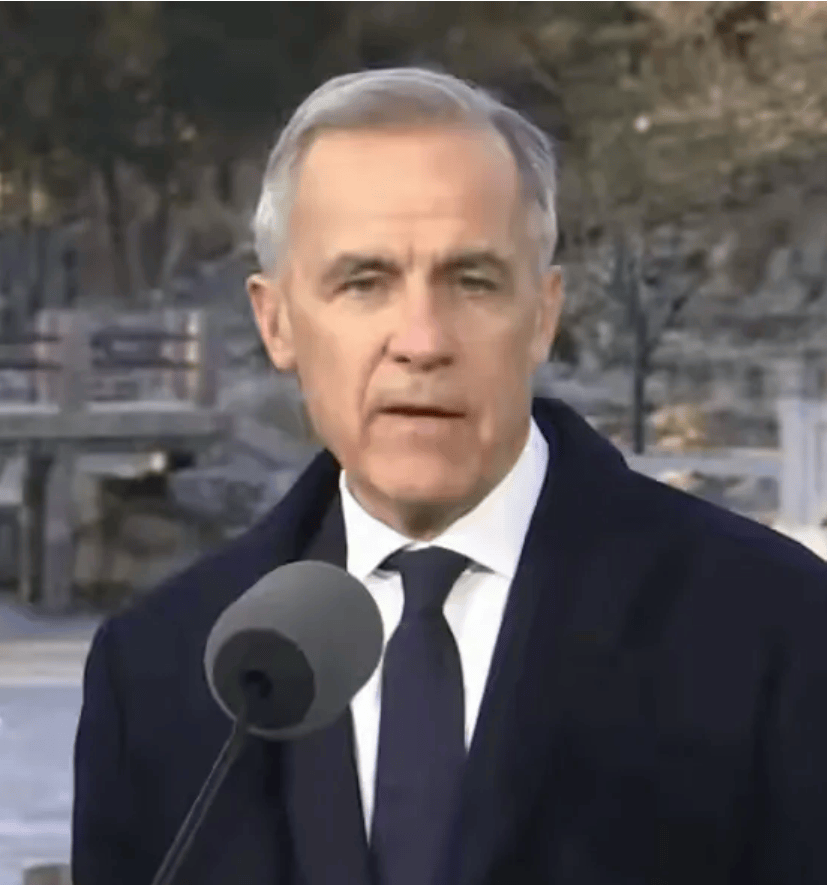
果然被我说中!正在访问中国的加拿大总理突然:宣布了一个大好消息:
Sou Hu Cai Jing· 2026-01-19 17:34
Core Viewpoint - The Canadian Prime Minister announced a significant policy shift by reducing tariffs on Chinese electric vehicles from 100% to 6.1%, allowing 49,000 vehicles to enter the market at a preferential rate, marking the end of nearly two years of high tariffs [1][2]. Group 1: Policy Changes - The decision to allow 49,000 Chinese electric vehicles at a 6.1% Most Favored Nation tariff rate restores trade conditions to pre-trade friction levels [1]. - This policy change signifies a rejection of the previous government's decision to impose a 100% tariff on Chinese electric vehicles, indicating a shift in Canada's approach to trade with China [1][2]. Group 2: Economic Implications - The quota of 49,000 vehicles represents only about 3% of Canada's annual car sales, but the political implications are substantial, signaling Canada's desire to not blindly follow U.S. strategies against China [1][2]. - In 2024, the total trade volume between Canada and China is projected to reach 118 billion CAD, with China being Canada's second-largest trading partner, highlighting the importance of diversifying trade relationships [2][3]. Group 3: Public Sentiment and Support - A poll by Ipsos indicates that 54% of Canadians support strengthening trade ties with China, and 60% favor eliminating tariffs on Chinese electric vehicles, reflecting a strong public backing for the government's policy shift [3]. - Over 70% of Canadians are willing to accept "slower economic growth" in exchange for reduced dependence on the U.S., further supporting the government's new trade direction [3]. Group 4: Strategic Positioning - Canada is seeking a new balance between the U.S. and China, moving away from being a mere echo of U.S. policies, as evidenced by the Prime Minister's strategic announcement during his visit to China [2][4]. - The signing of the "China-Canada Economic and Trade Cooperation Roadmap" and the elevation of the bilateral economic committee to a ministerial level are steps taken to enhance the stability of Canada-China relations [4]. Group 5: Broader Implications - Canada's policy shift may serve as a precedent for other Western nations facing similar dilemmas, as it reflects a growing trend of seeking strategic autonomy within the Western alliance [4][5]. - The adjustment in trade policy not only signals a reconfiguration of global power dynamics but also highlights the challenges faced by countries in navigating U.S. unilateralism and the desire for independent foreign policy [5].

美国大程度介入委内瑞拉 白银td再现“疯涨”行情
Jin Tou Wang· 2026-01-06 07:02
Group 1 - Silver TD is currently trading above 19,323, having opened at 18,180 yuan/kg, and is reported at 19,538 yuan/kg, reflecting a 7.36% increase, with a high of 19,700 yuan/kg and a low of 18,105 yuan/kg, indicating a bullish short-term trend [1] - The U.S. government has significantly escalated its involvement in Venezuela's political and economic transition following the arrest of President Nicolás Maduro, with Secretary of State Marco Rubio appointed to oversee the process [1] - The U.S. is reportedly receiving "comprehensive, thorough, and unconditional" cooperation from the interim government led by Maduro's former vice president, Delcy Rodríguez, despite her public condemnation of Maduro's arrest [1] Group 2 - The United Nations has expressed concern over actions that violate international law, particularly regarding President Trump's comments about expanding military action to Colombia and Mexico, as well as his remarks about Greenland [2] - The silver TD price has recovered part of last week's decline, continuing to rise over 7%, with strong bullish momentum indicated by the MACD histogram and the RSI entering the overbought zone, suggesting further upward potential [3] - Key support levels for silver TD are noted at 17,500-18,000, while resistance levels are identified at 19,500-20,000 [3]