
外卖进村

Search documents
外卖更好进村还需迈过三道坎
Zhong Guo Jing Ji Wang· 2026-02-03 22:33
Core Insights - The integration of food delivery services into rural areas reflects a shift towards diversified and immediate consumption scenarios, enhancing rural logistics and connecting urban and rural economies [1][2][3] Group 1: Service Expansion and Impact - The introduction of food delivery services in rural areas is driven by improved transportation and communication infrastructure, leading to a transformation in rural consumption from basic needs to quality and variety [2][3] - Local delivery services have created job opportunities for surplus rural labor, contributing to economic revitalization [2][3] - The initiative is seen as a key point in the digital economy's development, bridging urban-rural relationships and promoting integrated rural consumption [2][3] Group 2: Regional Disparities - Despite the positive outlook, the development of delivery services is uneven across regions, with many rural areas still lacking access to such services [4][5] - Economic conditions in specific towns, such as those with industrial development, significantly influence the availability and demand for delivery services [4][5] - Some rural merchants face challenges in utilizing delivery platforms due to a lack of available delivery personnel, leading to unfulfilled orders [4][5] Group 3: Challenges and Bottlenecks - High costs and limited choices hinder the effectiveness of delivery services in rural areas, where orders are often isolated and do not benefit from the economies of scale seen in urban settings [6][7] - Geographic challenges, such as long distances and poor road conditions, increase delivery costs and complicate logistics [6][7] - Inconsistent order volumes and low average spending in rural areas make it difficult for delivery services to achieve sustainable operations [6][7] Group 4: Recommendations for Improvement - To address the structural challenges, a shift towards a more integrated delivery model is recommended, focusing on building a logistics network that reduces delivery distances and costs [7][8] - Enhancing the accessibility of delivery platforms for elderly populations and ensuring fair compensation for delivery personnel are crucial for sustainable growth [8] - Collaboration among platforms, local businesses, and community members is essential to create a supportive ecosystem that benefits all stakeholders involved [8]


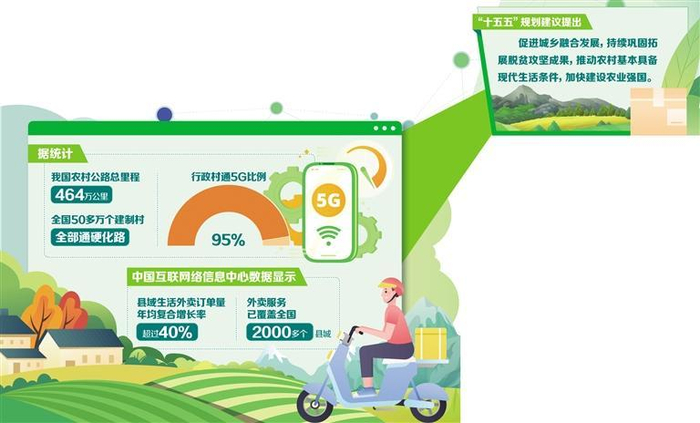
从“能送”到“愿送”,骑手如何在乡村跑得稳、留得下?
Xin Lang Cai Jing· 2026-01-01 19:47
Core Insights - The integration of food delivery services into rural areas is becoming increasingly common, driven by improved transportation and communication infrastructure, with a reported annual compound growth rate of over 40% in county-level food delivery orders [1][2] - Local delivery riders, often familiar with the terrain, are crucial for the success of these services, providing not only convenience but also creating job opportunities in rural areas [2][3] Group 1: Delivery Service Expansion - Food delivery platforms like Meituan have expanded their services to cover all county markets and are now reaching surrounding townships, establishing a foundational information network for rural delivery [2] - Local riders, such as those in Ning'er County, have formed teams to manage deliveries across multiple villages, enhancing community engagement and service reliability [2] Group 2: Challenges in Rural Delivery - Delivery fees in rural areas are often higher than in cities, leading to customer dissatisfaction due to longer wait times and limited restaurant options [3][4] - The delivery process in rural areas is complicated by geographical challenges, with riders facing unstable order volumes and varying demand based on seasonal factors [5][6] Group 3: Recommendations for Improvement - Experts suggest enhancing rider rights and protections, addressing high delivery costs and time inefficiencies, and improving rural infrastructure to support delivery operations [6] - Innovative service models, such as community retail adaptations and the use of technology like drones, are proposed to streamline rural delivery and improve service accessibility [6]