外卖服务

Search documents
开源证券晨会纪要-20260331
KAIYUAN SECURITIES· 2026-03-31 14:42
Group 1: Macro Economic Overview - The PMI has returned to expansion, with Q1 GDP expected to grow approximately 5.0% year-on-year, driven by post-holiday resumption of production and rising raw material prices [6][9] - Manufacturing PMI for March is reported at 50.4%, indicating a significant improvement of 1.4 percentage points, with demand recovering faster than production [6][9] - The industrial raw material prices have rebounded significantly, with expectations for March PPI to rise year-on-year by about 0.3% [6][9] Group 2: Food and Beverage Sector - Haidilao (603288.SH) reported revenue and net profit for 2025 at 288.7 billion and 70.4 billion yuan respectively, with year-on-year growth of 7.3% and 11.0%, exceeding expectations [17] - The company’s gross margin improved to 40.15% in 2025, up 3.15 percentage points, primarily due to lower raw material costs and operational efficiencies [20] - The product portfolio is shifting towards high-end health products, with organic and low-salt products seeing a growth rate of 48.3% [18] Group 3: Banking Sector - China Everbright Bank (601818.SH) achieved a revenue of 1263.11 billion yuan in 2025, a year-on-year decline of 6.72%, but the decline is narrowing [37] - The bank's net interest margin decreased to 1.40%, down 14 basis points year-on-year, but the decline is less severe than in 2024 [38] - The bank's asset quality remains stable, with a non-performing loan ratio of 1.27% and a capital adequacy ratio of 13.71% [39] Group 4: Real Estate and Construction Sector - China Resources Land (01209.HK) reported a revenue of 180.2 billion yuan in 2025, with a year-on-year increase of 5.7%, and a net profit of 39.7 billion yuan, up 9.4% [41][42] - The company has maintained a high dividend payout ratio, distributing 1.731 yuan per share, reflecting strong cash flow and profitability [43] - The company’s property management and commercial management segments have shown resilience, with revenue growth of 7.7% and 10.1% respectively [45] Group 5: Automotive Sector - BYD (002594.SZ) reported a revenue of 8039.65 billion yuan in 2025, with a year-on-year growth of 3.5%, while net profit decreased by 19.0% due to competitive pressures [53] - The company’s overseas sales significantly increased, accounting for 26.3% of total sales in Q4 2025, with a year-on-year growth of 95.1% [54] - The company is focusing on enhancing its electric vehicle technology and expanding its overseas market presence, with plans for new model launches [55] Group 6: Media Sector - Xindong Company (02400.HK) achieved a revenue of 57.64 billion yuan in 2025, a year-on-year increase of 15%, with net profit rising by 89% [32] - The company’s gross margin improved to 73.8%, driven by strong performance from overseas games and a higher proportion of revenue from high-margin segments [32] - The international version of "Xindong Town" is expected to drive further growth, leveraging the company's experience in domestic operations [33]
外卖大战一周年:烧光千亿,没有赢家
阿尔法工场研究院· 2026-03-30 00:33
Core Viewpoint - The article discusses the end of a significant price war in China's food delivery market, highlighting the impact on major players like Meituan, JD, and Alibaba, and the unexpected beneficiaries, the delivery riders [4][43]. Group 1: Market Dynamics - The price war in the food delivery sector has been characterized by massive subsidies, leading to a significant shift in market dynamics and consumer behavior [5][6]. - The competition has resulted in substantial financial losses for the involved companies, with nearly 100 billion yuan in profits evaporating [14]. - Meituan has maintained a market share of over 60%, while Alibaba's share has increased from 33% to approximately 40-42%, narrowing the gap with Meituan [18][20]. Group 2: Financial Performance - JD reported a loss of 46.641 billion yuan in its new business segment, with a marketing expense increase of 75% to 84 billion yuan, and a net profit decline of 43.5% [10]. - Meituan's core local business saw a profit of 52.4 billion yuan in 2024, which turned into a loss of approximately 6.9 billion yuan in 2025, despite an 8.1% revenue growth to 364.855 billion yuan [11]. - Alibaba's adjusted net profit dropped by 67% to about 15.6 billion yuan in Q3 of fiscal year 2026, with a 43% decline in its domestic e-commerce segment [13]. Group 3: Strategic Implications - JD's entry into the food delivery market was a defensive move to protect its core business, with plans to reduce delivery investments in the future [26][28]. - Alibaba's strategy focused on using food delivery to drive traffic to its e-commerce platform, resulting in over 10 million new active buyers [30][31]. - Meituan's approach was to defend its market share, but it faced challenges as its valuation logic was questioned due to the competitive landscape [23][34]. Group 4: Industry Impact - The price war has adversely affected the restaurant industry, with nearly 70% of surveyed merchants reporting a decline in revenue since the onset of the subsidy war [41]. - The article suggests that the competition will shift towards leveraging AI for growth, as the previous model of unsustainable subsidies is no longer viable [42]. - The war has led to improved working conditions for delivery riders, with companies like JD starting to provide social insurance benefits [44][46].


商贸零售行业周报:外卖停战改善餐饮行业生态,义乌1-2月进出口高增
GOLDEN SUN SECURITIES· 2026-03-29 10:24
Investment Rating - The industry investment rating is maintained as "Increase" [5] Core Insights - The report highlights that the takeaway food delivery sector is expected to return to rational competition, benefiting platform profitability and valuation recovery, as well as offline business formats [1][2] - The report indicates that the foreign trade in Yiwu experienced a significant growth of 52.8% in January-February, with market procurement dominating the export model [3] - The report emphasizes a positive outlook on the travel chain's elasticity and anticipates that service consumption will stabilize before goods consumption [4] Summary by Sections Takeaway Food Delivery - The report discusses the end of the "takeaway war," which has negatively impacted the pricing system of the restaurant industry, leading to a vicious cycle of quality sacrifice and profit compression [1] - It is projected that the takeaway business will return to reasonable profit levels in the medium to long term, aiding in the recovery of platform profitability and valuation [2] Foreign Trade in Yiwu - Yiwu's total import and export value reached 1735.6 billion, with exports growing by 52.9% and imports by 52.6% in January-February [3] - Market procurement accounted for 82.6% of Yiwu's total exports, with significant growth in trade with Africa and ASEAN [3] Investment Recommendations - The report reaffirms a positive outlook on the travel chain's elasticity, with a preference for hotel and scenic spot sectors, followed by dining and duty-free segments [4] - It suggests focusing on service consumption and selecting high-potential brands in the goods consumption sector [8]
广深豪宅成交增速超100%,Anthropic最早于10月上市 | 财经日日评
吴晓波频道· 2026-03-28 00:21
Group 1: Industrial Profit Growth - In the first two months of the year, China's industrial enterprises above designated size achieved a total profit of 10,245.6 billion yuan, a year-on-year increase of 15.2% [2] - State-owned enterprises reported a profit of 3,665.6 billion yuan, up 5.3%, while private enterprises saw a significant increase of 37.2% to 2,844.5 billion yuan [2] - The computer, communication, and other electronic equipment manufacturing industries experienced a profit growth of 200%, while the automotive manufacturing sector faced a decline of 30.2% [2][3] Group 2: Real Estate Market Trends - High-end residential transactions in first-tier cities increased by 14% year-on-year, with Guangzhou and Shenzhen seeing transaction growth exceeding 100% [4] - The luxury market in Guangzhou recorded a new high with a unit price of 28,000 yuan per square meter, reflecting strong demand despite overall market challenges [4][5] - The disparity between the luxury and mid-range markets indicates a divide in buyer purchasing power, with luxury properties maintaining strong demand [5] Group 3: Instant Delivery Market Growth - The instant delivery market is projected to exceed 600 billion orders by 2025, with a market size approaching one trillion yuan [6] - Instant retail is expanding beyond food delivery to include supermarkets, fresh produce, and pharmaceuticals, indicating a diversification of services [6] - Despite the challenges in profitability, major platforms are investing in instant delivery as a key growth area due to its high-frequency demand [6] Group 4: Financial Sector Developments - A Beijing-based private equity firm has relaxed its hiring requirements to attract younger talent, emphasizing skills over formal education [7][8] - The firm plans to leverage AI in its investment strategies, indicating a shift towards technology-driven investment approaches [7][8] Group 5: Company Financial Performance - Meituan reported a significant net loss of 186 billion yuan for 2025, despite a revenue increase of 8.1% to 364.9 billion yuan [9] - The company's core local business segment saw a revenue growth of 4.2%, but operating profit turned to a loss of 69 billion yuan, highlighting intense competition and increased marketing expenses [9][10] - Nayuki Tea reported a revenue decline of 12% to 4.33 billion yuan, but managed to narrow its net loss by 73.8% through strategic store closures and optimizations [11][12] Group 6: Upcoming IPOs in AI Sector - Anthropic is planning to go public as early as October, aiming to raise over 60 billion dollars, following a significant funding round that valued the company at 380 billion dollars [13][14] - The company has experienced rapid revenue growth, driven by strong demand for automation tools, and is expected to narrow the gap with competitors like OpenAI [13][14]

激烈的外卖价格战下 美团营收录得个位数增长
Xin Lang Cai Jing· 2026-03-27 04:02
Core Viewpoint - Meituan reported a moderate revenue growth of 4.1%, with its overseas expansion effectively alleviating pressures from intense domestic price wars against Alibaba and JD [1][2] Group 1: Financial Performance - The company achieved a revenue of 92.1 billion RMB (approximately 13.3 billion USD) for the quarter ending last December, aligning with analysts' average expectations [1] - Adjusted net loss was 15.1 billion RMB, exceeding market estimates of 13 billion RMB [1] - The company previously reported its first loss in nearly three years for the quarter ending September, with an adjusted net loss of 16 billion RMB [1] Group 2: Market Competition - Meituan is engaged in a costly battle to defend its market share in the domestic market, investing billions in subsidies and marketing [1] - The company's market share in the instant delivery sector is projected to decline from approximately 70% at the end of 2024 to about 50% by the end of 2025, according to S&P Global data [1] - Competitors like JD and Alibaba are also struggling, with JD reporting its first quarterly loss in nearly four years and Alibaba experiencing a 67% drop in quarterly profits due to significant investments in instant commerce [1] Group 3: Regulatory Environment - The intense competition has drawn increasing scrutiny from regulatory authorities, who have held multiple meetings to warn relevant companies and initiated investigations to end the price war that pressures merchants and delivery personnel [1] Group 4: International Expansion - To mitigate the impact of fierce domestic competition, Meituan is actively expanding its overseas presence, having entered markets such as the UAE, Qatar, Kuwait, and Brazil [2] - The company's business in Hong Kong achieved profitability last year, as stated by founder Wang Xing [2]

中泰国际每日晨讯-20260326
ZHONGTAI INTERNATIONAL SECURITIES· 2026-03-26 02:30
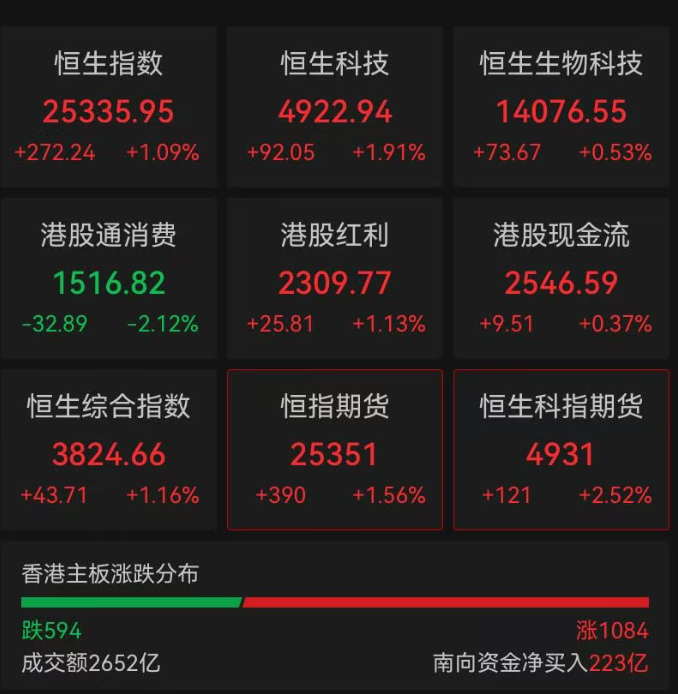
Core Insights - The report highlights a significant increase in the Hang Seng Index, which rose by 272 points (1.1%) to close at 25,335 points, driven by a positive sentiment in the tech sector and a net inflow of 22.3 billion HKD from southbound funds [1] - The report notes that Meituan (3690 HK), Alibaba (9988 HK), and JD.com (9618 HK) saw their stock prices increase between 4.6% and 13.9% due to the easing geopolitical tensions and favorable market conditions [1] - The energy sector shows robust growth, with the total installed power generation capacity reaching 3.95 billion kilowatts, a year-on-year increase of 15.9%, and solar power capacity growing by 33.2% [3] Industry Dynamics Consumer Sector - Pop Mart (9992 HK) reported a revenue of 37.12 billion RMB, a year-on-year increase of 184.7%, and a net profit of 12.78 billion RMB, up 308.8%, meeting market expectations [4] - The gross margin improved from 66.8% to 72.1%, but concerns remain regarding the sustainability of its IP lifecycle, leading to a 22.5% drop in its stock price following the earnings report [4] New Energy/Utilities - The new energy and utilities sector exhibited mixed performance, with thermal power companies like Huaneng International (902 HK) and Datang Power (991 HK) seeing stock increases of 5.5% to 6.4% [4] - Huaneng International reported a 42.7% year-on-year increase in net profit for FY25, contributing to positive sentiment in the sector [4] Pharmaceutical Sector - The pharmaceutical industry showed varied performance, with some innovative drug companies rising, while WuXi AppTec (2359 HK) experienced a pullback after a previous surge [5] - WuXi Biologics (2269 HK) reported earnings in line with expectations, and the market anticipates steady revenue growth for 2026 [5]
市场释放积极信号 美团午后拉升涨超13%
Sou Hu Cai Jing· 2026-03-26 02:17
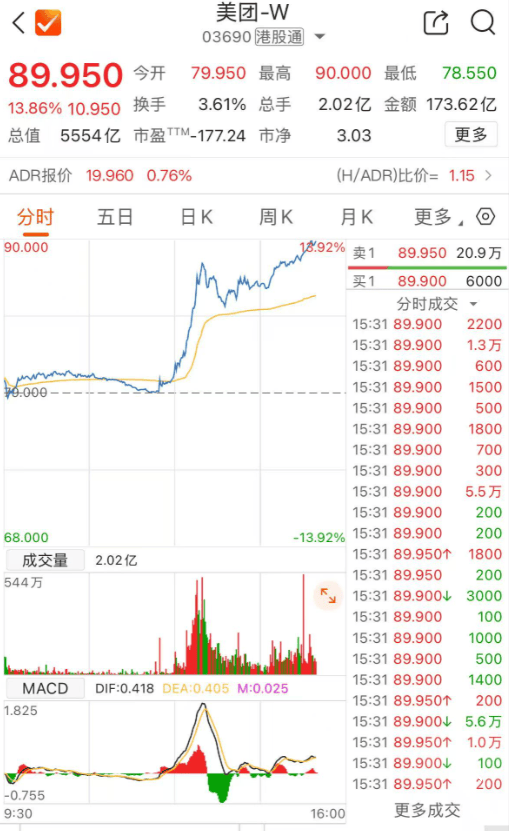
Group 1 - Meituan-W's stock price surged by 13.86%, reaching HKD 89.95 per share as of 15:31 on March 25 [1] Group 2 - The article titled "The Takeaway War Should End" emphasizes the need for takeaway prices to return to a reasonable range, allowing the restaurant industry to escape the cycle of subsidies and chaotic competition [2] - It suggests that competition should shift from price wars to service quality, indicating that price wars are unsustainable and that there are no winners in excessive competition [2] - Industry insiders interpret the article as a reflection of regulatory attitudes towards the takeaway market [2]
港股有好几个炸裂的消息
表舅是养基大户· 2026-03-25 13:33
Group 1 - The core viewpoint of the article discusses the unexpected surge in stock prices of major food delivery companies like Meituan, Alibaba, and JD after a government article suggested the end of the "food delivery war," which has negatively impacted market prices and CPI [1][3][4] - The article highlights the unusual timing of the market reaction, noting that the stock prices only began to rise after the article gained traction, despite being published earlier in the day [5][6] - The author believes that the article's impact is overstated, as regulatory measures regarding the food delivery industry have been ongoing since last year, and the competition will continue in a more regulated manner rather than coming to an end [8] Group 2 - Pop Mart's stock experienced a significant drop of 22.5% on the day of its earnings report, marking its largest single-day decline and turnover rate in three years [12][14] - The decline occurred in two phases: an initial drop of 15% after opening, followed by a further decline post-earnings call, attributed to lower-than-expected revenue and concerns over the company's reliance on a single IP, Labubu, which constitutes over 38% of total revenue [11][16][17] - The earnings call revealed a pessimistic outlook for future growth, with management indicating that the company has moved past its high-growth phase, which further contributed to the stock's decline [18] Group 3 - Xiaomi's stock initially fell 3.5% after its earnings report but rebounded due to the positive sentiment from the food delivery industry news, ultimately closing down only 0.5% [22] - The decline in Xiaomi's profits was primarily driven by a 30% drop in operating profit in Q4, largely due to challenges in its smartphone business, although its automotive segment has shown promise [22] - Li Auto's stock rose over 4% following a $1 billion share buyback announcement, reflecting its strategic response to competitive pressures in the new energy vehicle market [23][25] Group 4 - The article discusses the competitive landscape among new energy vehicle manufacturers, highlighting the challenges faced by Li Auto compared to its rivals NIO and Xpeng, particularly in terms of market positioning and product offerings [26][28] - Li Auto's strategy of focusing on family-oriented vehicles has become less effective due to increased competition in the SUV and MPV markets, and regulatory changes favoring pure electric vehicles have complicated its growth prospects [27][30] - The article suggests that the future of Li Auto may be uncertain, as it struggles to keep pace with competitors who have successfully launched popular models [29][30]

港股收评:连续两日反弹!恒生科技收涨1.91%,美团涨超13%,南下资金净买超200亿港元
Ge Long Hui· 2026-03-25 09:58
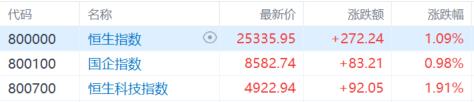
Market Overview - The Hong Kong stock market experienced a significant rebound, with the Hang Seng Technology Index rising by 2.6% at one point and closing up by 1.91% [1]. - The Hang Seng Index and the China Enterprises Index increased by 1.09% and 0.98%, respectively, marking the second consecutive day of market recovery [1]. - Southbound funds recorded a net purchase of over 20 billion HKD in Hong Kong stocks [1]. Sector Performance - Technology stocks led the market rally, with Meituan surging nearly 14% [2]. - Other notable performers included nuclear power stocks and optical communication concept stocks, with Changfei Optical Fiber Cable rising over 12% [2][8]. - The airline sector also showed strength, with domestic flight ticket bookings during the Qingming holiday increasing by approximately 20% year-on-year [2][11]. Key Stock Movements - Meituan's stock price reached 90.000 HKD, up by 13.92% [5]. - JD.com and Alibaba saw increases of 4.85% and 4.63%, respectively [5]. - Gold stocks performed well, with Ji Hai Gold and Lingbao Gold rising over 6% [6][7]. Industry Insights - A commentary in the Economic Daily called for an end to the "food delivery war," highlighting its negative impact on the restaurant industry and the broader economy [4]. - The article emphasized that healthy competition should focus on technological innovation, efficiency improvement, and service optimization [4]. Future Outlook - China Galaxy Securities indicated that if a prolonged conflict occurs between the U.S. and Iran, the Hong Kong market may experience a three-phase evolution: short-term emotional shock, mid-term fundamental transmission, and long-term structural differentiation [19]. - The report suggested focusing on cyclical sectors, financial sectors at valuation bottoms, and technology sectors with self-controllable logic [19].


港股主板千股上涨,“外卖三巨头”大涨:美团涨近14%,京东涨近5%,阿里巴巴涨超4%丨港股收盘
Mei Ri Jing Ji Xin Wen· 2026-03-25 08:57
Market Overview - The Hong Kong stock market closed higher on March 25, with the Hang Seng Index rising by 1.09% to 25,335.95 and the Hang Seng Tech Index increasing by 1.91% to 4,922.94 [1][2] - A total of 1,084 stocks rose while 594 stocks fell, with southbound funds recording a net inflow of 22.3 billion HKD [1][2] Sector Performance - Key sectors that saw significant gains include food and beverage, semiconductors, and non-ferrous metals, while military and petrochemical sectors experienced declines [2] - The food and beverage sector rose by 3.22%, semiconductors by 2.73%, and non-ferrous metals by 2.55% [3][4] Notable Stock Movements - Major tech stocks experienced a surge, with Meituan rising nearly 14%, JD.com up nearly 5%, and Alibaba increasing by 4.63% [4][5] - Li Auto saw an increase of over 4%, while Tencent and Baidu experienced slight declines of 1.65% and 0.53%, respectively [5][7] - Notably, Pop Mart's stock plummeted by 22.51% [7] Regulatory Context - An article titled "The Takeaway War Should End" was referenced, highlighting the negative impact of price wars on the restaurant industry and advocating for healthier competition based on innovation and service rather than capital expenditure [4][5]