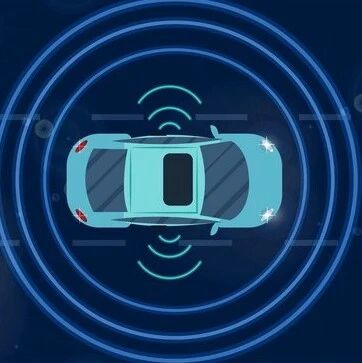
多传感器方案

Search documents
本土激光雷达大厂CEO:特斯拉纯视觉方案不够安全
半导体行业观察· 2025-10-22 01:20
Core Viewpoint - The founder of Chinese LiDAR manufacturer RoboSense, Qiu Chunchao, argues that multi-sensor systems are superior and safer for autonomous vehicles compared to the pure vision system promoted by Tesla's CEO Elon Musk [2][4]. Group 1: LiDAR vs. Vision Systems - LiDAR, which stands for Light Detection and Ranging, is a sensor technology that scans the environment by emitting laser beams and measuring the time it takes for the signals to return [2]. - Qiu emphasizes that relying solely on vision systems is insufficient for achieving Level 3 or Level 4 autonomous driving capabilities, necessitating the inclusion of additional sensors like LiDAR [2][3]. - Market research firm Yole Group predicts that RoboSense will capture the largest market share of global passenger car LiDAR systems by 2024 [3]. Group 2: Musk's Perspective on LiDAR - Musk has been a long-time critic of LiDAR systems, asserting that the future of autonomous driving lies solely in the use of cameras [4][6]. - He claims that the reliance on cameras is the most "human-like" way to navigate, as humans use their eyes for navigation [6]. - The cost of LiDAR systems is significantly higher, approximately $12,000 per vehicle, compared to around $400 for cameras [4][6]. Group 3: Industry Opinions on Sensor Technology - Other companies like Waymo and Zoox utilize a combination of cameras and sensors, including radar and LiDAR, to enhance object detection in adverse weather and low-light conditions [5]. - Uber's CEO Dara Khosrowshahi supports the use of a combination of sensors, including LiDAR, for achieving superior safety in autonomous vehicles [6][7]. - Qiu points out that the cost of LiDAR systems has dramatically decreased from around $70,000 per vehicle to a few hundred dollars, while performance has improved [7]. Group 4: Regional Differences in Autonomous Driving - Li Xiang, CEO of Chinese electric vehicle manufacturer Li Auto, suggests that Musk's dismissal of LiDAR may stem from differences in traffic conditions between the U.S. and China [7][8]. - He argues that in China, drivers often encounter poorly lit or malfunctioning vehicles, which current camera systems may struggle to detect [8].