多传感器系统

Search documents
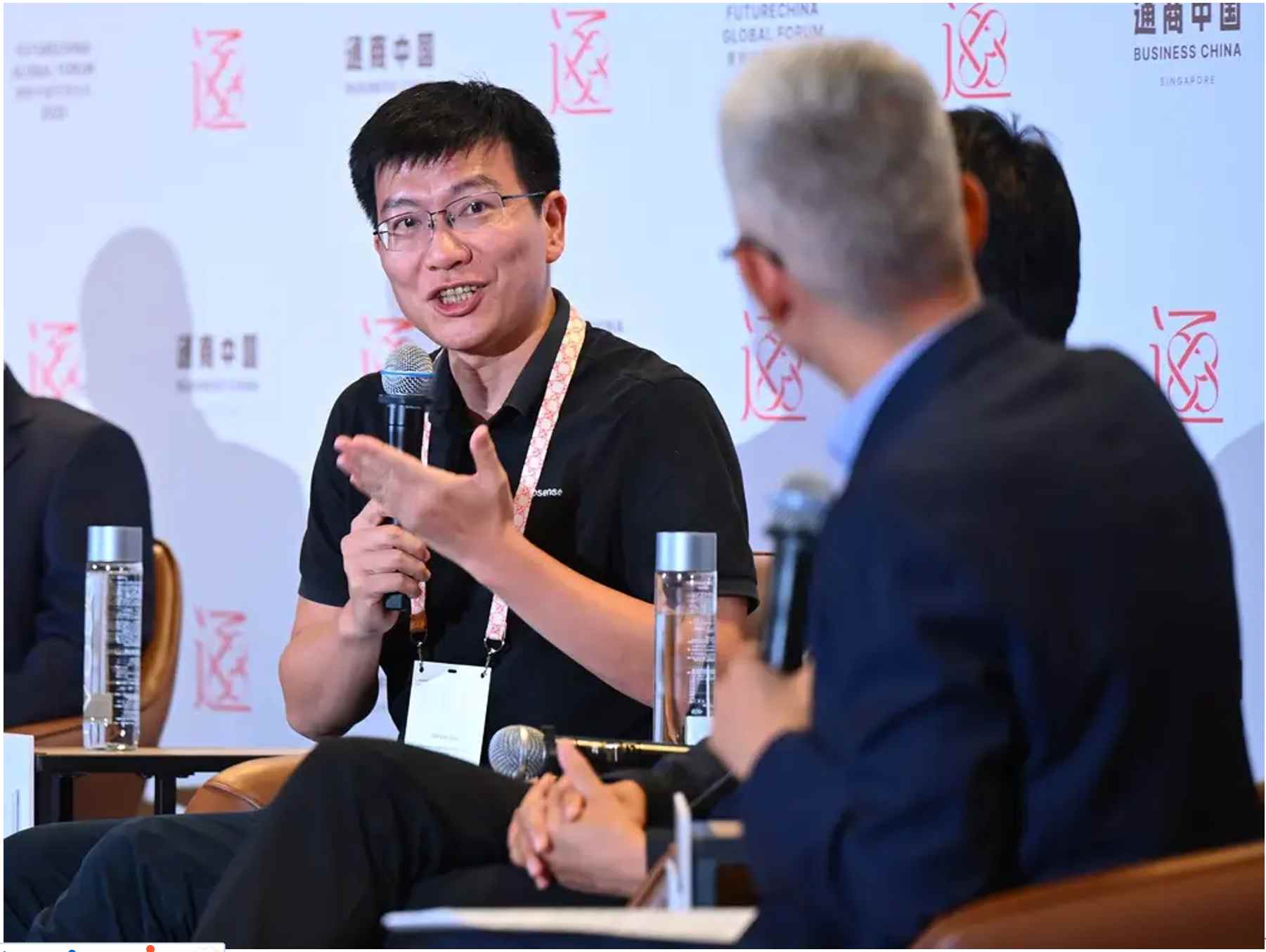
速腾聚创创始人邱纯鑫:激光雷达是自动驾驶安全刚需
Zhi Tong Cai Jing· 2025-10-29 11:17
Core Insights - RoboSense, founded in 2014, is projected to hold the largest market share in the global passenger car LiDAR system market by 2024 according to Yole Group [3] Group 1: Company Overview - RoboSense was established by Steven Qiu in 2014 and focuses on multi-sensor systems for autonomous vehicles, which are deemed safer than pure vision systems [4] - The company emphasizes the necessity of integrating LiDAR with other sensors to achieve higher levels of driving automation [4][5] Group 2: Industry Perspectives - The debate over the effectiveness of pure vision systems versus multi-sensor systems for autonomous driving has been ongoing for about a decade, with a consensus emerging that vision alone is insufficient for safety [4] - The cost of LiDAR systems has significantly decreased from approximately $70,000 per vehicle to a few hundred dollars, enhancing their performance [8] - Industry leaders like Ford and Rivian support the use of LiDAR, citing its advantages in challenging conditions where camera systems may fail [8][9] - The differing traffic conditions in China and the U.S. influence opinions on the necessity of LiDAR, with some executives arguing that LiDAR is crucial for safety in complex driving environments [10]
速腾聚创(02498)创始人邱纯鑫:激光雷达是自动驾驶安全刚需
智通财经网· 2025-10-28 03:11
Core Insights - RoboSense, founded in 2014, is projected to hold the largest global market share in passenger car LiDAR systems by 2024 according to Yole Group's report [1] - Steven Qiu, the founder of RoboSense, emphasizes that multi-sensor systems are superior and safer than pure vision systems for autonomous vehicles [2][3] - The debate over the effectiveness of pure vision versus multi-sensor systems has persisted for about a decade, with Qiu asserting that relying solely on vision is insufficient for achieving higher levels of automation [4][5] Group 1 - LiDAR technology, which uses laser beams to scan the environment, is essential for advanced autonomous driving capabilities [2][5] - Qiu argues that pure vision systems struggle in extreme conditions, making it difficult to achieve Level 3 or Level 4 automation without integrating additional sensors like LiDAR [5][6] - The Society of Automotive Engineers (SAE) classifies automation levels from 1 to 5, with Level 5 being fully autonomous [5] Group 2 - Elon Musk has criticized LiDAR as expensive and unnecessary, claiming that once visual perception issues are resolved, LiDAR becomes redundant [8][9] - Despite Musk's stance, many industry leaders, including Ford's CEO Jim Farley, consider LiDAR crucial for safety in autonomous vehicles [9][10] - The cost of LiDAR systems has significantly decreased from approximately $70,000 per vehicle to a few hundred dollars, improving performance alongside cost reductions [9] Group 3 - Rivian's CEO RJ Scaringe supports the use of LiDAR, stating that modern AI-driven systems can effectively integrate data from multiple sensors, overcoming previous technological limitations [10] - Li Auto's CEO Li Xiang highlights the differences in driving conditions between China and the U.S., suggesting that LiDAR is more valuable in environments with poor visibility [11][12] - The former Minister of Industry and Information Technology in China, Miao Wei, advocates for hardware redundancy in perception systems, indicating a preference for a combination of cameras, millimeter-wave radar, and LiDAR [12]