
多色打印

Search documents
从3D打印到桌面CNC,中国创客硬件集体破圈|硬氪直击CES
3 6 Ke· 2026-01-06 02:51
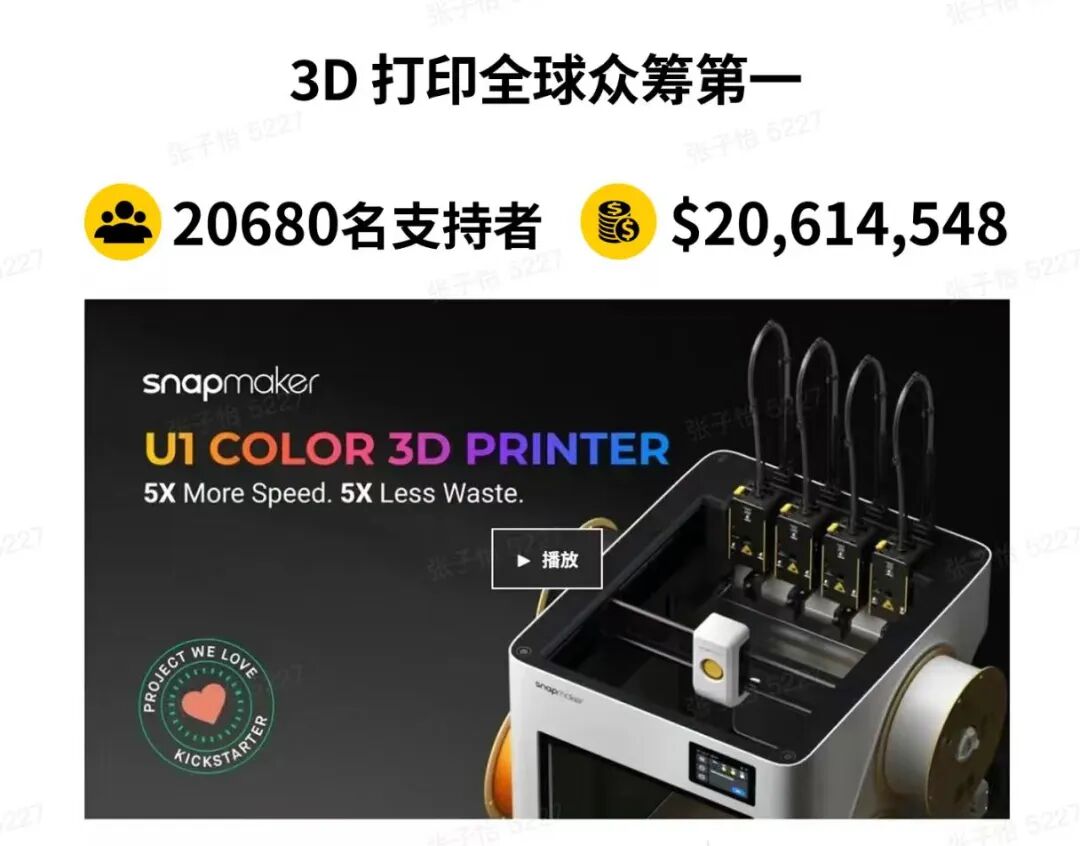
Core Insights - The CES event showcases a significant presence of Chinese companies, highlighting the competitive landscape in the hardware industry, particularly in the Maker sector [1] - The Maker tools market has rapidly evolved from niche products to mainstream offerings, with companies achieving impressive crowdfunding results [2][3] - The introduction of innovative products, such as xTool's desktop UV printer and Snapmaker's 3D printer, reflects a shift towards user-friendly designs and enhanced functionalities [6][10] Group 1: Product Innovations - xTool's new desktop UV printer utilizes UV-LED curing technology, allowing for high-precision color printing on various materials [6] - Snapmaker U1, a 3D printer, achieved over $20 million in crowdfunding, emphasizing its rapid development and market acceptance [10][13] - The introduction of features like multi-color printing and waste reduction technologies is becoming standard among new products, enhancing their appeal [14][20] Group 2: Market Dynamics - The Maker tools market is experiencing increased competition, with companies like xTool and Snapmaker pushing the boundaries of product capabilities [5][6] - Crowdfunding successes indicate a growing consumer interest and market potential for Maker tools, with some products achieving over $10 million in funding [2][17] - The shift from industrial-grade CNC machines to more accessible desktop versions is expanding the user base and redefining productivity in creative fields [4][15] Group 3: User Engagement and Community - Companies are adopting co-creation strategies, inviting community input in product development to enhance user engagement and meet market demands [8][9] - The social aspect of Maker tools is becoming more pronounced, with features that allow users to share their creative processes on social media [18][19] - The demographic of users is shifting from niche enthusiasts to small business owners, indicating a broader acceptance and utilization of Maker technologies [21][22]

消费级3D打印龙头专家交流
2025-12-04 15:36
Summary of the 3D Printing Industry Conference Call Industry Overview - The consumer-grade 3D printing market has experienced three pivotal turning points: DIY demand during the pandemic, breakthroughs in high-speed printing technology in 2022, and the application of multi-color and AI technologies in 2024, driving rapid market growth. It is projected that by 2030, shipments will exceed 8.5 million units [1][8]. - The user base has expanded from makers to include education, families, designers, and medical fields, with a focus on educational, maker, and family interaction users. However, domestic penetration remains low due to cultural, lifestyle, and supply chain differences [1][5]. Key Insights and Arguments - Future product upgrades will focus on color/full-color printing, increasing speed and success rates, and lowering usage barriers. Leading companies are promoting their products through offline experience stores, but addressing actual life needs is essential for increasing adoption [1][7]. - The quality of 3D printed products is currently slightly inferior to branded injection-molded products but superior to low-end non-branded products. Competitive advantages among companies lie in user positioning (Tao Zhu), channels (Chuangxiang 3D), cost-performance ratio (Zhongwei Lifan), and technology (Smart派) [1][12]. Market Dynamics - The average selling price of 3D printers has been declining since 2022, with low-end models having limited price reduction potential, while high-end models could see significant price drops from 8,000-10,000 RMB to 5,000-6,000 RMB [3][15][16]. - Third-party consumables dominate the market, accounting for 60% of the market share, with suppliers having low bargaining power and profit margins around 17%-20%. Many leading companies are planning or have established overseas production bases to gain competitive advantages [3][19][21]. User Demographics and Challenges - The user demographic has shifted significantly, with early adopters primarily being makers (70%), now supplemented by educational, family, and design users [4]. - Domestic penetration is low due to several factors, including cultural differences in education, lifestyle pace, and supply chain maturity. Currently, FDM and light curing combined annual shipments are less than 600,000 units, accounting for less than 12% of global sales [5][6][7]. Future Growth and Applications - The 3D printing industry is expected to accelerate growth in the next two to three years, driven by lower entry barriers and broader applications. The market is projected to exceed 8.5 to 9 million units by 2030 [8]. - Future applications will include household items like faucets and showerheads, with AI-generated models making it easier for users unfamiliar with modeling to utilize 3D printing [9]. Competitive Landscape - Major players include: - **Tao Zhu**: Leading in revenue with 5.7 billion RMB, focusing on diversified products beyond FDM. - **Chuangxiang 3D**: Diverse development but lacks sufficient R&D investment. - **Zhongwei Lifan**: Needs to enhance R&D and user experience. - **Smart派**: Must strengthen R&D to avoid price competition [14][12][13]. Pricing Trends and Cost Factors - The average price of 3D printers has decreased from approximately 480 USD in 2022 to around 360 USD in 2024, primarily due to intensified market competition [15][16]. - Factors influencing price differences include exchange rates, production costs, and compliance costs in different regions [26][27]. Regional Competition and Sales Channels - The competitive environment varies significantly across regions, with the U.S. being the largest and most competitive market. New entrants often use low-price strategies to gain market share, while established companies rely on offline channels [28][29]. Conclusion - The consumer-grade 3D printing industry is poised for significant growth, driven by technological advancements and expanding applications. However, challenges such as low domestic penetration and competitive pricing pressures remain critical factors for companies to address in their strategic planning.