
大中小学思政教育一体化建设

Search documents
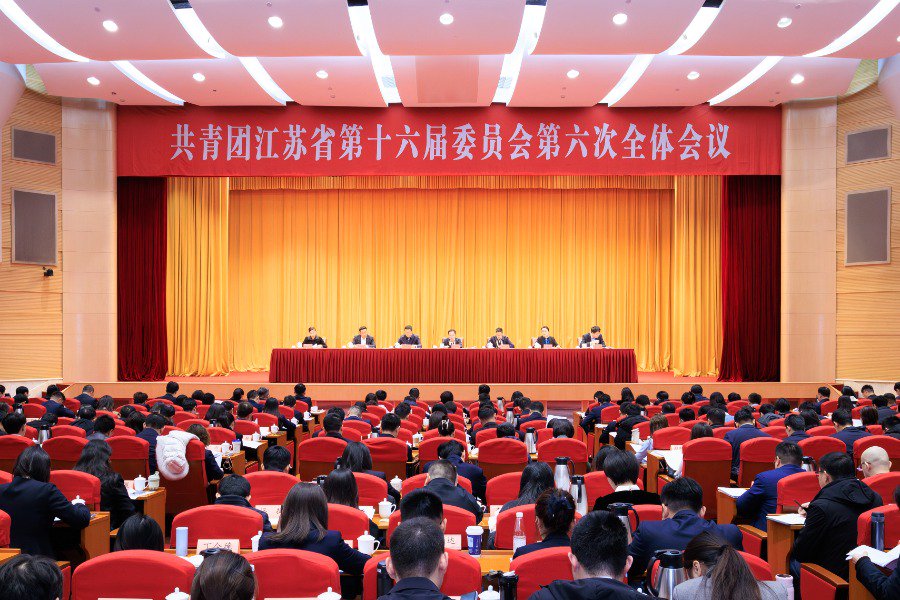
团省委十六届六次全会在南京召开
Xin Lang Cai Jing· 2026-01-30 04:12
Group 1 - The core viewpoint of the meeting is to advance the "715" action plan for the high-quality development of the Jiangsu Youth League, contributing to the modernization of Jiangsu as a "strong, rich, beautiful, and high" province [1] Group 2 - The meeting emphasizes the integration of ideological and political education across all educational levels, creating distinctive "walking ideological courses" to strengthen the ideological foundation of youth [3] - It focuses on the "1650" industrial system and the "U35 cultivation" initiative, promoting events like "Creative Youth" to facilitate the transformation of youth scientific achievements [3] - The implementation of a five-dimensional cultivation plan for young "new farmers" aims to support their entrepreneurial development [3] - The optimization of youth brands such as the Youth Commando Team and the cultivation of "Su Youth Stores" is intended to aid economic and social development [3] - The meeting outlines the enhancement of policies for attracting, nurturing, and retaining youth, including upgrades to service platforms like "Su Youth Station" and "Youth Apartments" [3] - It also includes plans for youth welfare initiatives, such as campus recruitment fairs and improved public service during holidays, as well as expanding the functions of "Youth Night Schools" [3]

东城区今年将新增中学学位5600个
Xin Jing Bao· 2026-01-14 08:40
Core Viewpoint - The Dongcheng District of Beijing is planning to enhance its educational resources by adding 4,500 junior high school places and 1,100 high school places by 2026, aiming for a more balanced and higher-quality education system [1][2] Group 1: Educational Resource Expansion - The district will continue to expand quality educational resources, with plans to add 4,500 junior high school places and 1,100 high school places by 2026 [1][2] - The district has already added 180 public nursery places and approximately 4,700 middle school places during the current five-year plan [1] Group 2: Educational Reform and Quality Improvement - The district aims to implement a comprehensive educational leadership reform and enhance teacher ethics and professional standards [1] - There will be a focus on integrating ideological and political education across all educational levels to improve the quality and effectiveness of moral education [1] Group 3: Innovative Talent Development - The district plans to establish a system for nurturing innovative talents, including a "脱颖计划" for high school students with innovative potential [2] - The "沃土计划" will be implemented to enhance scientific literacy and promote the establishment of model schools for artificial intelligence applications [2]
提升大中小学思政教育一体化建设质效
Xin Lang Cai Jing· 2025-12-21 19:39
Core Viewpoint - The integration of ideological and political education across primary, secondary, and higher education is essential for implementing the fundamental task of fostering virtue and cultivating talent, aligning with the strategic deployment of the 20th National Congress of the Communist Party of China on building an education powerhouse [1] Group 1: Content Construction - Establishing a "vertical continuity and horizontal integration" content system is crucial for the integration of ideological and political education across educational levels [2] - The curriculum should transition from "segmented implementation" to "organic connection," ensuring a coherent progression of themes across different educational stages [2] - Emphasis on avoiding repetition and disconnection in content delivery, with a focus on key themes at each educational stage [2] Group 2: Teaching Method Innovation - Innovative teaching methods are vital for enhancing the integration of ideological and political education, utilizing diverse approaches tailored to different educational stages [3] - A gradual teaching system should be constructed, employing various engaging methods such as storytelling and practical exploration to make classes more dynamic [3] - The establishment of a resource-sharing platform for ideological and political education can facilitate the flow of quality educational resources across different educational levels [3] Group 3: Teacher Capacity Building - Building a strong teaching workforce with political integrity and broad vision is essential for the integration of ideological and political education [4] - A mechanism for teacher training and collaboration across educational stages should be established to enhance teaching quality and experience sharing [4] - Expanding the recruitment and training of teachers, especially in underdeveloped regions, is necessary to improve educational service levels and equity [4] Group 4: Evaluation System Improvement - Developing a comprehensive and objective evaluation system is crucial for the integration of ideological and political education across educational levels [5] - The evaluation should combine process-oriented and developmental assessments, focusing on individual differences and collaborative efforts [5] - A collaborative evaluation ecosystem involving government, schools, teachers, and students should be established to enhance the effectiveness of the evaluation process [5]