大类资产配置策略

Search documents
2026年大类资产配置策略—2026年的四大系统性变化(PPT)
2025-12-04 04:47
Summary of Key Points from the Conference Call Industry Overview - The report discusses the macroeconomic environment and asset allocation strategies for 2026, focusing on the Chinese economy and its financial markets, including A-shares, bonds, and commodities. Core Insights and Arguments 1. **New Phase of Economic Cycle**: The demand-side drag on the economy is weakening, indicating a potential rebound. Leading indicators like M1 and PPI suggest the economic cycle is entering the final stage of preparation for recovery. However, the recovery will not be instantaneous, as factors like balance sheets, external demand, employment expectations, and policy pace will influence the recovery rhythm [3][13][23]. 2. **PPI Recovery**: The Producer Price Index (PPI) is expected to shift from negative to positive growth in 2026 due to factors such as increased monetary activity, potential oil price rebounds, and diminishing tail effects. This recovery is anticipated to support overall economic improvement [3][29][37]. 3. **Potential Fed Rate Cut Cycle**: The Federal Reserve may end its rate cut cycle in 2026, as the negative impact of a deteriorating labor market on monetary policy is expected to diminish. Persistent inflation suggests that the Fed's monetary policy will remain a critical factor in the economic landscape [3][55][57]. 4. **Characteristics of Chinese Asset Returns**: Chinese bonds are expected to maintain low volatility, but anticipated returns may stabilize at lower levels due to the current interest rate environment. In contrast, stock market volatility is likely to increase following high valuations [3][69][101]. Asset Allocation Strategies 1. **A-shares**: The market shows valuation differentiation, indicating potential for returns. Earnings for listed companies are improving, and this trend is expected to continue into 2026. The market is anticipated to favor growth styles in the first half of the year and value styles in the latter half, influenced by the Fed's monetary policy and domestic earnings recovery [3][85][95]. 2. **Chinese Bonds**: The attractiveness of bonds lies more in their volatility than in yield. The monetary policy will be the key driver for the bond market in 2026, with expectations of a stable policy environment that neither significantly loosens nor tightens [3][99][101]. 3. **Dollar Assets**: The macro environment, characterized by potential Fed rate stabilization and persistent inflation, poses challenges for U.S. Treasury bonds. The stock market may not face significant downturns until recession pressures become evident [3][102]. 4. **Commodities**: Commodity prices will be driven by their inherent attributes rather than financial characteristics. Factors such as U.S. inflation, the dollar credit system, and geopolitical tensions will support gold prices, although expected returns should be moderated [3][3]. Risk Factors - Risks include lower-than-expected fiscal policy effectiveness, geopolitical conflicts in regions like the Middle East, limited Fed rate cuts in 2026, and unexpected increases in U.S. tariff policies [3][3]. Additional Important Insights - The report emphasizes the importance of monitoring the economic cycle's recovery pace, which is influenced by various external and internal factors, including real estate market dynamics and youth unemployment rates [3][35][57]. - The analysis highlights the correlation between PPI and stock market performance, suggesting that a recovery in PPI could lead to a more optimistic long-term outlook for the stock market [3][39][45]. This comprehensive overview captures the essential insights and strategic recommendations for investors looking to navigate the evolving economic landscape in 2026.
东兴蓝海财富混合A:2025年第二季度利润121.91万元 净值增长率6.42%
Sou Hu Cai Jing· 2025-07-21 10:29
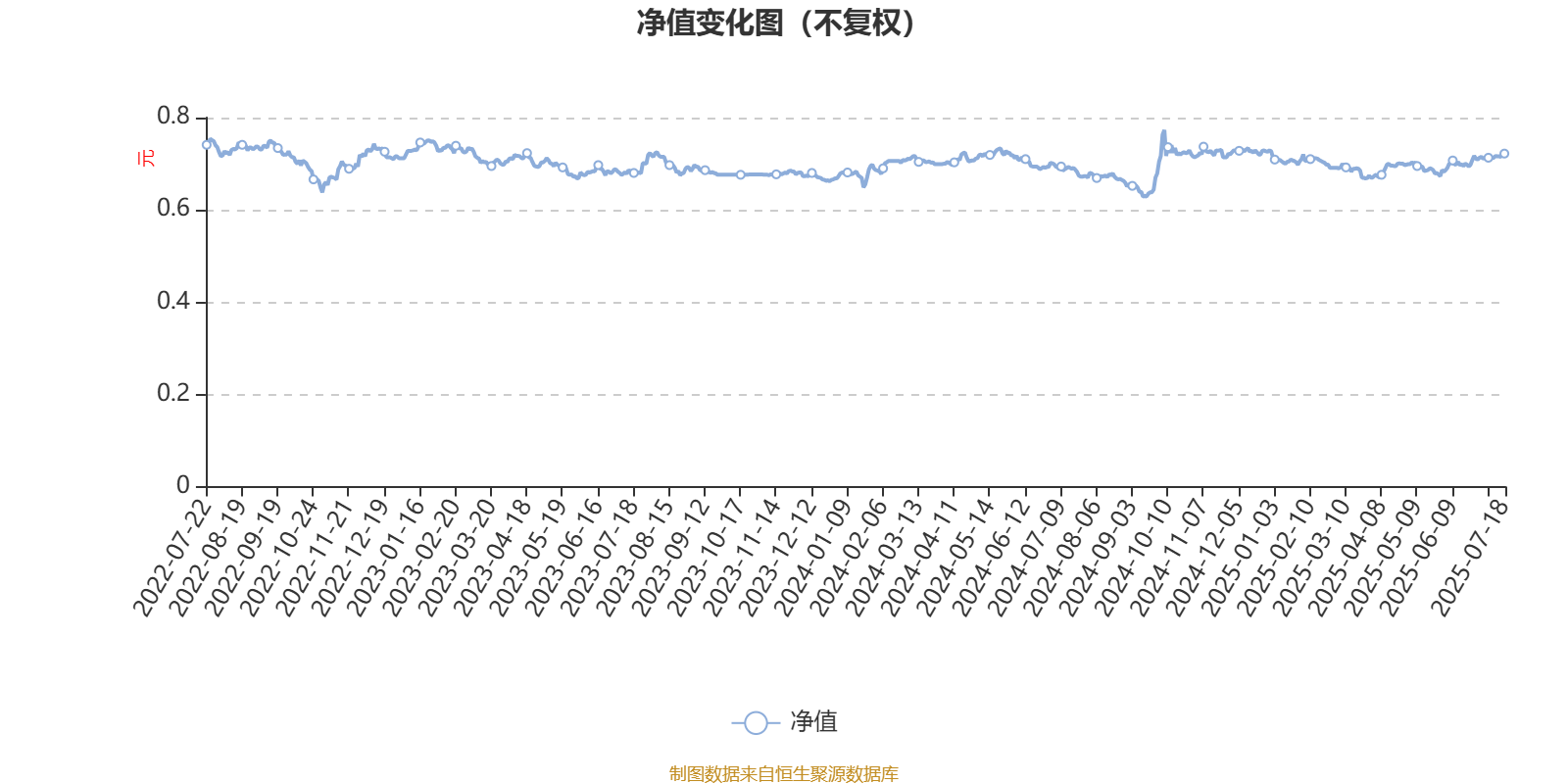
Core Viewpoint - The AI Fund Dongxing Blue Ocean Wealth Mixed A (002182) reported a profit of 1.2191 million yuan for Q2 2025, with a weighted average profit per fund share of 0.0426 yuan, and a net asset value growth rate of 6.42% during the period [3][15]. Fund Performance - As of July 18, the fund's unit net value was 0.722 yuan, with a three-month net value growth rate of 3.88%, ranking 52 out of 119 comparable funds [4]. - The fund's six-month net value growth rate was 2.12%, ranking 84 out of 119, while the one-year growth rate was 4.49%, ranking 89 out of 119 [4]. - Over the past three years, the fund's net value growth rate was -3.60%, ranking 69 out of 119 [4]. Risk and Return Metrics - The fund's Sharpe ratio over the past three years was 0.0621, ranking 57 out of 119 comparable funds [8]. - The maximum drawdown over the past three years was 16.58%, with the highest single-quarter drawdown occurring in Q1 2022 at 17.61% [10]. Asset Allocation - The average stock position over the past three years was 63.86%, compared to the industry average of 46.3% [13]. - The fund reached its highest stock position of 93.76% by the end of Q3 2024, while the lowest was 0.12% at the end of Q3 2023 [13]. Fund Holdings - As of the end of Q2 2025, the top ten holdings of the fund included Huahong Semiconductor, Naxin Micro, Sitaiwei, Hengxuan Technology, Ruichuang Micro, BeiGene, Hongsoft Technology, Zhongke Feimiao, Guodun Quantum, and CloudWalk Technology [18].