天地空灵产业体系

Search documents
推动建立具身智能驱动下的京津冀智算长廊 聚焦2025全球数字经济大会
Qi Lu Wan Bao· 2025-07-05 12:08
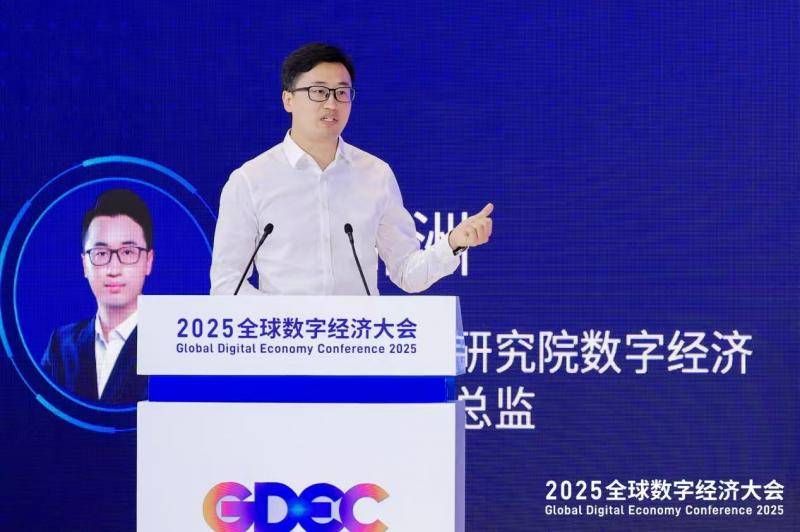
Group 1 - The "Digital Economy and Urban Development Forum" was successfully held during the 2025 Global Digital Economy Conference, aiming to promote the integration of real and digital economies and assist Beijing in becoming a global benchmark city for the digital economy [1] - The forum featured speeches from various experts, including Rong Ke from Tsinghua University, who emphasized that future Sino-US competition will focus on four major industries: "Heaven, Earth, Air, and Spirit" [3] - Rong Ke pointed out that China needs to enhance its openness and application scenarios in commercial aerospace, fully release productivity in intelligent interconnectivity, address challenges in low-altitude economy, and manage uncertainties in virtual space [3] Group 2 - Yin Limei from the National Industrial Information Security Development Research Center highlighted that industrial data is the cornerstone of data-driven urban digital economy development, advocating for high-quality data set construction and application [3] - Yin proposed strengthening the data foundation for urban industrial development by analyzing over 70 typical application scenarios in various industrial fields [3] - Cui Ying from the China Academy of Information and Communications Technology discussed the need for cities to accelerate their all-domain intelligent transformation, focusing on building data circulation facilities and fostering a high-quality data ecosystem [5] Group 3 - Yang Jinzhu from China Unicom emphasized that embodied intelligence will reshape the economic and social landscape, creating new computing power demands [5] - Yang suggested the establishment of a "Smart Computing Corridor" in the Beijing-Tianjin-Hebei region, integrating research and development, pilot transformation, and large-scale manufacturing [5] - The proposed strategy includes a main axis for smart computing, three types of edge computing nodes, and a collaborative paradigm for energy, computing, and networks [5]