
天然气全国一张网

Search documents
国家石油天然气基础设施重点工程苏皖豫干线管道工程开工建设
Ge Long Hui A P P· 2026-02-28 03:28
Core Viewpoint - The construction of the Suwan-Puyang gas pipeline, a key national oil and gas infrastructure project, has officially commenced, marking the first major gas pipeline project initiated in the year of the 14th Five-Year Plan, indicating a new phase in the construction of a national gas network and the optimization of energy channel layout [1] Group 1 - The Suwan-Puyang gas pipeline is a significant national key oil and gas pipeline project [1] - This project represents the first new start of a national key gas pipeline in the opening year of the 14th Five-Year Plan [1] - The construction marks a new stage in the development of a nationwide gas network, enhancing regional supply capacity [1]
中国三大天然气主干管网工程今日集中开工,总投资超300亿元
Sou Hu Cai Jing· 2026-02-28 00:26
Core Viewpoint - The commencement of the Suwan-Puyu gas pipeline marks a significant step in China's national oil and gas infrastructure development, indicating a new phase in the construction of a unified national gas network [1] Group 1: Project Details - The Suwan-Puyu gas pipeline is the first national key oil and gas pipeline project to start construction during the "14th Five-Year Plan" period [1] - Alongside the Suwan-Puyu pipeline, two other major projects, the W23-Anqing gas pipeline and the Shandong North Trunk Line, also began construction today in Anhui and Shandong respectively [1] - The total investment for the three projects exceeds 30 billion yuan, which is approximately 4.6 billion USD [1] Group 2: Impact on Infrastructure - The completion of these projects is expected to significantly enhance the pipeline density and interconnectivity in China's central and eastern regions [1]
陕京管道输气量超8000亿立方米
Ren Min Ri Bao· 2026-02-26 21:57
Core Insights - The Shaanxi-Beijing pipeline system has transported over 800 billion cubic meters of natural gas since its inception in 1997, equivalent to replacing approximately 1.07 billion tons of standard coal and reducing carbon dioxide emissions by about 1.17 billion tons [1][2] Group 1: Pipeline System Overview - The Shaanxi-Beijing pipeline system is a crucial part of China's national natural gas network, consisting of four main lines with a total length of 5,599 kilometers [1] - The pipeline serves over 70 cities across multiple provinces, including Beijing, Tianjin, Hebei, Shaanxi, and Shanxi, and supports thousands of medium and large enterprises [1] Group 2: Daily Operations - The system has a daily average gas transmission volume of approximately 200 million cubic meters, fulfilling over 95% of Beijing's natural gas demand [2]
陕京天然气管道系统累计输气量突破8000亿立方米
Xin Lang Cai Jing· 2026-02-25 17:54
Core Insights - The Shaanxi-Beijing pipeline system has surpassed a cumulative gas transmission volume of 800 billion cubic meters, marking a significant milestone in China's energy infrastructure [1][5]. Group 1: Pipeline System Overview - The Shaanxi-Beijing pipeline system is a crucial part of China's national natural gas network, comprising four lines with a total length of 5,599 kilometers [3]. - The system integrates resources from the Changqing oilfield, Central Asia pipeline gas, and liquefied natural gas, achieving an annual gas transmission capacity of 80 billion cubic meters [3]. Group 2: Impact and Coverage - The pipeline supplies gas to over 70 cities, including Beijing, Shaanxi, and Inner Mongolia, serving thousands of medium and large enterprises [3]. - During peak periods, the pipeline can deliver up to 309 million cubic meters of gas per day, meeting over 95% of the natural gas demand in the Beijing-Tianjin-Hebei region and surrounding areas [5]. Group 3: Environmental Benefits - Since its commissioning in 1997, the pipeline system has replaced approximately 1.07 billion tons of standard coal and has contributed to a reduction of over 1.1 billion tons of carbon dioxide emissions [5].

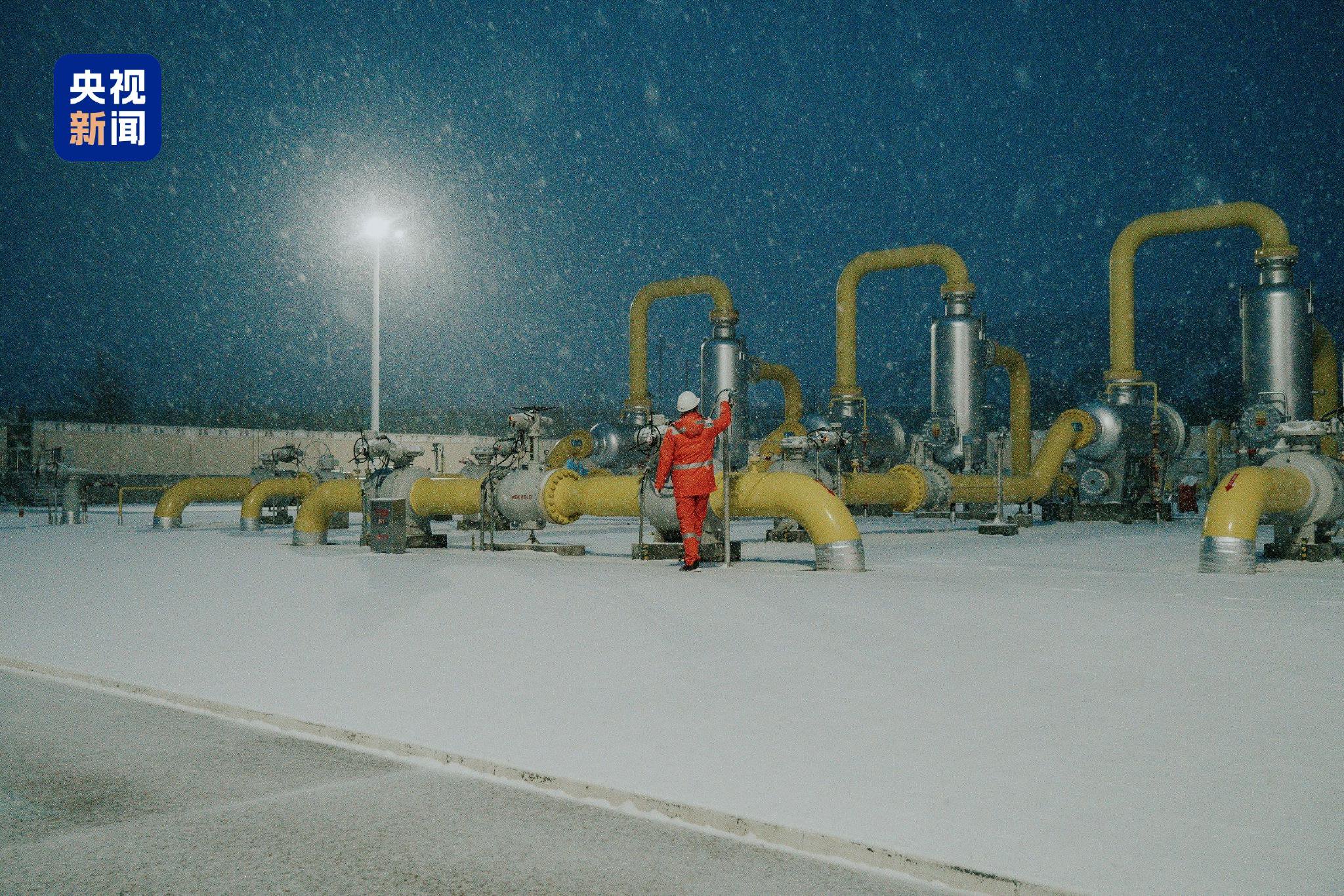
从“第一方气”到万亿输气量的能源跨越
Xin Hua Wang· 2025-12-12 01:39
Core Insights - The West-to-East Gas Pipeline project has successfully transported over 1 trillion cubic meters of natural gas since its launch in 2004, significantly enhancing China's natural gas supply capacity [1] - By 2025, China's annual natural gas consumption is projected to exceed 450 billion cubic meters, marking a substantial increase from approximately 20 billion cubic meters before the pipeline's inception [1] - The project has established a national gas supply network, addressing the mismatch between natural gas resources and market demand across different regions [1] Group 1: Infrastructure Development - The establishment of the National Pipeline Network Group in 2019 has strengthened the construction of a unified national gas network, improving operational efficiency and enhancing the delivery capacity of energy arteries [2] - The Zhongwei Compressor Station serves as a critical hub in the West-to-East Gas Pipeline, allowing for flexible gas distribution based on national demand, functioning like a transfer station in the gas delivery network [2] - Advanced equipment at the Zhongwei Compressor Station, including separators and flow meters, ensures the purity and accurate measurement of gas, which is essential for effective gas delivery and management [2] Group 2: Technological Advancements - Domestic equipment has become the mainstay for gas transmission at the Zhongwei Compressor Station, offering reliable performance and lower maintenance costs, thereby ensuring stable gas supply [3] - Safety and control capabilities have been enhanced through remote intelligent control from the Beijing Oil and Gas Control Center, allowing for precise and rapid response to operational needs [4] - The completion of the Zhongwei No. 2 Station has created a "dual insurance" gas supply framework, further bolstering regional distribution capabilities and supply resilience [4] Group 3: Economic Impact - The West-to-East Gas Pipeline not only serves as a conduit for energy transport but also represents a significant leap in China's energy infrastructure and technological innovation [4] - The extensive network of pipelines has become a vital link between eastern and western China, contributing to economic development and improving the quality of life for citizens [4]