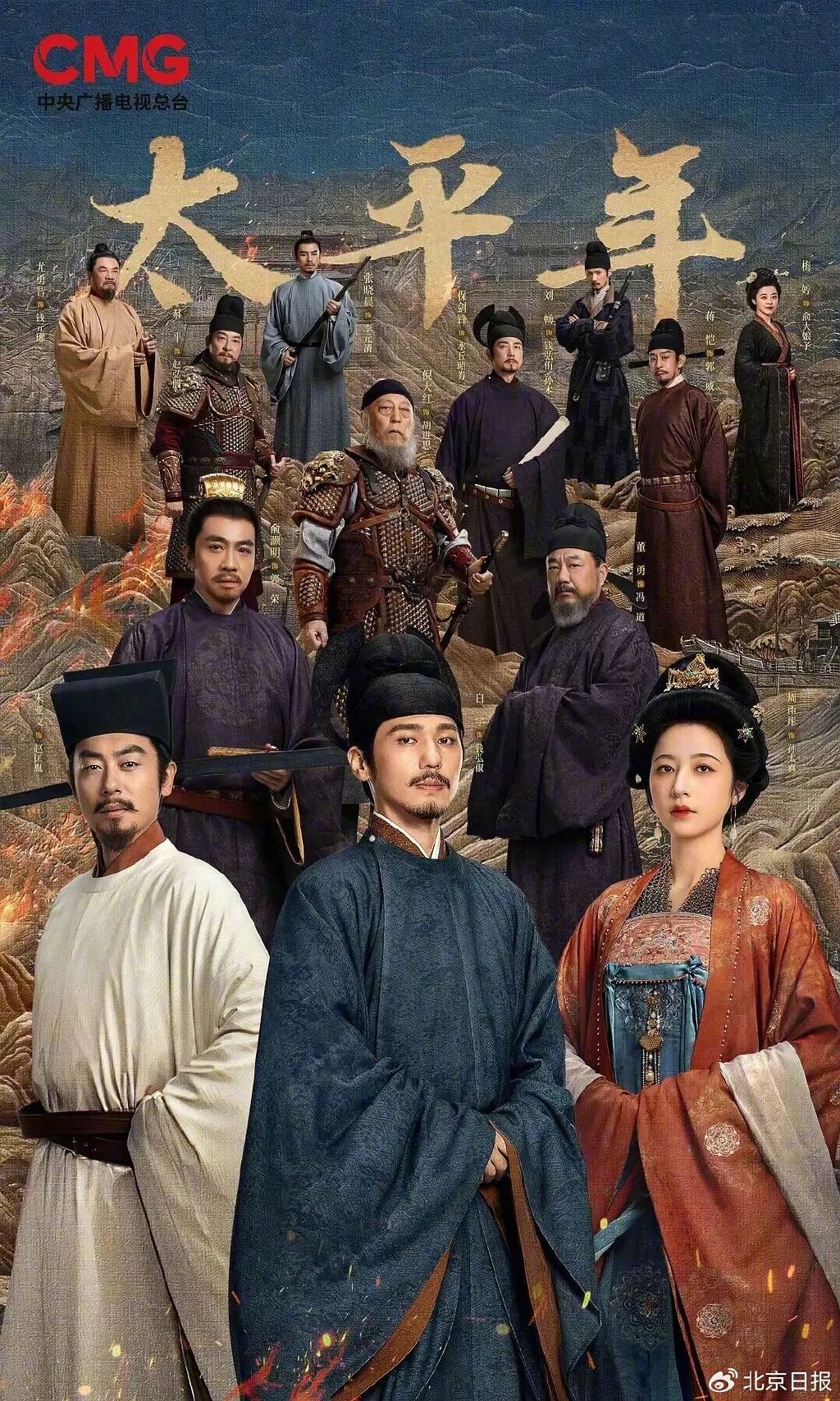
太平

Search documents
《太平年》:戏骨云集,每一帧都值得细翻历史书
Xin Lang Cai Jing· 2026-01-24 16:31
Core Viewpoint - The historical drama "Tai Ping Nian" explores the chaotic period of the Five Dynasties and Ten Kingdoms, focusing on the political struggles and choices that shaped the era, particularly through the lens of the Wu-Yue Kingdom and its eventual unification under the Song Dynasty [4][21]. Summary by Sections Historical Context - The drama is set in the aftermath of the Five Dynasties and Ten Kingdoms, a time marked by political instability and power shifts, where every decision could mean life or death [4]. - The narrative begins with a dual storyline, depicting the dire conditions in the north and the political intrigues in the south, establishing a backdrop of chaos and survival [8]. Plot Development - The first four episodes serve as a prologue, introducing key characters and the political landscape, including a grain shortage in the north and a scandal involving the sale of military gear in the south [10]. - The sudden death of the Wu-Yue king triggers a power struggle, leading to the ascension of the young prince Qian Hongzuo, while the main character, Qian Hongqi, is still in his formative years [12]. Character Dynamics - The series features a complex web of characters, including power-hungry officials and young princes, with the narrative focusing on their political maneuvers and personal sacrifices [15][21]. - The portrayal of the Wu-Yue Kingdom emphasizes its unique approach to governance during a tumultuous time, opting for a policy of retreat to maintain peace and stability [21]. Audience Reception - "Tai Ping Nian" has received polarized reviews, with some praising its cinematic quality and historical accuracy, while others criticize its complexity and high viewing threshold due to the multitude of characters introduced [17][18]. - The show challenges viewers to engage deeply with its historical context, requiring a level of familiarity with the era to fully appreciate the narrative [22]. Historical Significance - The series highlights the ultimate goal of "Tai Ping," representing a deep-rooted aspiration for peace in Chinese culture, and showcases the sacrifices made by individuals for the greater good [21][24]. - The historical backdrop of the Wu-Yue Kingdom's eventual submission to the Song Dynasty is portrayed as a significant moment in Chinese history, marking the end of fragmentation and the beginning of a unified state [24][26].

东西问丨王旭烽:《太平年》热播,“纳土归宋”这样照见中国统一智慧
Xin Lang Cai Jing· 2026-01-24 12:26
Core Viewpoint - The historical drama "Tai Ping Nian" reflects the wisdom of Chinese unification through the narrative of "Na Tu Gui Song," showcasing a significant historical choice made during a turbulent period in Chinese history [3][4]. Historical Context - The drama is set during the Five Dynasties and Ten Kingdoms period, characterized by frequent regime changes and wars, leading to a fragmented society [4]. - The Wu-Yue Kingdom, under the leadership of Qian Chu, maintained relative stability and a connection to the central authority, making it a unique entity during this chaotic time [4][5]. Key Historical Decision - "Na Tu Gui Song" occurred when the Northern Song had unified the north, and Qian Chu chose to peacefully integrate his territory into the Song dynasty, thus avoiding potential warfare in the southern regions [4][5]. - This decision preserved the social and cultural fabric of the southern regions, laying the groundwork for Hangzhou to become a significant cultural center during the Song dynasty [4][5]. Cultural Significance of "Tai Ping" - The term "Tai Ping" embodies a deep cultural aspiration for stability and order, representing a collective desire for peace during a time of chaos [7]. - The Wu-Yue Kingdom's commitment to avoiding unnecessary conflict and maintaining stability is highlighted as a crucial aspect of its historical significance [7][8]. Modern Relevance - The lessons from "Na Tu Gui Song" emphasize the importance of peaceful resolution and rational decision-making in the face of conflict, offering insights applicable to contemporary global challenges [10][12]. - The historical narrative serves as a reminder that unity can be achieved through cooperation and understanding rather than confrontation, which is relevant in today's increasingly polarized world [10][12].
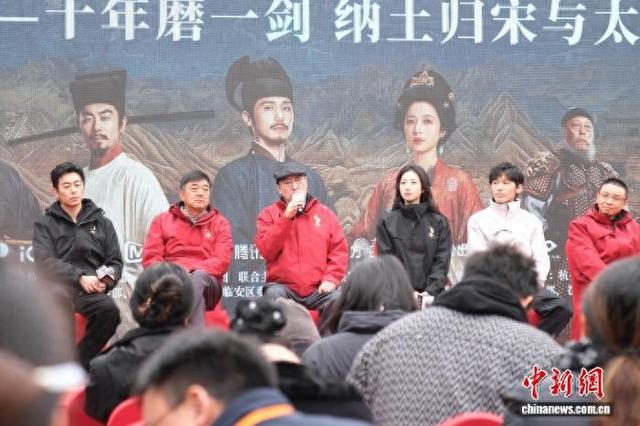
《太平年》发布会在杭举行 以史为镜叩问“太平”真义
Xin Lang Cai Jing· 2026-01-18 12:16
Core Viewpoint - The historical drama "Tai Ping Nian" reflects on the significance of peace and governance through the lens of the Wu-Yue Kingdom's political decisions during the Five Dynasties and Ten Kingdoms period, particularly the peaceful submission to the Northern Song Dynasty [1][3]. Group 1: Historical Context - The drama is set against the backdrop of the late Five Dynasties and early Northern Song period, focusing on the Wu-Yue Kingdom's ruler Qian Chao, who navigated internal and external challenges to achieve peace through the "Na Tu Gui Song" (submission to Song) [1][3]. - The Wu-Yue Kingdom, under the governance of the Qian family, maintained relative stability and prosperity for 72 years during a time of national fragmentation, contrasting with the rapid changes in the central plains [3][4]. Group 2: Cultural Significance - The historical value of the Wu-Yue Kingdom has been underestimated, with its principles of "protecting the region and ensuring the people's welfare" and the peaceful political transition showcasing a unique wisdom in maintaining regional stability [3][4]. - The cultural heritage from the Wu-Yue period, including significant sites like the Leifeng Pagoda and the Banshan Temple, reflects the social spirit and values of that era, emphasizing loyalty and concern for the people's livelihood [6][4]. Group 3: Production and Global Reach - The production team of "Tai Ping Nian" aims for historical accuracy, with meticulous attention to detail in costume and set design to immerse viewers in the historical context [4][6]. - The drama is positioned as a global narrative, with themes of peace, livelihood, and development resonating universally, highlighting the relevance of Chinese civilization's wisdom in contemporary global challenges [9][3].