太阳磁场精确测量

Search documents
新春走基层|戈壁小镇的星空守望——青海冷湖新春走访见闻
Xin Hua She· 2026-02-15 13:33
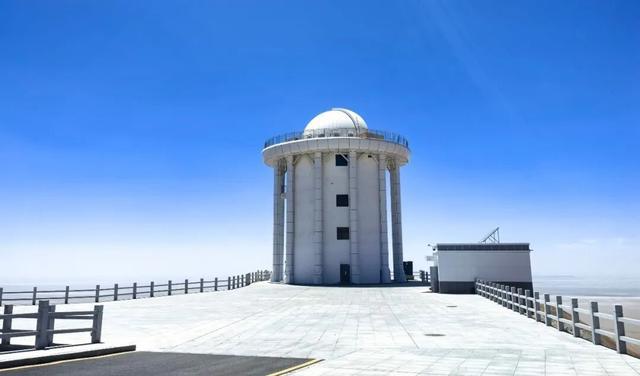
Core Viewpoint - The AIMS telescope, designed for precise solar magnetic field measurement, is set to be operational by October 2025, contributing significantly to solar research and space weather forecasting [1][3]. Group 1: AIMS Telescope and Its Functionality - The AIMS telescope operates in the mid-infrared spectrum to measure the solar magnetic field, requiring it to track the sun during the day [1]. - The telescope's observation team, led by Wang Chengsen, has been working at the Cold Lake observation base for nearly 200 days over the past year, focusing on capturing high-quality solar data [3][5]. - The data collected will be transmitted to servers in Beijing, aiding scientists in analyzing solar magnetic fields and their activity patterns, with results expected to be published in international academic journals [3][5]. Group 2: Importance of Solar Magnetic Field Research - Understanding solar magnetic fields is crucial as they are the primary mechanism behind sunspot formation and can trigger solar flares and coronal mass ejections, impacting spacecraft and communication systems [5]. - Precise measurement of solar magnetic fields will enhance the understanding of solar and stellar formation and evolution, improving space weather forecasting and system safety [5]. Group 3: Local Support and Infrastructure Development - The Cold Lake region has implemented the "Cold Lake Astronomical Observation Environmental Protection Regulations," the first local law in China aimed at protecting dark night skies [5]. - Increased visitor traffic due to the region's unique natural landscape and astronomical observations poses challenges for local infrastructure and governance, prompting plans for new facilities to support astronomical research and related industries [5][6]. - The second phase of the Cold Lake astronomical observation research base is being planned, which will accommodate larger telescopes and support ancillary industries such as commercial space ventures [6].

“凝视”太阳,捕捉这道“光”——全球首台中红外波段太阳磁场望远镜启用
Ke Ji Ri Bao· 2025-10-20 09:22
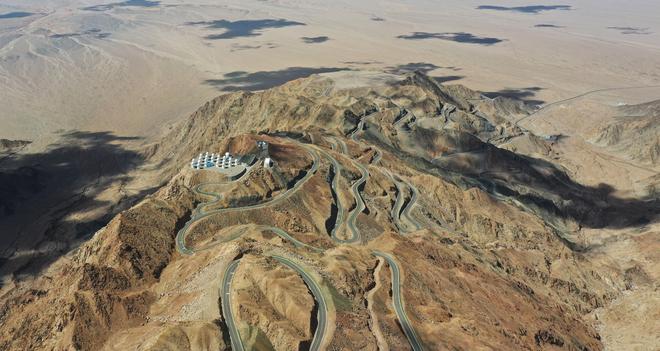
Core Insights - The AIMS telescope, a significant advancement in solar magnetic field observation, has been officially launched at an altitude of 4000 meters in Qinghai, China, marking a milestone in international solar research [1][2][4] Group 1: Technological Breakthroughs - The AIMS telescope represents the first dedicated instrument for measuring solar magnetic fields in the mid-infrared spectrum, filling a critical gap in international solar observation capabilities [1][2] - The telescope has achieved a measurement precision improvement by an order of magnitude, transitioning from indirect to direct measurement methods [2][3] - Key technological advancements include the use of a 12.3-micron mid-infrared observation method and the successful measurement of the Zeeman splitting, enhancing measurement precision to better than 10 Gauss [3] Group 2: Construction Challenges - The construction of the AIMS telescope faced significant challenges due to the harsh high-altitude environment, requiring innovative solutions for transporting materials and ensuring operational functionality [4] - The project timeline included milestones such as the start of dome construction in 2020, completion of the main telescope structure by the end of 2022, and the commencement of trial observations in September 2023 [4] - Technical difficulties included issues with the optical system due to low temperatures and electromagnetic interference, which were resolved through extensive troubleshooting efforts [4] Group 3: Future Prospects - The AIMS telescope has entered the scientific output phase, with its data expected to support advanced research in solar physics and space weather forecasting [5] - Future plans include developing collaborative observation strategies that integrate mid-infrared measurements with multi-band observations to further explore unresolved questions about solar magnetic fields [5]
【新华社】全球首台!揭秘精确测量太阳磁场的望远镜
Xin Hua She· 2025-10-20 02:25
Core Insights - The AIMS telescope, a groundbreaking instrument for measuring solar magnetic fields in the mid-infrared spectrum, has successfully passed its project acceptance, marking a significant advancement in solar observation technology [2][4][6] Group 1: Technological Breakthroughs - The AIMS telescope allows for direct measurement of solar magnetic fields, overcoming a century-old limitation of relying on indirect calculations through visible light [4] - By utilizing a 12.3-micron mid-infrared wavelength and a narrowband Fourier spectrometer, the telescope achieves a measurement precision better than 10 Gauss, significantly enhancing the accuracy of solar magnetic field measurements [4] - All components of the AIMS telescope, including the infrared spectrometer and cooling system, are domestically produced, showcasing China's capabilities in astronomical instrument innovation [4] Group 2: Engineering Challenges - Constructing the telescope at an altitude of 4,000 meters posed significant logistical and engineering challenges, including the transportation of materials and the establishment of living conditions for the research team [5] - The team faced issues with optical quality due to low temperatures, requiring extensive troubleshooting and modifications to the equipment [5] - Interference from electromagnetic signals during the operation of the Fourier spectrometer was resolved through rigorous filtering and grounding techniques, leading to the successful capture of solar spectra in July 2023 [5] Group 3: Future Applications - The AIMS telescope is expected to enhance the understanding of solar eruptions and their mechanisms, providing critical data for predicting solar activity and improving space weather forecasts [6] - The ability to predict solar events days in advance will be crucial for satellite operations and power grid management, emphasizing the importance of understanding solar magnetic fields [6] - The development of the AIMS telescope represents a significant leap in international capabilities for mid-infrared solar magnetic field observation, contributing to both scientific research and societal applications [6]

【科技日报】全球首台中红外波段太阳磁场望远镜启用
Ke Ji Ri Bao· 2025-10-20 02:25
Core Insights - The AIMS telescope, a significant advancement in solar magnetic field observation, has been officially launched and is expected to enhance understanding of solar activities and improve space weather forecasting [1][2]. Group 1: Technological Breakthroughs - The AIMS telescope represents the first dedicated instrument for measuring solar magnetic fields in the mid-infrared spectrum, filling a critical gap in international solar observation capabilities [1][2]. - The telescope has achieved a measurement precision improvement by an order of magnitude, transitioning from indirect calculations to direct measurements of solar magnetic fields [2][3]. - Key technological advancements include the use of a 12.3-micron mid-infrared observation method and the successful measurement of the Zeeman splitting, achieving a precision better than 10 Gauss [3]. Group 2: Construction Challenges - The AIMS telescope is located at an altitude of 4,000 meters in the harsh environment of Qinghai's Cold Lake, presenting significant logistical and engineering challenges [6]. - Construction milestones included the start of dome construction in 2020, completion of the main telescope structure by the end of 2022, and the commencement of trial observations in September 2023 [6]. - The project faced extreme conditions, including reliance on helicopters for material transport and the need for construction personnel to live in containers due to the lack of housing [6]. Group 3: Scientific Contributions - The AIMS telescope has successfully captured multiple mid-infrared solar flare data, providing new insights into the mechanisms of energy transfer during solar eruptions [5]. - The telescope is now in the scientific output phase, with its data expected to support advanced research in solar physics and improve predictions of solar activity and space weather [7]. - Future plans include developing collaborative observation strategies that integrate mid-infrared measurements with multi-band observations to further explore unresolved questions about solar magnetic fields [7].

全球首台 正式启用!
Zhong Guo Ji Jin Bao· 2025-10-18 00:17
Core Insights - The "AIMS" (Advanced Infrared Measurement System) has been officially launched, marking it as the world's first dedicated mid-infrared solar magnetic field observation system [1] - AIMS aims to enhance the understanding of solar phenomena and improve space weather forecasting through precise measurement of solar magnetic fields [1] Group 1: Technological Breakthroughs - AIMS has achieved significant technological advancements since its development began in 2015, including a breakthrough in direct measurement methods for solar magnetic fields [1] - The measurement precision of solar magnetic fields has been improved to better than 10 Gauss, addressing a century-old bottleneck in solar magnetic field measurement [1] Group 2: Research Implications - AIMS has already accumulated valuable scientific observation data, which is expected to contribute to important advancements in areas such as solar three-dimensional atmospheric dynamics and flare physics [1]
全球首台,正式启用!
Zhong Guo Ji Jin Bao· 2025-10-18 00:04
Core Insights - The "AIMS" (Advanced Infrared Measurement System) has been officially launched, marking it as the world's first dedicated mid-infrared solar magnetic field observation device [1] - AIMS aims to enhance the understanding of solar phenomena and improve space weather forecasting through precise measurement of solar magnetic fields [1] Group 1: Technological Breakthroughs - AIMS has achieved significant technological advancements since its development began in 2015, including breakthroughs in direct measurement methods for solar magnetic fields [1] - The measurement precision of solar magnetic fields has been improved to better than 10 Gauss, addressing a century-old bottleneck in solar magnetic field measurement [1] Group 2: Research Implications - AIMS has already accumulated valuable scientific observation data, which is expected to contribute to important advancements in areas such as three-dimensional solar atmospheric dynamics and flare physics [1]
全球首台,正式启用!
中国基金报· 2025-10-17 23:58
Core Points - The "AIMS" (Mid-Infrared Observation System for Accurate Measurement of Solar Magnetic Fields) has been officially launched, marking it as the world's first dedicated mid-infrared solar magnetic field observation device [1] - AIMS is expected to significantly advance the understanding of solar physics and provide critical data for space weather forecasting [1] Group 1 - AIMS successfully passed national acceptance and is now operational, representing a major technological breakthrough in solar observation [1] - The system operates at an altitude of 4000 meters and has achieved a measurement precision of better than 10 Gauss, addressing a century-old challenge in solar magnetic field measurement [1] - AIMS has already accumulated valuable scientific observation data, which is anticipated to contribute to research in solar three-dimensional atmospheric dynamics and flare physics [1]

全球首台!揭秘精确测量太阳磁场的望远镜
Xin Hua Wang· 2025-10-17 23:06
Core Insights - The AIMS telescope, the world's first mid-infrared solar magnetic field observation system, has successfully passed its project acceptance, marking a significant breakthrough in solar magnetic field measurement [1][2] Group 1: Technological Breakthroughs - AIMS telescope directly measures the solar magnetic field using mid-infrared wavelengths, overcoming a century-old limitation of indirect measurement through visible light [1] - The precision of magnetic field measurement has been improved to better than 10 Gauss level by utilizing a 12.3-micron mid-infrared observation [1] - All components of the AIMS telescope, including the infrared spectrometer and vacuum cooling system, are domestically produced, showcasing China's innovation capabilities in astronomical instruments [1] Group 2: Engineering Challenges - The construction of the telescope at an altitude of 4000 meters posed significant logistical challenges, including transportation of materials by helicopter and living conditions for researchers [3] - The team faced technical difficulties, such as optical quality degradation due to low temperatures, which required extensive troubleshooting and modifications [3] - After overcoming electromagnetic interference issues, the team successfully received the solar spectrum for the first time on July 15, 2023, marking a milestone in mid-infrared solar observation [3] Group 3: Future Applications - The AIMS telescope is expected to enhance the understanding of solar flares and improve the prediction capabilities for space weather, providing critical data for satellite operations and power grid management [5] - The project fills a gap in international mid-infrared solar magnetic field observation, contributing to the broader field of solar research [5] - The advancements in observation technology signify a shift from exploring cosmic mysteries to serving societal needs, reflecting the progress of China's scientific endeavors [5]
全球首台,正式启用!实现多项关键技术突破
Huan Qiu Wang Zi Xun· 2025-10-17 07:50
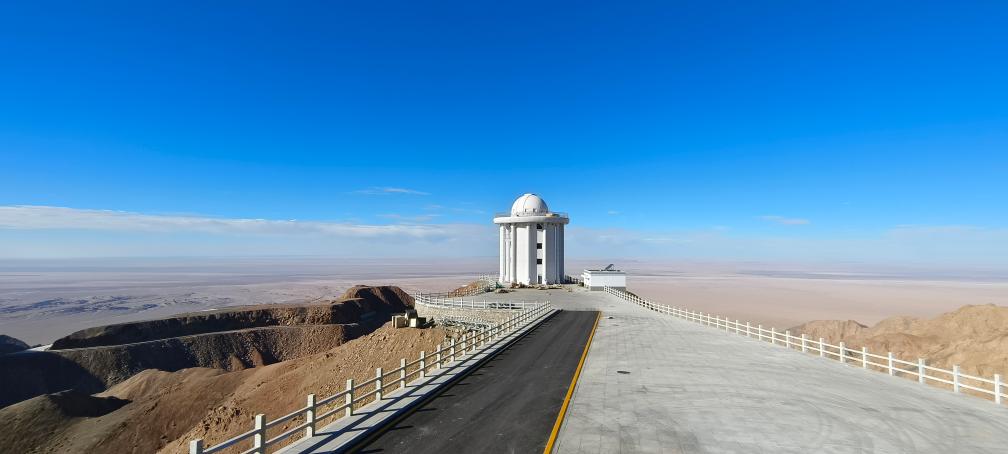
Core Points - The "AIMS" (Advanced Infrared Measurement System) has successfully passed national acceptance and is officially operational, marking it as the world's first dedicated mid-infrared solar magnetic field observation device [1][3] - AIMS is China's first astronomical telescope operating in the mid-infrared range, aimed at enhancing the understanding of solar phenomena in this wavelength [1][3] - Accurate measurement of solar magnetic fields is crucial for understanding solar and stellar physics, as well as for space weather forecasting [1] Technical Achievements - AIMS was constructed at an altitude of 4,000 meters at the Qinhai Cold Lake site and has achieved several key technological breakthroughs since its development began in 2015 [3] - The system utilizes 12.3-micron mid-infrared observations to directly measure solar magnetic fields, improving measurement precision to better than 10 Gauss, addressing a century-old bottleneck in solar magnetic field measurement [3] - AIMS has already accumulated valuable scientific observation data, which is expected to contribute significantly to research in solar three-dimensional atmospheric dynamics and flare physics [3]