
AIMS望远镜

Search documents
【新华社】戈壁小镇的星空守望——青海冷湖新春走访见闻
Xin Hua She· 2026-02-24 02:27
Group 1 - The AIMS telescope is a significant national scientific research project aimed at precise measurement of solar magnetic fields, set to be operational by October 2025 [2] - The telescope operates during the day, tracking the sun and measuring its magnetic field through mid-infrared spectral analysis [2] - The AIMS telescope team is dedicated to collecting extensive observational data, which will be transmitted to servers in Beijing for analysis by scientists [4] Group 2 - The solar magnetic field is crucial for understanding phenomena such as sunspots and solar flares, which can impact spacecraft and communication systems [4] - Over 30 telescopes are currently engaged in observations or trial observations at the Cold Lake site, highlighting the growing importance of this location for astronomical research [4] - The implementation of the "Cold Lake Astronomical Observation Environment Protection Regulations" in 2023 marks a significant step in protecting the dark night sky, which is vital for astronomical observations [5] Group 3 - The local government is actively working on infrastructure improvements to support the increasing visitor flow and the development of astronomical observation and related industries [5] - Plans for the second phase of the Cold Lake astronomical observation research base are underway, which will include space for larger telescopes and support for commercial space industries [5]

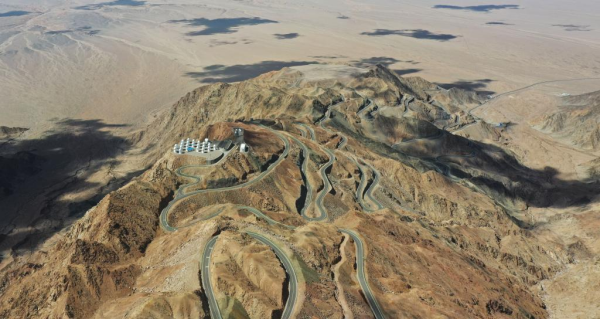
新春走基层|戈壁小镇的星空守望——青海冷湖新春走访见闻
Xin Hua She· 2026-02-15 13:33
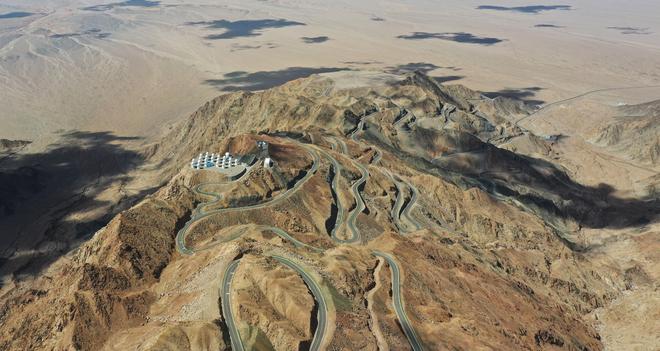
Core Viewpoint - The AIMS telescope, designed for precise solar magnetic field measurement, is set to be operational by October 2025, contributing significantly to solar research and space weather forecasting [1][3]. Group 1: AIMS Telescope and Its Functionality - The AIMS telescope operates in the mid-infrared spectrum to measure the solar magnetic field, requiring it to track the sun during the day [1]. - The telescope's observation team, led by Wang Chengsen, has been working at the Cold Lake observation base for nearly 200 days over the past year, focusing on capturing high-quality solar data [3][5]. - The data collected will be transmitted to servers in Beijing, aiding scientists in analyzing solar magnetic fields and their activity patterns, with results expected to be published in international academic journals [3][5]. Group 2: Importance of Solar Magnetic Field Research - Understanding solar magnetic fields is crucial as they are the primary mechanism behind sunspot formation and can trigger solar flares and coronal mass ejections, impacting spacecraft and communication systems [5]. - Precise measurement of solar magnetic fields will enhance the understanding of solar and stellar formation and evolution, improving space weather forecasting and system safety [5]. Group 3: Local Support and Infrastructure Development - The Cold Lake region has implemented the "Cold Lake Astronomical Observation Environmental Protection Regulations," the first local law in China aimed at protecting dark night skies [5]. - Increased visitor traffic due to the region's unique natural landscape and astronomical observations poses challenges for local infrastructure and governance, prompting plans for new facilities to support astronomical research and related industries [5][6]. - The second phase of the Cold Lake astronomical observation research base is being planned, which will accommodate larger telescopes and support ancillary industries such as commercial space ventures [6].
回望2025 多个“大国重器”取得新突破 “中国力量”闪耀寰宇
Yang Shi Wang· 2026-01-01 11:20
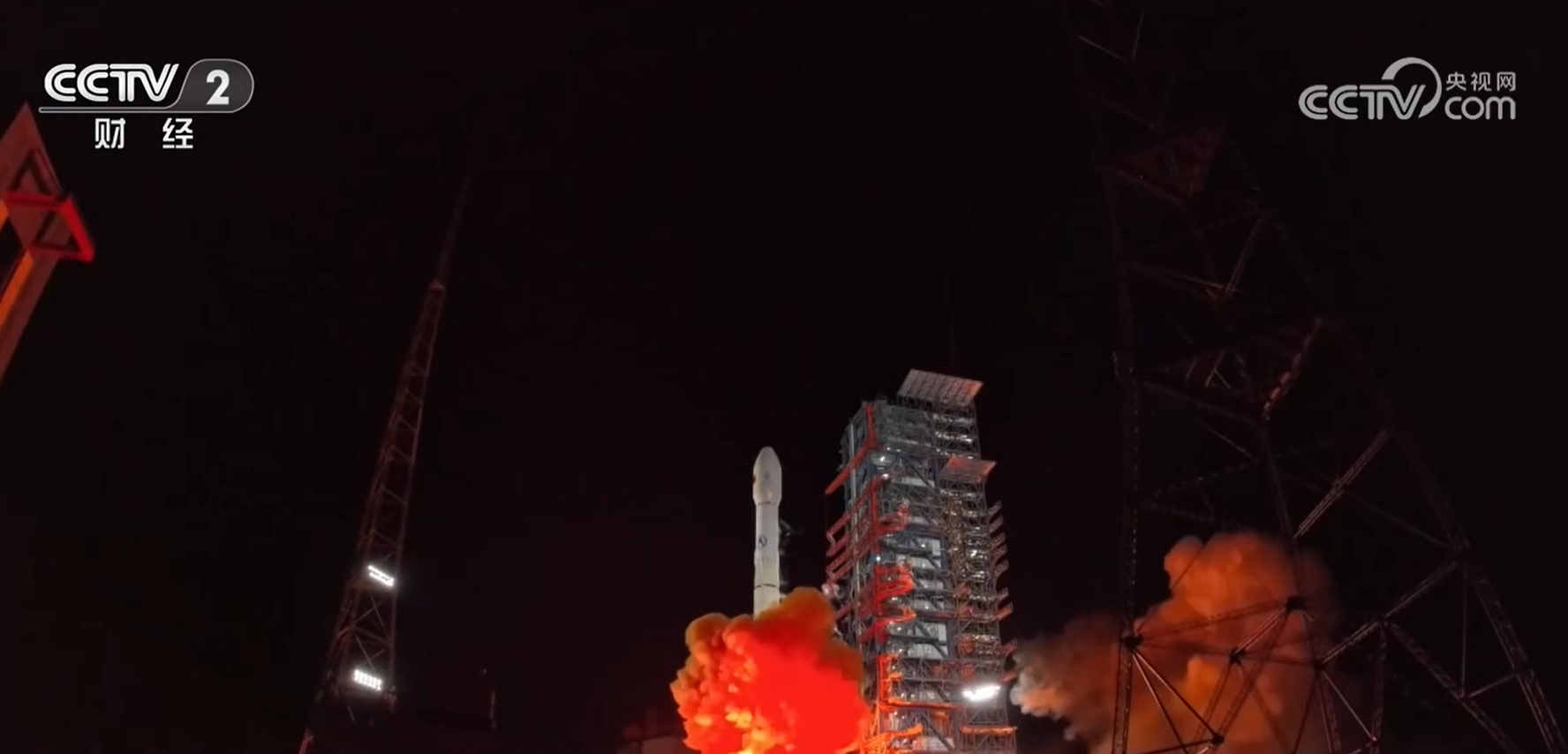
Group 1 - China's space exploration has achieved significant milestones with the successful launch of the Tianwen-2 asteroid probe, which aims to conduct dual-target exploration of asteroid 2016HO3 and comet 311P [3] - The Long March 3B rocket successfully launched the Tianwen-2 probe, marking a breakthrough in China's planetary exploration capabilities [3] - The successful launch of the Lijian-1 rocket, which deployed nine satellites in a single mission, signifies the scaling up of international business in China's commercial space sector [5] Group 2 - China's manned submersible technology continues to advance, with the Jiaolong submersible completing its first dive in the Arctic region, showcasing a new collaborative underwater operation model [7] - Two ultra-large dredging vessels, Tongjun and Jun Guang, have been launched, featuring the largest dredging capacity in Asia and world-leading loading efficiency [9] Group 3 - The world's largest 26 MW offshore wind turbine has successfully connected to the grid in Shandong, capable of generating up to 100 million kWh annually under optimal conditions [12] - The first unit of the "Hualong One" nuclear power plant in Fujian has successfully connected to the grid, with an expected annual output of 20 billion kWh [14] Group 4 - China's largest diameter shield tunneling machine has been completed and is set for export, featuring advanced intelligent technologies and a diameter of 15.7 meters [15] - The AG600 amphibious aircraft has entered mass production, becoming the world's largest civil amphibious aircraft, enhancing China's aerial rescue capabilities [16] Group 5 - The CR450 high-speed train has set a new record with a speed of 453 km/h, marking a significant advancement in China's high-speed rail technology [17] - The Jiangmen neutrino experiment facility has commenced operations, achieving a major milestone in measuring solar neutrino oscillation parameters with improved precision [18] - The AIMS telescope has successfully measured solar magnetic fields, providing new capabilities for solar observation [19]
上天入地、钻山探海,2025年我国多个“大国重器”迎高光时刻!
Sou Hu Cai Jing· 2025-12-31 16:12
Group 1: Agricultural Innovation - In 2025, Yunnan Academy of Agricultural Sciences will launch over a thousand new "Chinese-style" rose cut flower varieties, aiming to embed "Chinese core" into fresh flowers [1] Group 2: Aerospace Advancements - China's aerospace sector is experiencing "technological breakthroughs" and "scale explosion," highlighted by the successful launch of the Tianwen-2 probe and the "one rocket, nine satellites" mission, marking a significant step in international business [3] Group 3: Deep-Sea Technology - In 2025, China's manned submersible application level will continue to improve, with the "Jiaolong" submersible completing its first dive in the Arctic and two large dredging vessels launched, setting records in dredging depth and capacity [5] Group 4: Energy Technology - A 26 MW offshore wind turbine developed in China successfully connected to the grid, capable of generating 100 million kWh annually, and the "Hualong One" nuclear power unit in Fujian has also successfully connected to the grid, with an expected annual output of 20 billion kWh [7] Group 5: Manufacturing Strength - China's self-developed large-diameter shield tunneling machine and the AG600 amphibious aircraft have entered mass production, while the CR450 high-speed train prototype has set a new speed record of 453 km/h, showcasing advancements in manufacturing capabilities [9] Group 6: Scientific Research - The Jiangmen neutrino experiment has successfully completed the infusion of 20,000 tons of liquid scintillator, becoming the first large-scale neutrino facility, and the AIMS telescope has been accepted for operation, enhancing solar magnetic field observation [11]
人类观测太阳又多了一双“慧眼” 从一台望远镜“看”源头创新
Ren Min Ri Bao· 2025-11-17 08:49
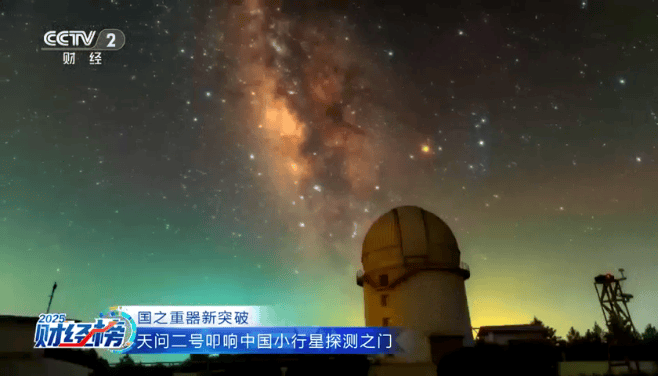
Core Insights - The AIMS telescope, the world's first dedicated mid-infrared solar magnetic field observation device, has been officially launched, enhancing human observation capabilities of the sun [1][2] - The development of AIMS fills a significant gap in international solar magnetic field observation in the mid-infrared spectrum, supporting China's leading position in solar physics research [1][3] Group 1: Technological Advancements - AIMS aims to improve magnetic field measurement precision to better than 10 Gauss and has developed the world's first mid-infrared Fourier spectrometer with ultra-high spectral resolution, achieving a 156-fold increase in spectral resolution compared to previous domestic levels [3] - The project has made several key technological breakthroughs since its initiation in 2015, including advancements in polarization measurement technology, which required starting from scratch due to the lack of existing mid-infrared measurement devices [3][4] Group 2: Collaborative Efforts - The AIMS telescope's development involved a multi-disciplinary collaborative effort, with various research institutes contributing to different components, ensuring organized and efficient project execution [3][4] - The project emphasized top-level design from the outset, allowing for smooth integration of various components without design rework issues [4] Group 3: Site Selection and Local Support - The site for AIMS was carefully chosen based on specific requirements such as long sunlight duration, dry climate, and high altitude, with Qinghai's Seishiteng Mountain ultimately selected after evaluating five potential locations [5] - Local government support was crucial for the project's success, facilitating the transportation of equipment and ensuring the necessary infrastructure was developed in a timely manner [5] Group 4: Team Dynamics and Challenges - The project team, primarily composed of young researchers, faced significant challenges due to high-altitude conditions, yet demonstrated resilience and commitment to advancing the project despite difficult living conditions [6] - The team successfully identified and resolved issues related to low-temperature effects on optical performance, showcasing their problem-solving capabilities and dedication to the project's success [6]
【人民日报】从一台望远镜“看”源头创新
Ren Min Ri Bao· 2025-11-17 01:57
Core Insights - The AIMS telescope, the world's first dedicated mid-infrared solar magnetic field observation device, has been officially launched, enhancing human observation capabilities of the sun [2][3][4] - The development of AIMS fills a significant gap in international solar magnetic field observation in the mid-infrared band, providing a reference for future large astronomical equipment in high-altitude areas [3][4] Group 1: Technological Advancements - AIMS aims to improve magnetic field measurement precision to better than 10 Gauss and has developed the world's first mid-infrared Fourier spectrometer with both ultra-high spectral resolution and imaging capabilities, achieving a 156-fold increase in spectral resolution compared to previous domestic levels [5] - The project has made several key technological breakthroughs since its initiation in 2015, including advancements in polarization measurement technology, which required starting from scratch due to the lack of existing mid-infrared measurement devices [5][6] Group 2: Collaborative Efforts - The development of AIMS is a successful example of multidisciplinary collaboration, involving various research institutes such as the National Astronomical Observatories, Shanghai Institute of Technical Physics, and Xi'an Institute of Optics and Precision Mechanics, among others [6][7] - The project emphasized top-level design and clear technical interfaces, which facilitated smooth integration of various components and minimized design rework [6] Group 3: Site Selection and Local Support - The site for AIMS was chosen based on strict requirements for sunlight exposure, dry climate, and thin air, with the final location being the Qinhai Lenghu Saishiteng Mountain after evaluating five potential sites [6][7] - Local government support was crucial for the project's construction, providing assistance such as helicopter transport for equipment to the high-altitude site [7] Group 4: Team Dynamics and Challenges - The project team, primarily composed of young researchers, faced significant challenges due to high-altitude conditions, including cold temperatures and scarce resources, yet they remained committed to advancing the project [8] - During the testing phase, the team identified and resolved issues related to low-temperature effects on imaging quality, demonstrating their problem-solving capabilities and dedication [8]

从一台望远镜“看”源头创新(科技视点·加快高水平科技自立自强)
Ren Min Wang· 2025-11-16 22:26
Core Insights - The AIMS telescope, the world's first dedicated mid-infrared solar magnetic field observation device, has been officially launched, enhancing human observation capabilities of the sun [2][3] Group 1: Technological Advancements - AIMS telescope aims to improve magnetic field measurement precision to better than 10 Gauss and has developed the world's first mid-infrared Fourier spectrometer with ultra-high spectral resolution, achieving a 156-fold increase in spectral resolution compared to previous domestic levels [5] - The project has made significant technological breakthroughs since its inception in 2015, including the development of polarization measurement technology for mid-infrared wavelengths, which required starting from scratch due to the lack of existing devices and components [5][6] Group 2: Collaborative Efforts - The development of the AIMS telescope involved a multi-disciplinary collaborative effort, with various research institutes contributing to different components, ensuring a well-coordinated project without design rework issues [6][7] - The project emphasized top-level design and clear communication of technical requirements among participating institutions, which facilitated smooth integration of various parts [6] Group 3: Site Selection and Local Support - The telescope's location was carefully chosen based on criteria such as long sunlight duration, dry climate, and high altitude, with Qinghai's Seishiteng Mountain ultimately selected after evaluating five potential sites [7] - Local government support was crucial for the project's success, providing assistance in transporting equipment to the high-altitude site [7] Group 4: Team Dynamics and Challenges - The project team, primarily composed of young researchers, faced significant challenges due to high-altitude conditions, yet they demonstrated resilience and commitment to advancing the project despite difficult living conditions [8] - During the testing phase, the team successfully identified and resolved issues related to low temperatures affecting imaging quality, showcasing their problem-solving capabilities [8]

人类观测太阳又多了一双“慧眼” 从一台望远镜“看”源头创新(科技视点·加快高水平科技自立自强)
Ren Min Ri Bao· 2025-11-16 22:04
Core Insights - The AIMS telescope, the world's first dedicated instrument for observing solar magnetic fields in the mid-infrared spectrum, has been officially launched, enhancing human observation capabilities of the sun [1][2][3] Group 1: Technological Advancements - AIMS telescope aims to improve magnetic field measurement precision to better than 10 Gauss, with a Fourier spectrometer achieving a spectral resolution 156 times higher than previous domestic levels [3][4] - The project has made significant technological breakthroughs since its inception in 2015, including the development of the largest mid-infrared wave plate made from cadmium selenide [3][4] Group 2: Collaborative Efforts - The development of the AIMS telescope involved a multi-disciplinary approach with collaboration among various research institutes, ensuring smooth integration of different components [4][5] - The project emphasized top-level design and clear communication of technical requirements among participating organizations, which minimized design rework [4] Group 3: Site Selection and Local Support - The telescope's location in Qinghai's Se Shiteng Mountain was chosen for its optimal conditions for solar observation, including long sunlight hours and dry climate [5] - Local government support was crucial for the project's infrastructure development, including the use of helicopters for transporting equipment to the high-altitude site [5] Group 4: Team Dynamics and Challenges - The project team, primarily composed of young researchers, faced significant challenges due to high-altitude conditions, yet demonstrated resilience and commitment to advancing the project [6] - The team successfully identified and resolved issues related to low-temperature effects on optical performance, showcasing their problem-solving capabilities [6] Group 5: Future Directions - AIMS telescope has already collected valuable mid-infrared data on solar flares, contributing to the understanding of energy transfer mechanisms during solar eruptions [6] - The project aims to maintain and operate the telescope effectively while focusing on cutting-edge scientific research in solar physics [6]
走近大国重器 | “看”清太阳磁场的奥秘
Zhong Yang Ji Wei Guo Jia Jian Wei Wang Zhan· 2025-11-03 00:10
Core Viewpoint - The AIMS telescope, a significant scientific instrument for measuring solar magnetic fields, has been officially launched and is expected to enhance understanding of solar phenomena and their impact on Earth [7][15]. Group 1: AIMS Telescope Overview - The AIMS telescope is the world's first mid-infrared solar magnetic field observation device, recently passing acceptance tests and officially entering operation [7][15]. - It is located at an altitude of approximately 4000 meters in the Qaidam Basin, chosen for its optimal observational conditions after extensive site evaluations [14]. Group 2: Scientific Significance - Understanding solar magnetic fields is crucial for deciphering solar phenomena, which have implications for various aspects of life on Earth, including climate prediction and infrastructure safety [10][11]. - The AIMS telescope improves measurement precision from 100 Gauss to 10 Gauss, allowing for more accurate observations of solar magnetic fields [12][13]. Group 3: Development and Innovation - The project took over a decade to develop, with a focus on creating a high-spectral-resolution imaging system that is domestically produced [12][13]. - The team faced numerous challenges, including harsh environmental conditions and the need for self-sufficiency in technology development [20]. Group 4: Collaborative Efforts - The AIMS telescope works in conjunction with space-based solar observation satellites, enhancing the overall efficiency and quality of solar observations through a "ground-space collaboration" approach [17][18]. - This collaboration allows for comprehensive tracking of solar activities and their effects on Earth, contributing to improved space weather forecasting [18].
“凝视”太阳,捕捉这道“光”——全球首台中红外波段太阳磁场望远镜启用
Ke Ji Ri Bao· 2025-10-20 09:22
Core Insights - The AIMS telescope, a significant advancement in solar magnetic field observation, has been officially launched at an altitude of 4000 meters in Qinghai, China, marking a milestone in international solar research [1][2][4] Group 1: Technological Breakthroughs - The AIMS telescope represents the first dedicated instrument for measuring solar magnetic fields in the mid-infrared spectrum, filling a critical gap in international solar observation capabilities [1][2] - The telescope has achieved a measurement precision improvement by an order of magnitude, transitioning from indirect to direct measurement methods [2][3] - Key technological advancements include the use of a 12.3-micron mid-infrared observation method and the successful measurement of the Zeeman splitting, enhancing measurement precision to better than 10 Gauss [3] Group 2: Construction Challenges - The construction of the AIMS telescope faced significant challenges due to the harsh high-altitude environment, requiring innovative solutions for transporting materials and ensuring operational functionality [4] - The project timeline included milestones such as the start of dome construction in 2020, completion of the main telescope structure by the end of 2022, and the commencement of trial observations in September 2023 [4] - Technical difficulties included issues with the optical system due to low temperatures and electromagnetic interference, which were resolved through extensive troubleshooting efforts [4] Group 3: Future Prospects - The AIMS telescope has entered the scientific output phase, with its data expected to support advanced research in solar physics and space weather forecasting [5] - Future plans include developing collaborative observation strategies that integrate mid-infrared measurements with multi-band observations to further explore unresolved questions about solar magnetic fields [5]