央企科创

Search documents
央企科创成果发布,多家上市公司产品在列
Shang Hai Zheng Quan Bao· 2026-01-25 16:01
Core Viewpoint - The State-owned Assets Supervision and Administration Commission (SASAC) of the State Council has released the 2024 edition of the Central Enterprises' Scientific and Technological Achievements Handbook, which includes 208 achievements from 67 central enterprises across seven fields, including electronic components, software products, and high-end equipment [1]. Group 1: Electronic Components - The handbook features 16 achievements in electronic components, including GPUs, CPUs, DPUs, and RISC-V products [1][2]. - The "Tengyun S5000C" high-performance server CPU, developed by Feiteng Information Technology Co., is included, featuring an FTC862 processor core and compatibility with the ARMv8.2 instruction set [3]. - The Lingjiu GP200 graphics processor from China Shipbuilding Group is also listed, with three models supporting various graphics and computing standards [3]. Group 2: Software Products - The handbook includes multiple software products such as the full-stack power system intelligent agent and the Tianyi Cloud Intelligent Computing Platform [5][6]. - The full-stack power system intelligent agent, developed by Southern Power Grid Artificial Intelligence Technology Co., provides a unified management infrastructure for heterogeneous computing power [6]. - The Tianyi Cloud Intelligent Computing Platform, developed by Tianyi Cloud Technology Co., offers integrated intelligent computing acceleration capabilities [6]. Group 3: Achievements from Listed Companies - Several achievements from state-owned listed companies are highlighted, including the "CodeWise" PLC programming development software from Guodian Nanzi, which is applicable in various industrial automation fields [8]. - Baoshan Iron & Steel's "Tianxing T series large PLC" integrates 19 patented technologies and significantly improves production efficiency and reduces costs [8]. - The "AI Computing Center High-Speed Optical Interconnect 400G & 800G Optical Modules" from Guangxun Technology is designed for data center interconnections and has achieved significant improvements in power consumption and bandwidth [9].
共享基经丨与AI一起读懂ETF(十三):央企科技和央企科创主题,有何不同?
Mei Ri Jing Ji Xin Wen· 2025-05-08 02:08
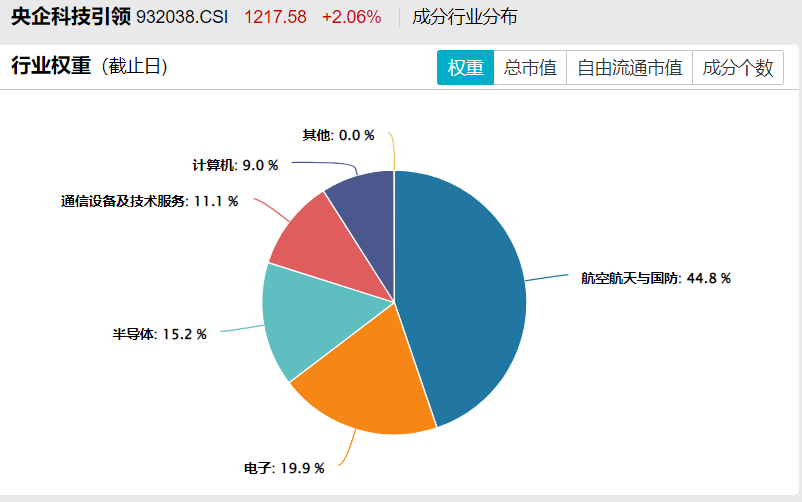
Core Viewpoint - The article discusses the differences and similarities between two indices related to central enterprise technology: the China Securities National New Central Enterprise Technology Leading Index and the China Securities Chengtong Central Enterprise Technology Innovation Index, highlighting their performance and characteristics in the context of recent market movements. Group 1: Differences Between the Indices - The China Securities National New Central Enterprise Technology Leading Index is customized by Guoxin Investment Co., Ltd., while the China Securities Chengtong Central Enterprise Technology Innovation Index is customized by China Chengtong Group [2]. - The selection methods differ: the National New Index scores based on net profit growth, revenue growth, total market capitalization, and R&D expenditure as a percentage of revenue, whereas the Chengtong Index evaluates based on the number and quality of patents and the implementation of equity incentives [3]. - Industry distribution varies significantly; the National New Index focuses heavily on aerospace and defense, electronics, and semiconductors, with a combined weight of nearly 80%, while the Chengtong Index has a more balanced distribution across telecommunications, aerospace and defense, and electronics, with the top five industries also exceeding 80% [4][6]. Group 2: Key Holdings and Performance - The top ten holdings of the National New Index account for 52.63% of the total, with Hikvision and AVIC Optoelectronics each exceeding 7% [8]. - In contrast, the Chengtong Index's top ten holdings represent 60.34% of the total, with China Telecom, Hikvision, and China Mobile each exceeding 7% [12]. - Historical performance shows that while the one-year returns of both indices are similar, the Chengtong Index outperforms the National New Index over three and five years, with the National New Index exhibiting higher volatility across all time frames [14]. Group 3: Valuation and Commonalities - As of now, the National New Index's TTM price-to-earnings ratio has risen to the historical 100th percentile, indicating a high valuation position [15]. - The Chengtong Index's TTM price-to-earnings ratio is also above the historical 80th percentile, suggesting a similarly high valuation, although its historical data is limited [17]. - Both indices select samples from listed companies under the State-owned Assets Supervision and Administration Commission, aim to reflect the overall performance of central enterprises in technology innovation, and emphasize that R&D expenditure as a percentage of revenue should not be less than 3% [20].