
奶茶经济

Search documents
春节出游带火“奶茶经济”,部分品牌广东门店日均销量超2500杯
Nan Fang Nong Cun Bao· 2026-02-26 04:34
Core Insights - The Chinese New Year holiday has significantly boosted the "milk tea economy," with some brands reporting daily sales exceeding 2,500 cups in regions like Guangdong [8][16] - The overall performance of new tea drink brands during the holiday was impressive, with major cities like Shanghai, Beijing, and Guangzhou leading in sales [10][15] - The trend of consumption in lower-tier cities and towns has emerged as a key growth driver for the new tea drink sector, with some stores in these areas achieving remarkable sales figures [18][21] Group 1: Sales Performance - During the nine-day Spring Festival holiday, domestic travel reached 596 million trips, contributing to a surge in new tea drink sales [10][11] - Major brands such as Bawang Chaji and Cha Baidao reported strong sales in popular destinations, with stores in Guangdong and Guangxi achieving daily sales over 2,500 cups [14][16] - In lower-tier cities, stores like Shuyi Shao Xian Cao have become significant contributors, with some rural stores achieving daily sales exceeding 5,400 yuan [18][21] Group 2: Market Trends - The overseas market also showed positive results, with Nayuki's tea stores in New York achieving a single-day sales record of nearly 100,000 yuan during the holiday [23] - Scenic area stores saw a notable increase in sales, with some locations experiencing over 200% growth compared to pre-holiday figures [28] - Emerging destinations have become unexpected stars, with some stores in lesser-known areas reporting sales increases of up to 4,500% [30] Group 3: Product Innovation - The Spring Festival serves as an optimal time for brands to introduce new products and reinforce classic offerings, with many classic items becoming staples for family gatherings [33][36] - Nayuki's top three products during the holiday included the "Slim Green Bottle," "Strawberry Snow," and "No Sugar Black Grape," showcasing the enduring appeal of established items [37][40] - New limited-edition products infused with festive elements have also gained popularity, with some brands reporting sales nearing 1 million cups for seasonal offerings [44][54] Group 4: Marketing Strategies - The use of themed packaging for the Year of the Horse has become a significant marketing strategy, enhancing the festive experience for consumers [56][59] - Brands like Bawang Chaji and Nayuki have introduced unique limited-edition cups and promotional items, creating a strong sense of holiday celebration and driving consumption [58][59]


三倍薪水、参与分红⋯⋯“00后”留守奶茶制作一线“反向过年”
Mei Ri Jing Ji Xin Wen· 2026-02-18 13:59
Core Insights - The article highlights the trend of young employees in the tea and coffee industry choosing to work during the Chinese New Year, motivated by the prospect of earning triple wages and bonuses, rather than returning home for the holiday [1][2][5][12] Group 1: Employee Experience - Many young employees, particularly those born in the 2000s, find joy in working during the holiday season, as it allows them to earn significant income while avoiding familial pressures [2][5] - The average age of employees at the Bawang Tea Ji store is around 20 years, and many have opted to stay and work during the holiday, indicating a shift in work culture among younger generations [2][5] - Employees express a sense of satisfaction in their decision to work, as they can enjoy the company of peers and the financial benefits that come with it [5][6] Group 2: Business Operations - The tea and coffee industry is experiencing a surge in demand during the holiday season, with some stores reporting a significant increase in orders, leading to operational challenges [8][9] - Automation plays a crucial role in enhancing efficiency, with machines significantly reducing the time required to prepare drinks, thus enabling stores to handle the increased volume of orders [10] - The competition within the industry is evolving, focusing on flexible supply chains, refined operations, and innovative employment models, as indicated by the shift from fixed rewards to profit-sharing models for employees [12] Group 3: Market Trends - The market for new-style tea drinks and freshly made coffee is projected to exceed 450 billion yuan by 2025, indicating a growing consumer base and changing spending habits among young people in various cities [12] - The industry's competitive landscape is shifting from mere scale to a comprehensive evaluation of supply chain flexibility and operational precision, reflecting the need for brands to adapt to changing market dynamics [12][13]
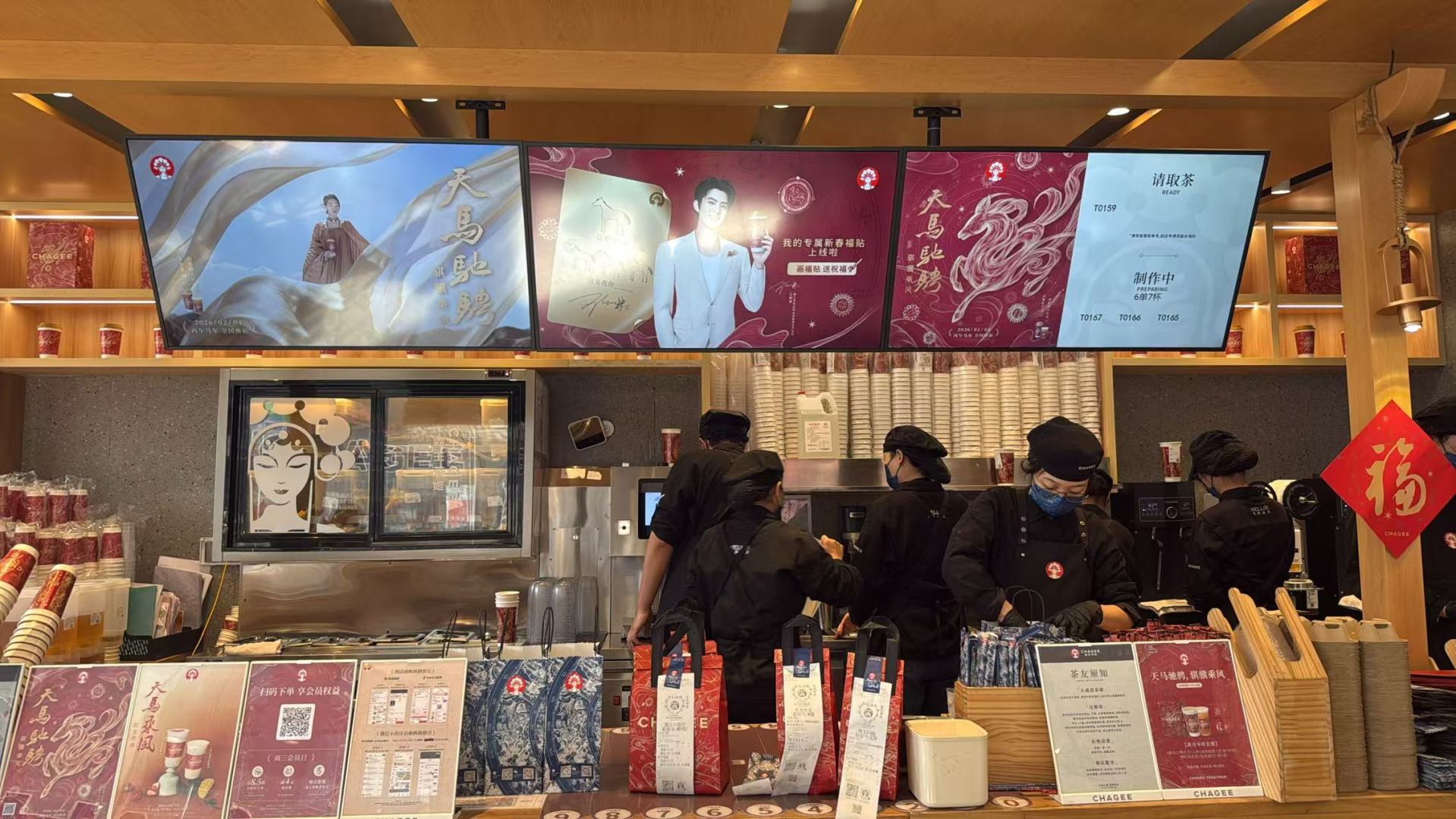
三倍薪水、参与分红“00后”留守奶茶制作一线“反向过年”|新春走基层
Mei Ri Jing Ji Xin Wen· 2026-02-18 06:14
Core Insights - The article highlights the trend of young employees in the tea and coffee industry choosing to work during the Chinese New Year, motivated by the prospect of earning triple wages and bonuses, while also navigating the emotional challenges of not returning home for the holiday [1][2][3] Group 1: Employee Experience - Many young employees, particularly those born in the 2000s, are opting to stay in the city and work during the holiday season, finding satisfaction in the financial rewards and camaraderie with colleagues [1][2] - The average age of employees at the featured tea shop is around 20 years, and many have become accustomed to working during holidays, viewing it as a normal part of their job [2][3] - Employees express mixed feelings about missing family gatherings but find comfort in the financial incentives and the opportunity to share experiences with peers [2][3] Group 2: Business Operations - The tea and coffee industry is experiencing a surge in demand during the holiday season, leading to increased orders and operational pressure on employees [5][6] - Automation plays a crucial role in enhancing efficiency, with machines significantly reducing the time required to prepare drinks, allowing businesses to handle the increased volume of orders [6][7] - The introduction of profit-sharing models during peak seasons aims to motivate employees and improve overall performance, reflecting a shift towards more flexible and innovative labor practices [4][8] Group 3: Market Dynamics - The tea and coffee market in China is projected to exceed 450 billion yuan by 2025, indicating a growing consumer base and evolving spending habits among young people [8] - The competitive landscape is shifting from a focus on scale to a more nuanced approach that includes supply chain flexibility, refined operations, and innovative employment models [8] - The ongoing transformation in the industry highlights the resilience and adaptability of both brands and employees in navigating challenges and seizing opportunities during peak periods [9]