媒体并购

Search documents
Netflix Backs Out of the Warner Bros. Deal. 5 Reasons It's a Smart Move
The Motley Fool· 2026-02-28 04:30
Core Insights - Netflix has withdrawn from the bidding for Warner Bros. Discovery, which was initially accepted but ultimately won by Paramount Skydance with a bid of $111 billion, including debt, or $31 per share for the entire company [1][2] Group 1: Strategic Rationale - Netflix does not require Warner Bros. as it already leads the streaming market, while Warner Bros. comprises struggling streaming and studio operations [4] - The management's interest in Warner Bros. brands does not justify the high price, as Netflix has successfully built its own content library without significant acquisitions [5] - Netflix's uncertainty regarding Warner Bros.' theatrical business conflicts with its strategy of limited theatrical releases [6] Group 2: Historical Context of Media Mergers - Media mergers often fail, with notable examples including the Time Warner and AOL merger, and AT&T's acquisition of Time Warner, which resulted in significant losses [7] - Disney's acquisition of Fox's assets is also viewed as unsuccessful, indicating that the Netflix-Warner Bros. merger lacked a solid strategic foundation [8] Group 3: Financial Considerations - Paramount's acquisition of Warner Bros. is seen as overpaying, given that Warner Bros. shares were trading below $13 prior to the sale discussions and had dropped to as low as $7.52 [9][10] - Warner Bros. carries a substantial debt of $33.5 billion, which would have limited Netflix's financial flexibility if the acquisition proceeded [10] Group 4: Competitive Landscape - The consolidation of Paramount and Warner Bros. may benefit Netflix by reducing competition for content and potentially leading to fewer streaming services in the market [11] - Given the financial struggles of both companies, Netflix might have the opportunity to acquire the combined entity in the future at a lower price [12] Group 5: Regulatory Challenges - The merger would have faced significant regulatory scrutiny, with potential antitrust issues raised by the Trump administration and opposition from Hollywood [13][15] - With the deal abandoned, Netflix will receive a $2.8 billion termination fee from Warner Bros. and Paramount, which is viewed as a favorable outcome for the company [16]



好莱坞世纪大收购陷拉锯战!华纳兄弟(WBD.US)拟再次拒绝派拉蒙(PSKY.US)最新方案
美股IPO· 2025-12-31 00:37
Group 1 - Warner Bros. Discovery (WBD.US) plans to reject Paramount's (PSKY.US) revised acquisition offer, as the board has not made a final decision yet [1][3] - Paramount has not increased its offer, which Warner Bros. previously deemed inferior to Netflix's (NFLX.US) proposal [3][4] - Paramount's latest offer includes a cash bid of $30 per share and a personal guarantee of $40.4 billion in equity financing from Oracle founder Larry Ellison [3] Group 2 - Warner Bros. board is waiting for Paramount to improve the financial terms of its offer, with shareholders expecting more funding from Paramount [4] - Concerns exist that a deal with Paramount could restrict Warner Bros. from managing its debt without Ellison's approval, and Paramount has not guaranteed to cover the breakup fee owed to Netflix [4] - Warner Bros. argues that Netflix's offer is superior for various reasons, including Paramount's potential debt burden and plans for further job cuts [4]
Warner Bros. Discovery CEO's bidding war destroyed the initial confidence of the Ellisons — but don't count them out just yet
New York Post· 2025-12-07 03:46
Core Insights - David Zaslav, CEO of Warner Bros. Discovery (WBD), successfully sold the company for $72 billion, significantly increasing its value in a short period [1] - The sale involved a competitive bidding process, showcasing Zaslav's strategic maneuvering against major media moguls [2] Group 1: Company Valuation and Sale Process - WBD's stock was trading at approximately $12 per share before the bidding war began, which was just above its one-year low of $7.50 [3] - Paramount Skydance initially offered $23.50 per share, valuing WBD at around $56 billion, which was seen as a potential deal [4] - Zaslav's strategy involved pitching the sale to major companies like Amazon and Apple, ultimately leading to a bidding contest among Comcast, Paramount Skydance, and Netflix [11] Group 2: Strategic Moves and Market Perception - Zaslav, a protégé of notable CEOs, was tasked with improving WBD's operations, which included addressing money-losing assets and significant debt [5][6] - Despite initial skepticism from the market, Zaslav's efforts led to the Warner studio surpassing $4 billion in revenues by 2025 and establishing HBO Max as the third-largest streaming service [7] - The competitive bidding escalated, with Netflix ultimately sealing the deal at $30.75 per share, while the Ellisons aimed to counter with a higher all-cash offer [16]
720亿大收购背后:Netflix如何击败大热门派拉蒙抢走华纳兄弟?
Feng Huang Wang· 2025-12-06 07:39
Core Viewpoint - Netflix unexpectedly won the bidding to acquire Warner Bros for $72 billion, defeating Paramount, which was previously considered the frontrunner [1]. Group 1: Acquisition Details - Netflix's acquisition includes Warner Bros' film and television studios, HBO, and HBO Max streaming services [1]. - Warner Bros Discovery (WBD) CEO David Zaslav successfully initiated a bidding war, boosting the company's stock price and securing his position [1]. - The bidding process was initiated in October, with WBD's board recognizing the need for swift action to maintain control [2]. Group 2: Competitive Landscape - David Ellison of Paramount was aggressively pursuing the acquisition, supported by significant financial backing from his father, Larry Ellison, and Apollo Global Management [3]. - Netflix downplayed its acquisition intentions, emphasizing a builder mindset rather than a traditional acquirer approach [4]. - WBD set a tight timeline for bids, leading to intense negotiations and emergency meetings among board members [4]. Group 3: Netflix's Strategy - Netflix's proposal was deemed fully executable, meeting all of WBD's requirements, while competitors were still negotiating terms [6]. - Netflix's team worked diligently to address all requests and agreed to a $5.8 billion breakup fee, one of the highest in history [5]. - Even within Netflix, there was initial skepticism about their chances of winning the bid due to Paramount's early and aggressive involvement [7]. Group 4: Regulatory Considerations - The acquisition is expected to face significant antitrust hurdles, potentially prolonging the approval process beyond the anticipated 12 to 18 months [8]. - Netflix executives expressed confidence in overcoming antitrust concerns, citing the diverse and expansive entertainment market [8]. - If successful, the deal could position Netflix as a dominant player in the streaming service sector, potentially transforming the entertainment industry [8].

好莱坞大变局
虎嗅APP· 2025-11-09 13:19
Core Viewpoint - Warner Bros. Discovery (WBD) is considering selling the company or parts of its business due to significant debt issues, with potential buyers including Paramount, Netflix, Amazon, and Apple, indicating a major shift in the entertainment industry landscape [5][11][15]. Group 1: Reasons for Sale - WBD's board announced on October 22 that it is exploring a full or partial sale, leading to a stock price surge of over 16% [5]. - Paramount has made multiple bids for WBD, with the highest approaching $60 billion, but these offers have been rejected [11]. - The traditional media business model is under threat, as evidenced by WBD's struggles with a $50 billion debt and declining cable revenues [11][19]. Group 2: Industry Context - The rise of streaming services like Netflix has transformed the media landscape, with traditional cable businesses losing their value [7][10]. - Major acquisitions in the past, such as Disney's purchases of Pixar, Marvel, and Lucasfilm, have reshaped the industry, leading to fewer independent studios [19]. - The potential merger of WBD with another major player could further consolidate the industry, reducing competition and increasing market concentration [19][23]. Group 3: Potential Buyers - Apple, with over $2 trillion in cash reserves, is a significant player interested in WBD, focusing on high-quality content for its Apple TV service [15]. - Netflix's leadership is divided on pursuing acquisitions, with some executives expressing interest in WBD's assets, particularly HBO [16]. - Comcast is also a potential buyer, having already established agreements with WBD for theme park attractions, indicating a strategic interest in integrating content [17]. Group 4: Implications of Acquisition - The consolidation of media companies could lead to job losses and reduced diversity in content, as seen in previous mergers [19][24]. - Consumers may face higher subscription costs as fewer platforms dominate the market, despite potentially richer content offerings [23]. - The potential sale of WBD serves as a cautionary tale for traditional media companies in other markets, highlighting the risks of not adapting to changing consumer preferences and technological advancements [28].

好莱坞大变局:派拉蒙欲买华纳、苹果加码、特朗普力推
3 6 Ke· 2025-11-05 23:34
Core Viewpoint - Warner Bros. Discovery (WBD) is considering a full or partial sale of the company due to its significant debt issues, with interest from multiple potential buyers including Paramount, Netflix, Amazon, and Apple [1][2][10] Group 1: Company Situation - WBD's board announced on October 22 that it is exploring the sale of the company or parts of its business, leading to a stock price surge of over 16% [1] - The company has a substantial debt burden of approximately $407 billion, which has not been effectively managed by CEO David Zaslav, despite some debt reduction efforts [10][11] - WBD's traditional cable business is declining, and its streaming platform Max lacks competitive strength [10][11] Group 2: Potential Buyers - Paramount, backed by Oracle's Ellison family, has made multiple bids for WBD, with the highest approaching $60 billion, but these offers have been rejected by WBD's board [1][11] - Other interested parties include Netflix, Amazon, and Comcast, with Apple also showing interest, particularly in acquiring HBO's intellectual property [2][14][15] - The competitive landscape is shifting, with potential mergers that could reshape the media industry, similar to past significant mergers in Hollywood [2][21] Group 3: Industry Context - The decline of traditional media companies like WBD reflects a broader trend in Hollywood, where many historic studios have been absorbed or have disappeared due to the rise of streaming services [3][8][29] - The potential sale of WBD raises concerns about the future of independent studios and the impact on content diversity and creator bargaining power [22][27][30] - The ongoing consolidation in the media industry may lead to fewer choices for consumers, potentially increasing subscription costs [27][30]
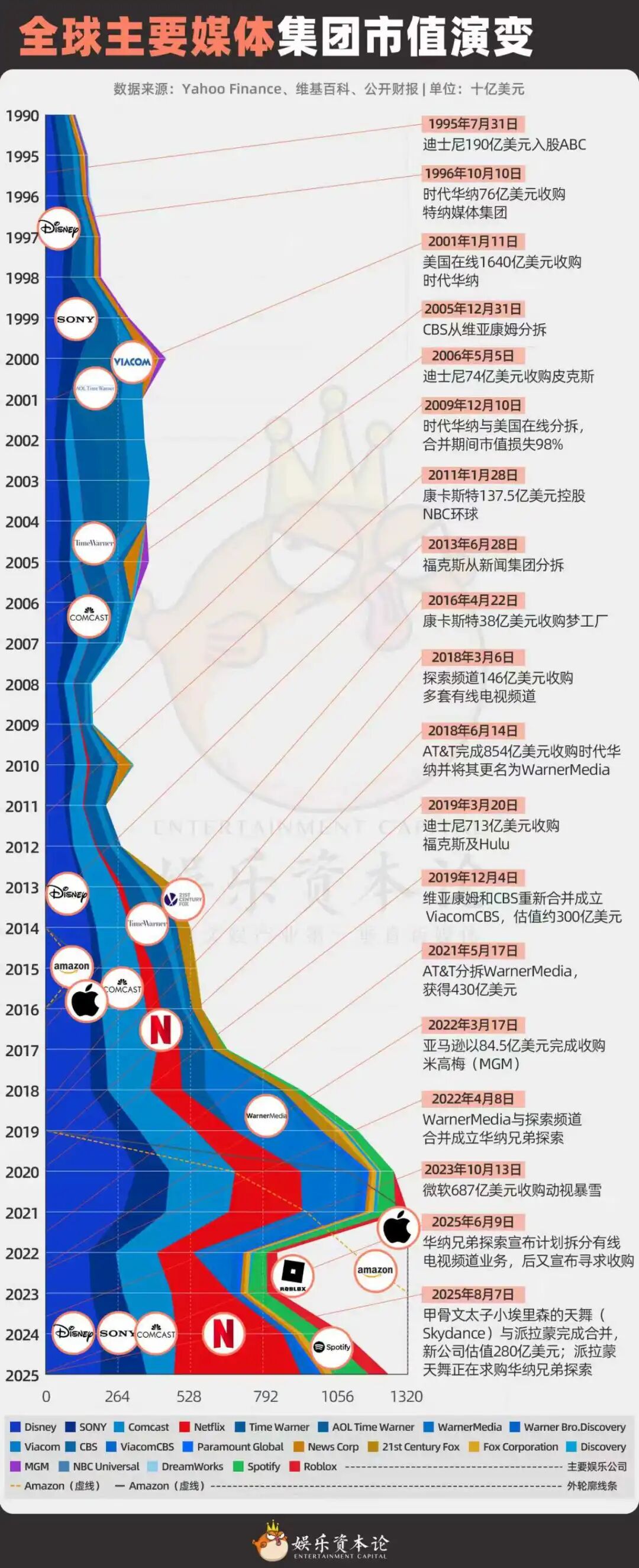
创业四年的自媒体人,掀翻了美国百年传媒帝国
Hu Xiu· 2025-10-14 06:24
Core Points - Bari Weiss announced that The Free Press has joined Paramount Group, highlighting the significant financial backing of $150 million behind this move [1][3] - The Free Press, founded by Weiss in 2021, has rapidly evolved from a niche blog to a successful app and YouTube channel, contributing to Weiss's rise as a billionaire [4][5] - The acquisition has sparked controversy within CBS News, with employees expressing concerns over Weiss's qualifications and the implications for journalistic integrity [6][19] Group 1 - The Free Press has grown to 1.5 million subscribers and 170,000 paying users, with an estimated annual profit of $2 million and a market valuation of $100 million prior to the acquisition [18] - CBS News is facing internal turmoil as employees question Weiss's lack of experience in television news, raising doubts about her ability to lead a major news organization [19][20] - The acquisition reflects a broader trend of traditional media companies being absorbed by larger entities, diminishing their independence and altering the landscape of American journalism [22][41] Group 2 - The media industry is undergoing significant consolidation, with major players like CBS and CNN being acquired by new capital, leading to concerns about the future of independent journalism [46][47] - The rise of individual media figures and platforms, such as podcasts and YouTube channels, is reshaping the media landscape, as they gain influence and audiences previously held by legacy media [52][56] - The ongoing political dynamics and financial pressures are contributing to a crisis in traditional media, as they struggle to maintain their relevance and independence in a rapidly changing environment [48][50]


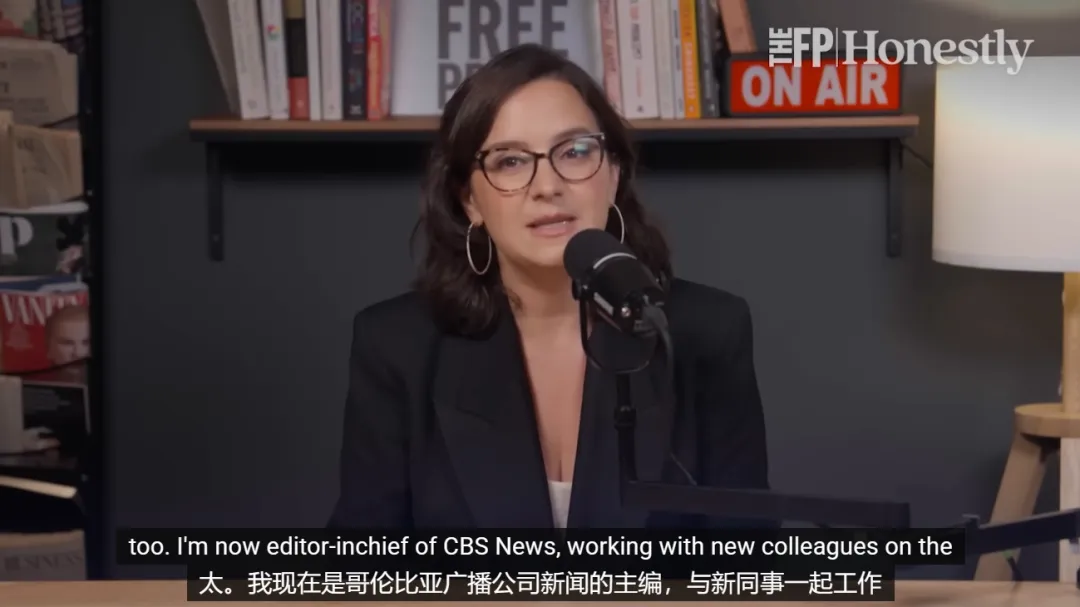
Nexstar And Tegna Announce Merger Plan: What To Look For Next
Forbes· 2025-08-20 21:10
Core Viewpoint - Nexstar Media Group announced the acquisition of Tegna, Inc. for $6.2 billion, marking a significant development in the media merger landscape [3]. Group 1: Acquisition Details - Nexstar is already the largest owner of broadcast television stations in the U.S. and aims to enhance its scale and revenue through this acquisition [3][6]. - The deal is expected to generate approximately $300 million in synergies, primarily through cost-cutting measures [6]. - Tegna's corporate journey has been tumultuous, having been spun off from Gannett in 2015 and facing a failed merger attempt with Standard General in 2022 [5]. Group 2: Regulatory Considerations - The acquisition may exceed the existing nationwide cap on the percentage of U.S. households that one TV station ownership group can reach, raising potential regulatory challenges [7]. - The broadcasting industry has long sought to lift this cap, but significant legal and regulatory hurdles remain, particularly in the context of the current political landscape [8]. Group 3: Market Dynamics - The regional sports network (RSN) market has been struggling, leading to gains for local broadcasters as teams shift their broadcasts to local stations [10][11]. - Local broadcasters have seen significant increases in ratings and engagement as teams like the Phoenix Suns and Florida Panthers move away from RSNs [11]. - The competition for local sports rights is expected to intensify, potentially benefiting broadcasters as they seek reliable content to attract viewers [12]. Group 4: Network and Affiliate Relationships - The relationship between major networks and local affiliates is evolving, with networks increasingly requiring affiliates to contribute to the costs of national sports rights [13][14]. - There is a risk that powerful entities like Nexstar may resist paying affiliate fees, prompting networks to explore direct partnerships with local cable operators [14].