存量经济时代

Search documents
9年前准确预见“房价走势”,如今再看李迅雷,字字如刀!
Xin Lang Cai Jing· 2026-01-25 15:09
Core Viewpoint - Economist Li Xunlei's predictions about the real estate market and investment strategies have proven to be insightful, emphasizing the importance of recognizing long-term trends over short-term fluctuations [4][11]. Group 1: Real Estate Market Predictions - In 2017, Li Xunlei predicted that by 2020, housing prices in China would experience a decline across all city tiers, including first, second, and third-tier cities [4][5]. - He noted that the real estate market was characterized by a "stock economy" phase, where population and income disparities were becoming more pronounced, leading to a net outflow of people from many third and fourth-tier cities [9][10]. Group 2: Investment Strategies - Li Xunlei emphasized the necessity of gold investment in the context of ongoing monetary expansion, suggesting that it should be a key component of investment portfolios [7][11]. - He highlighted the importance of having a long-term perspective in investment, stating that the success of investments is a probability event, and that most people's focus tends to be short-sighted [10][11]. Group 3: Trend Recognition - The ability to identify and act on trends is described as a rare and valuable skill in today's information-saturated environment, where filtering valuable signals from noise is crucial [10][11]. - Li Xunlei's work encourages the development of a "trend thinking" mindset, which allows individuals to view economic fluctuations and wealth changes from a broader and more rational perspective [11].


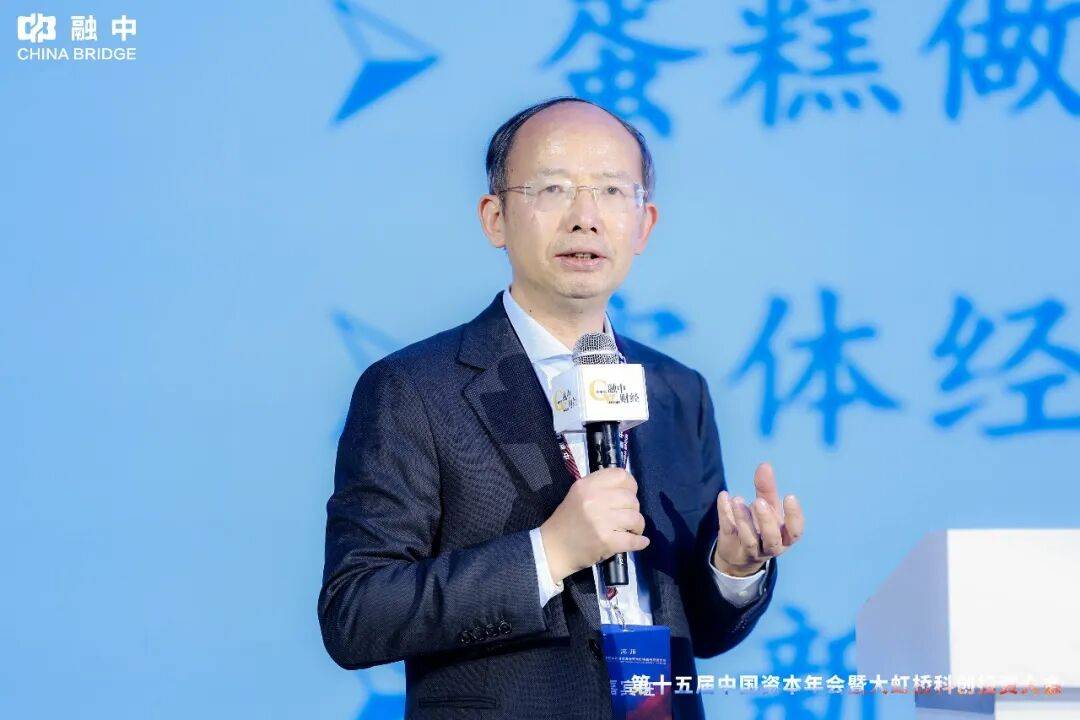
盛石资本周道洪:资本市场大时代已至,国资要做科创“摆渡人”
Sou Hu Cai Jing· 2026-01-17 03:57
Core Insights - The equity investment industry is entering a "refinement period" characterized by cognitive return and capability reshaping, with a focus on hard technology and strategic emerging industries [1] - The 15th China Capital Annual Conference aims to create an efficient ecosystem that integrates investors and enterprises, discussing investment trends and technological innovation [1] - The current macroeconomic landscape presents a dual characteristic, with intense market competition but unprecedented historical opportunities for investment [2] Group 1: Economic Transition - The transition from a factor-driven growth model to an innovation-driven model is reshaping the competitive landscape, emphasizing efficiency and quality over speed and quantity [3] - The capital market is becoming a crucial source of wealth, with a shift from real estate and infrastructure to technology innovation as the new growth paradigm [3][4] - The current economic conditions in China resemble those of the U.S. during 2008-2012, indicating a need for capital market prosperity to restore balance sheets [3] Group 2: Capital Market Dynamics - China's capital market is experiencing relative excess liquidity, with household savings reaching 162 trillion yuan, surpassing GDP [4] - The active mergers and acquisitions market indicates a structural reform in the capital supply side, leading to a balanced development of investment and financing [4] - The success of domestic GPU companies has boosted market sentiment, highlighting the importance of technology innovation in the capital market [4] Group 3: Institutional Innovation - Institutional innovation is key to developing new productive forces, with a focus on creating a mixed and integrated governance model for state and social capital [6][7] - The role of state-owned capital has evolved from being absent in the tech sector to becoming a significant player in supporting innovation and development [7] - Local governments should prioritize capital market valuation and technology innovation to foster high-quality economic development [8] Group 4: Government and Market Relations - The relationship between government guidance and market leadership is crucial, with state capital acting as a builder of the innovation ecosystem rather than a monopolist [9] - High-quality development requires integrating new productive forces with capital markets, providing financing channels for innovative enterprises [9] - Investment institutions should act as partners in regional economic development, supporting tech companies through various stages of growth [9] Group 5: Future Outlook - The deep integration of technology innovation and capital markets will drive high-quality economic development, with a focus on leveraging head effects, capital market opportunities, and innovation waves [10] - Continuous institutional innovation is essential to create a market-friendly and inclusive development mechanism, fostering collaboration between state and social capital [10]