制度创新

Search documents
锻造高能“出海服务站”:浦东出海综合服务体系如何炼成?
21世纪经济报道· 2026-03-23 14:54
Core Viewpoint - The article emphasizes that the globalization process of Chinese enterprises is entering a critical phase, with the government of Pudong actively supporting local companies in their international expansion efforts, thereby transforming them into multinational corporations [1][4]. Group 1: Export Growth and Government Support - In 2022, Shanghai led the nation with an export growth rate of 10.8%, with Pudong contributing over half of the city's total exports and achieving a growth rate of 11.9% [1]. - The Pudong government has prioritized services for enterprises going abroad, establishing a comprehensive service system to support their internationalization [1][4]. Group 2: Establishment of Service Systems - By the end of 2025, Pudong had recognized 500 regional headquarters of multinational companies, accounting for 46.5% of the total in Shanghai, and 294 foreign-funded R&D centers, also 46.23% of the total [4]. - The establishment of the "Going Global" comprehensive service center in March 2025 aims to provide a one-stop service network for enterprises, integrating various professional services [6][9]. Group 3: Comprehensive Service Capabilities - The "Going Global" center integrates government services, comprehensive services, and professional services, offering support in areas such as foreign investment, tax issues, and intellectual property [9][10]. - Pudong aims to create a "headquarters gathering area" for enterprises, with 19 recognized headquarters and 31 pioneer enterprises by 2025, attracting over 500 companies with clear international intentions [7][8]. Group 4: Focus on Industry-Specific Services - Pudong is developing a service matrix that includes five regional service stations and various industry-specific platforms to address the unique needs of different sectors [12][13]. - The government is focusing on digital enterprises and industries like biomedicine and artificial intelligence, providing targeted support to facilitate their international expansion [13][14]. Group 5: Long-term Ecosystem Development - To ensure the effectiveness of the service system, Pudong is promoting multi-dimensional collaborative development, encouraging cooperation between upstream and downstream enterprises in the supply chain [16][17]. - The region is also working on institutional innovations to facilitate cross-border trade and investment, including the implementation of new financial products and services [18][19].


深耕沃土向新行
Xin Lang Cai Jing· 2026-02-26 19:41
Core Viewpoint - The article highlights the rapid development and investment growth in the Horgos Free Trade Zone's Fourth Division Block, showcasing significant increases in fixed asset investment, industrial output, and trade volume, driven by innovative policies and a supportive business environment [1][4][11]. Investment and Economic Growth - The Fourth Division Block reported a 74% increase in fixed asset investment and a 51% rise in actual foreign investment in 2025 compared to the previous year [1]. - The total industrial output value, tax revenue, and import-export trade volume all experienced substantial growth, indicating a thriving economic environment [1]. Project Highlights - Xinjiang Mingfeng Technology Co., Ltd. secured a 1 billion yuan investment project in just 5 minutes, demonstrating the efficiency and attractiveness of the Fourth Division Block for investors [3]. - The project is expected to generate an annual output value of 2 billion yuan upon full production, contributing significantly to the local new energy and new materials industry [2][3]. Policy and Support Mechanisms - The success of investments is attributed to strong institutional innovation, the combined advantages of the Free Trade Zone and development zone, and tailored support policies that enhance investor confidence [3][4]. - The Fourth Division Block has introduced a new model for integrated development of green electricity and industry, successfully attracting over 32 billion yuan in key projects [4]. Infrastructure and Logistics - The completion of a dedicated wide-gauge railway line has improved cross-border logistics, reducing transportation costs by 25% and increasing cargo turnover rates by 20% [9][10]. - The logistics hub construction is expected to enhance the region's capacity for international trade, with a projected 48% increase in import-export trade volume in 2025 [10]. Industry Development - The Fourth Division Block is focusing on building a robust industrial ecosystem, particularly in the bio-manufacturing sector, with significant investments in corn deep processing projects [5][6]. - The region aims to create a market-oriented, law-based, and international business environment to attract leading enterprises and foster industrial clusters [7].
著名经济学家韩志国:长期牛市!中国股市打开上升空间
Shen Zhen Shang Bao· 2026-02-26 18:09
Group 1 - The core viewpoint is that the A-share market has entered a long-term bull market, and the current rise is merely restorative, with significant long-term upward potential now opened [1] - The long-term decline of the stock market has shown detrimental effects on the Chinese economy, and only a sustained bull market can drive technological innovation, industrial upgrades, and optimal resource allocation [1] - The stock market's development is crucial for transitioning China's economy from a major economy to a strong economy, necessitating further acceleration and deepening of institutional innovation [1] Group 2 - A bull market must feature a broad-based, inclusive rise rather than being driven solely by heavyweight stocks, as this is essential for attracting social capital and addressing deep-seated economic contradictions [2] - The competition between China and the U.S. is intensifying, particularly in the capital markets, with a notable difference in the dominant sectors of their respective stock markets [2] - The long-term bull market in China is expected to fundamentally change the development model and operational methods of the Chinese economy, promoting technological innovation and advancement [2]
创新高地 创业热土
Xin Lang Cai Jing· 2026-02-25 22:05
Core Insights - Xiong'an New Area has made significant progress in nearly 9 years, with key projects advancing, a comprehensive highway network established, and over 5,300 buildings constructed, supported by a favorable business environment [1][2] Group 1: Business Environment - Xiong'an provides a "nanny-style" service for businesses relocating from Beijing, allowing for a seamless online application process for cross-province migration [1][3] - The area has implemented a streamlined approval system, reducing the approval time for projects to within 12 working days [1][2] Group 2: Infrastructure and Services - Major state-owned enterprises, including China Star Network and China National Chemical Corporation, have officially settled in Xiong'an, with over 400 branches established [2] - The "15-minute living circle" in Xiong'an encompasses various essential services, including education, healthcare, and recreational facilities, all within walking distance [2] Group 3: Talent Attraction and Retention - Policies have been detailed to ensure that relocated personnel receive educational, medical, and housing benefits comparable to those in Beijing, with equal rights for renters and buyers [3][4] - The "Xiong'an Talent Plan" aims to attract high-end talent through innovative employment structures and resource sharing with Beijing [3][4] Group 4: Future Development - The year 2026 is highlighted as a pivotal year for enhancing Xiong'an's capabilities, with new opportunities arising from national planning initiatives aimed at high-quality urban development [4]

锻造高质量发展引擎
Xin Lang Cai Jing· 2026-02-25 22:05
Core Viewpoint - Xiong'an New Area is actively optimizing its business environment and fostering high-quality development, aiming to create a first-class service brand that resonates with enterprises and the public [1]. Group 1: Business Environment Optimization - The Xiong'an New Area has transformed from a "blank slate" to a rapidly developing region, focusing on improving the business environment in alignment with urban development [1]. - The area aims to achieve a breakthrough in the business environment by implementing targeted reforms and innovations, with a goal to match international standards and be the best in the country [1]. - The "Xiong'an Service" brand is becoming increasingly recognized, with a commitment to efficient and barrier-free service delivery [1]. Group 2: Institutional Innovations - The "Xiong'an One Card" has been introduced, allowing for seamless transactions across various services, including healthcare and public transport, with a target of issuing over 800,000 cards by the end of 2025 [3]. - A cloud platform has been established to facilitate over 3,500 administrative services, enabling cross-regional processing of business matters between Beijing and Xiong'an [3]. - The area has implemented a "one-click migration" process for businesses relocating from Beijing, allowing over 250 companies to maintain their original names and qualifications [3]. Group 3: Efficient Administrative Services - The approval process for construction projects has been streamlined, with some approvals completed in just three days, significantly reducing project timelines [6]. - The area has reduced administrative steps by 82%, application materials by 60%, and processing times by 72% for key services [6]. - A comprehensive service guide has been created to facilitate the understanding of policies and procedures for businesses, ensuring efficient service delivery [6]. Group 4: Digital and Intelligent Services - The Xiong'an New Area has developed a multi-channel online service matrix, allowing citizens to access 1,374 administrative services through various digital platforms [7]. - The introduction of AI assistants for public inquiries has enhanced the accessibility and efficiency of government services [7]. - The "Enterprise Code" system allows businesses to access their records quickly, improving operational efficiency [11]. Group 5: Talent Attraction and Development - By January 2026, Xiong'an New Area will have developed nearly 215 square kilometers, with over 16,400 business entities established, marking a 106% increase since the end of the 13th Five-Year Plan [12]. - The area has issued over 16,500 "Xiong'an Talent Cards," providing various benefits to attract skilled professionals [13]. - Significant investments in innovation and infrastructure have been made, including the establishment of specialized buildings and support for over 700 companies to secure nearly 5 billion yuan in credit loans [13]. Group 6: Regulatory Environment - The regulatory framework in Xiong'an has been designed to minimize disruptions for businesses, with a focus on efficient and responsive governance [14]. - The area has implemented a "credit repair" initiative, assisting over 1,100 companies in rectifying administrative penalties [14]. - Future plans include further reforms and enhancements to create a market-oriented, rule-of-law, and internationalized business environment [14].
以战略定力打造海南自贸港
Xin Lang Cai Jing· 2026-02-25 08:43
Core Viewpoint - The construction of Hainan Free Trade Port is a significant historical mission for the region, aimed at high-level opening-up and institutional reform, emphasizing the need to avoid misconceptions about economic growth being the sole measure of success [1][2]. Group 1: Economic Development and Strategic Goals - Hainan's development should focus on institutional innovation and not merely on GDP growth, as it serves as a "testbed" for national reform and high-level opening-up [1][2]. - The emphasis should be on building a modern industrial system and optimizing the business environment, rather than solely relying on tax-free shopping to drive growth [2][4]. Group 2: Open and Inclusive Development - The Free Trade Port should be viewed as a national asset that benefits both local and national interests, avoiding a narrow focus on local gains [3]. - There is a need to balance local development with national strategies to maximize benefits for all citizens [3]. Group 3: Long-term Vision and Patience - Hainan should not rush to surpass established trade hubs like Hong Kong and Singapore, recognizing that such achievements require decades of development [3]. - The construction of the Free Trade Port is a long-term project that requires a steady and patient approach to build a solid institutional foundation [3]. Group 4: Internal Reform and Innovation - The development of the Free Trade Port should not rely on external policies or financial support but should focus on internal reforms and innovation to create sustainable competitive advantages [4][5]. - Historical examples show that successful development does not depend on preferential policies but on institutional innovation and self-driven reform [5].
河北自贸试验区第八批制度创新案例向全省推广
Xin Lang Cai Jing· 2026-02-19 23:02
Core Viewpoint - The Hebei Free Trade Zone has released its eighth batch of 19 institutional innovation cases aimed at promoting reform and optimizing the business environment across the province [1] Trade Facilitation - The Zhengding area has innovated a new model for the supervision of imported cultural relics, reducing customs clearance time by 83.3% and lowering enterprise costs by over 30% [1] - The area has implemented a model for "international mail, international express, and cross-border e-commerce" that shortens customs clearance time for import and export enterprises by 25% and saves logistics companies and platform enterprises 25% in operational costs [1] - The Xiong'an area has established the province's first land port supervision site, moving customs inspection for export goods forward, compressing overall customs clearance time to under 4 hours [1] - The Daxing Airport area has achieved nearly a 50% reduction in the processing time for the entire import red wine business through electronic bill of lading inter-company recognition [1] Industrial Open Development - The Xiong'an area has created a model for efficient utilization of mineral trading and data through "online transactions + trusted data space," addressing issues in the aerospace information field [2] - The Caofeidian area has innovated a cooperation model between the free trade zone and the linked innovation zone for bonded logistics, solving high storage costs and low customs efficiency for import and export enterprises [2] - The Daxing Airport area has introduced a cross-border e-commerce all-cargo aircraft operation model, reducing transportation time from 5-7 days to 2-3 days and lowering logistics costs by 2-3 yuan per kilogram [2] Financial Innovation - The Xiong'an area has innovated the process for cross-province migration of cross-border capital pools for financial state-owned enterprises, providing an operational template for the relocation of headquarters and functional institutions [2] - The Zhengding area has promoted the establishment of Hebei's only national carbon trading market service center, aiding Hebei Steel in creating the first carbon management system in the steel industry and training over 200 "dual carbon" talents [2] Government Function Transformation - The Xiong'an area has pioneered a corporate pension promotion model characterized by "automatic joining, gradual coverage, and multiple incentives" [3] - The Zhengding area has collaborated with Shijiazhuang High-tech Zone and Shijiazhuang Economic Development Zone to promote cross-regional "one license, multiple addresses" reform, achieving an 80% reduction in approval time and material simplification [3] - The Caofeidian area has established the province's first operational immigration service center, integrating high-frequency foreign-related matters such as visas and work permits into a one-stop service [3] Coordinated Development in Beijing-Tianjin-Hebei - The Caofeidian area has implemented a new regulatory mechanism for regional cooperation in foreign trade, reducing the average port stay of vessels by 3.5 hours and cutting inspection time by 50% [3] - The Daxing Airport area has innovated a customs facilitation model between comprehensive bonded zones and designated customs supervision sites, improving efficiency by over 10 times [3] - The Daxing Airport area has also promoted environmental assessment linkage reforms, effectively compressing the preparation time for environmental assessments by over 30% [3]
东北这座城,最争气
虎嗅APP· 2026-02-17 14:10
Core Viewpoint - Dalian has achieved a significant economic milestone by surpassing a GDP of 1 trillion yuan, marking its role as a key player in the revitalization of Northeast China and setting an example for regional economic growth [5][9][34]. Economic Performance - In 2025, Dalian's GDP reached 1,000.21 billion yuan, reflecting a rapid growth trajectory from 700 billion to 1 trillion yuan since 2018 [5][6]. - The city's industrial added value increased by 11.7% year-on-year, with the petrochemical industry growing by 8.9% and equipment manufacturing by 15.4% [16][17]. Strategic Positioning - Dalian serves as the only coastal city in Northeast China and a critical gateway for international trade, handling over 98% of the region's foreign trade containers [7][16]. - The city has attracted over 100 Fortune 500 companies, with its foreign trade accounting for approximately 40% of the total in Northeast China [16]. Innovation and Development - Dalian has seen a significant increase in technology-driven enterprises, with over 10,000 companies and a 75% growth in high-value invention patents over five years [24]. - The establishment of the Dalian Free Trade Zone has led to 540 institutional innovations, enhancing its role as a hub for global resource allocation [16][40]. Challenges and Opportunities - Despite its achievements, Dalian faces challenges such as an aging population, with 24.71% of residents over 60 years old, and a need for high-quality job creation to retain talent [27][28]. - The city’s per capita GDP of approximately 132,600 yuan, while leading in Northeast China, still lags behind more developed eastern cities like Shenzhen and Hangzhou [28]. Regional Collaboration - Dalian's future growth depends on its ability to foster regional collaboration with neighboring cities like Shenyang and Changchun, enhancing industrial integration and supply chain connectivity [31][38]. - The city must overcome institutional barriers that limit the benefits of its Free Trade Zone to local enterprises, ensuring that regional industries can fully integrate into its economic framework [40].


上海融资租赁资产流转中心线上服务平台正式启动
Xin Lang Cai Jing· 2026-02-14 14:36
Core Viewpoint - The Shanghai Financing Leasing Asset Circulation Center online service platform was successfully launched on February 13, marking a significant step in supporting industrial upgrades and empowering technological innovation in the Lingang New Area [1][3]. Group 1: Platform Launch and Objectives - The platform aims to enhance digital service capabilities in the industry and create a more open and convenient leasing asset trading system, contributing to the construction of Shanghai as an international financial center [1][3]. - The initiative is a collaboration between the Lingang New Area Administrative Committee and the Shanghai Trading Group, focusing on "digitalization, marketization, and specialization" [1][3]. Group 2: Strategic Cooperation - A strategic cooperation agreement was signed between the Lingang New Area Administrative Committee and the Shanghai Trading Group to deepen collaborative efforts and improve platform functionalities [2][4]. - Key representatives from various financial institutions and regulatory bodies attended the launch ceremony, indicating strong support from the financial sector [2][4]. Group 3: Key Participants - Several major financial institutions, including Bank of Communications, Agricultural Bank of China, and Shanghai Rural Commercial Bank, completed significant project signings during the launch event [1][3].
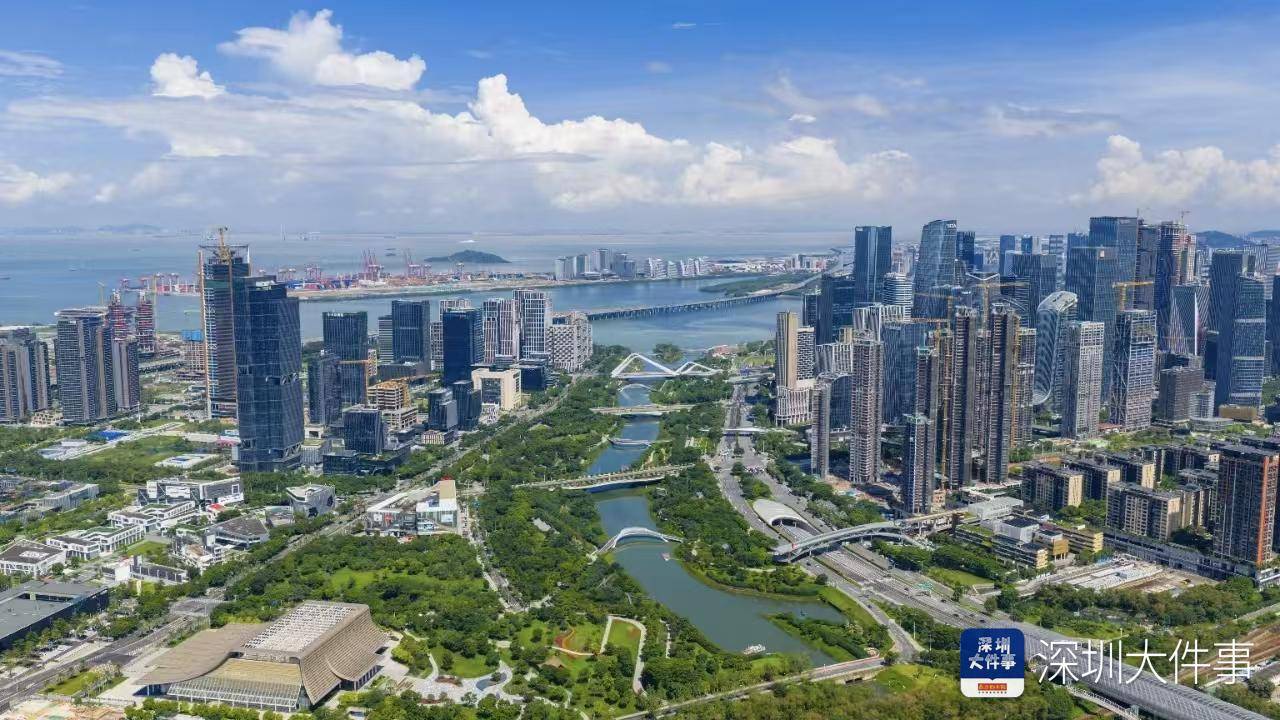
答卷已交,考题升级,前海开足“马”力
Sou Hu Cai Jing· 2026-02-13 13:34
Core Insights - The Qianhai Cooperation Zone has demonstrated significant economic growth during the 14th Five-Year Plan period, with GDP nearly doubling from 175.57 billion to 331.81 billion yuan and import-export volume also doubling from 378.05 billion to 757.43 billion yuan, highlighting its role as a core engine for high-quality development in the Guangdong-Hong Kong-Macao Greater Bay Area [1][3][8] Economic Growth - The total area of the Qianhai Cooperation Zone expanded from 14.92 square kilometers to 120.56 square kilometers, providing strong momentum for high-quality development [3] - The region's GDP is projected to grow from 175.57 billion yuan in 2021 to 331.81 billion yuan by 2025, maintaining a high annual growth rate [3] - Import-export volume increased from 378.05 billion yuan to 757.43 billion yuan, showcasing resilience in foreign trade [3] Investment and Foreign Capital - Over the past five years, fixed asset investment in Qianhai exceeded 700 billion yuan, significantly boosting infrastructure and industrial development [3] - Actual foreign investment reached 157.52 billion yuan, with 29.32 billion yuan in 2025 alone, accounting for 58.1% of Shenzhen's total, making Qianhai a preferred destination for foreign investment in South China [3] Industry Development - By 2025, the software and information service industry cluster in Qianhai is expected to exceed 200 billion yuan in revenue, with seven other industry clusters each surpassing 50 billion yuan [4][5] - The software and information service sector, as a leading industry cluster, achieved a revenue of 255.49 billion yuan in 2025, reflecting a year-on-year growth of 19.6% [4] Modern Service Industry - The added value of the modern service industry in Qianhai is expected to exceed 200 billion yuan by 2025, more than doubling since 2021 [6] - Qianhai has attracted 183 Fortune 500 companies and nurtured 42 global service headquarters, significantly enhancing its internationalization [6] Institutional Innovation - Qianhai has led in institutional innovation, with its index ranking first among national free trade zones for four consecutive years and 105 innovative achievements replicated nationwide [3][8] - The region's exploration in cross-border data, finance, and shipping registration is becoming a replicable model for broader reforms [8] Competitive Landscape - The establishment of industry clusters indicates resilience, with the software and information service industry surpassing 200 billion yuan in revenue and seven major clusters each exceeding 50 billion yuan [8] - The simultaneous development of sectors like artificial intelligence, low-altitude economy, marine industry, and digital creativity signifies a transition from a "policy lowland" to an "industrial highland" [8][9]