学习模式

Search documents
新年如何破局?优秀领导者已经在悄悄做这4件事
3 6 Ke· 2026-01-06 00:25
Core Insights - Effective leadership is characterized by the ability to narrow the gap between optimal and regular performance, leading to better outcomes and healthier teams [4][20] - The gap between the leaders needed and those available is often due to the difference between potential and actual performance, with many leaders failing to meet the standards of effective leadership [3][4] Group 1: Understanding Ideal Self - Leaders often feel a disconnect between their actions and their ideal selves, leading to existential burnout despite external success [5][6] - To bridge this gap, leaders must continuously reassess their motivations and redefine their "ideal self" in response to changing environments [6][7] - Practical methods for understanding one's ideal self include reflecting on peak experiences, seeking 360-degree feedback, and regularly reviewing personal goals [7] Group 2: Challenging Systems - Exceptional leadership involves challenging existing systems rather than merely optimizing them, as many leaders tend to maintain the status quo due to political incentives [9][10] - Leaders must cultivate situational awareness to distinguish between adaptive behaviors that enhance influence and those that merely serve self-preservation [10][11] - To effectively challenge systems, leaders should recognize moments of compliance driven by fear and practice principled dissent [11] Group 3: Embracing a Learning Mindset - Many leaders fall into a performance mode that prioritizes short-term control over long-term growth, leading to stagnation [13][14] - To maintain a learning mindset, leaders should create psychological safety within their teams and openly display vulnerability [14][15] - Strategies for fostering a learning environment include setting knowledge goals, replacing familiar behaviors with curious actions, and reflecting on adaptive behaviors after stressful situations [15][16] Group 4: Overcoming Resistance to Change - Leaders often resist change due to ingrained habits and identity, which can hinder their evolution [17][18] - Successful leaders view themselves as evolving prototypes and recognize that self-reinvention is a deeper expression of their identity [18][19] - To overcome resistance, leaders should identify outdated identities, engage in slightly challenging tasks, and conduct quarterly "forgetting rituals" to let go of burdensome habits [19]


Z世代生存、学习与未来宣言,伯克利学霸预言课堂,用AI设计人生
3 6 Ke· 2025-08-18 09:42
想象一个课堂:讲台上是永不疲倦的AI讲师,台下是专注于启发和引导的人类导师。本期播客,听听他们关于AI如何重塑教育、老师角色以及适应力为 何是新一代职业保障的深刻洞见。 本期OpenAI播客,受访小姐姐Yabi来自USC,男生就读于加州大学伯克利分校EECS。 Yabi第一次用ChatGPT,是一个很搞笑的场景。 当时,她给它的第一个指令是让它写一篇同人小说(fan fiction)。 对她来说,那个「顿悟时刻」在于,意识到AI不仅仅可以用于教育或研究,更可以用于处理日常的琐事。 教授如何适应AI? 学习模式最厉害的一点是,它不会假设你听完一遍就记住了。 可能过了几分钟,它会回过头来给你一个小测验:「嘿,来检查一下,你还记得这个概念吗?」 然后你需要再次回答。这才是我们大脑中真正形成神经连接、记住这些概念的方式。 受访者会让它扮演一个顶级公司的顾问,告诉他如何处理某个问题;或者让它扮演一个研究这个领域的、极具创意的教授,为我提出独特的解决方案。 将ChatGPT置于一个特定的角色、视角和专业人士的身份中,会激发它表现得更好。 就作业和课程内容而言,现在正处于一个过渡期。这感觉很像小时候,从用手算除法,过渡到使 ...
OpenAI回应ChatGPT用多了会变傻
3 6 Ke· 2025-08-01 12:18
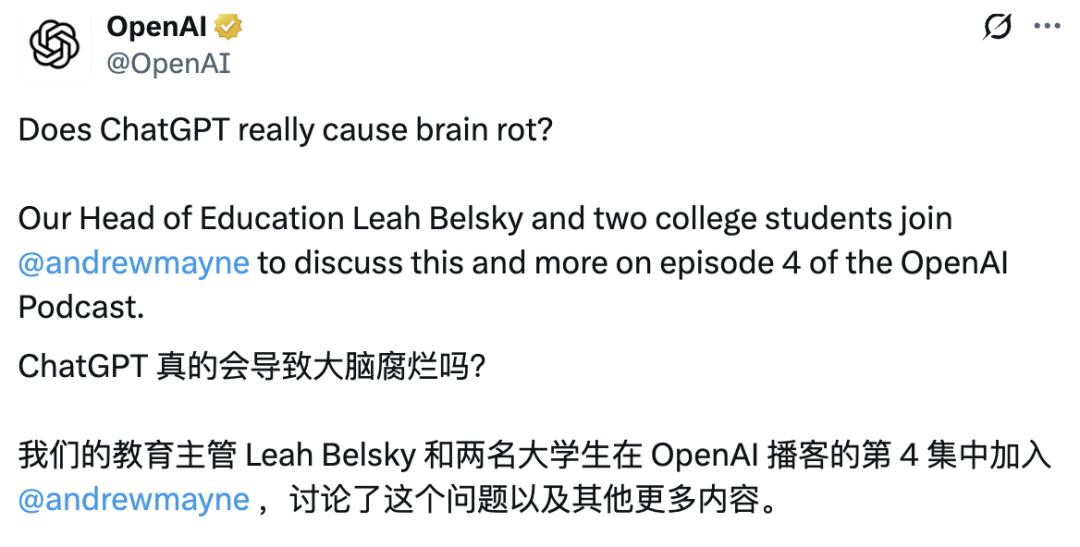
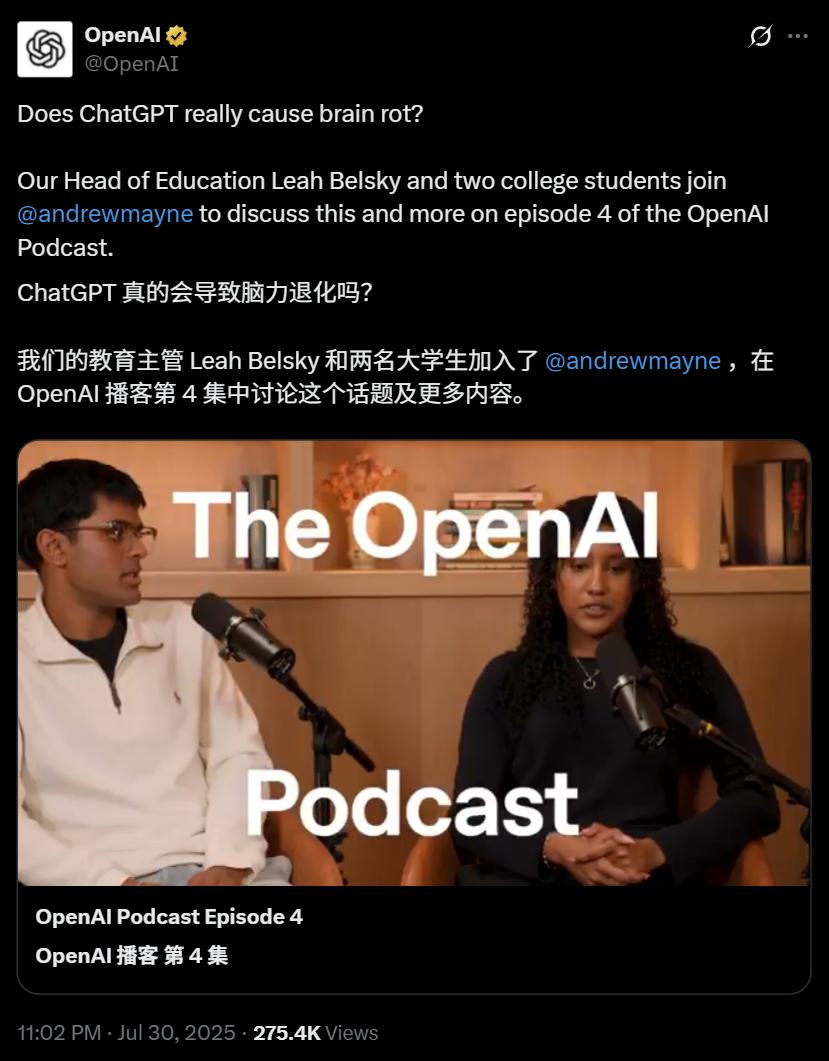
在这期OpenAI的官方播客里,Leah Belsky和两位大学生一起,回答了网络上对AI工具在学习方面的担忧,审视了ChatGPT如何在全球范围内改变学习和 教学。 ChatGPT用多了会变傻?官方回应来了! OpenAI教育主管Leah Belsky明确表示:AI本质上是一个工具,关键在于如何使用它。 还谈论了如何正确使用AI以避免"大脑腐朽"的方法。 为改善用户的学习体验,OpenAI提出了"学习模式":将ChatGPT从一个仅仅"提供答案"的工具,转变为一个引导学生主动找到答案的模式。 我们总结了这次播客的核心内容,一起来看。 AI本质上是个工具 面对网络上那些AI会导致"大脑腐朽"(Brain rot)的头条新闻,OpenAI教育主管Leah Belsky表示,这也是她每天都会被问到的问题之一。 AI本质上是个工具,关键在于如何去使用它。 Leah Belsky指出:学习需要付出努力、处理信息和消化知识。 简单地说,如果学生将AI仅用作"答案机器",它确实会阻碍学习——难道仅凭抄作业就能得到知识么?这显然是不可能的。 但如果以拓展批判性思维和创造力的方式使用,它则能促进学习,OpenAI的目标就在于 ...