
安全生产责任保险

Search documents
新疆金融监管局:持续强化保险效能,履行安全生产社会责任
Jin Rong Jie· 2026-01-09 09:41
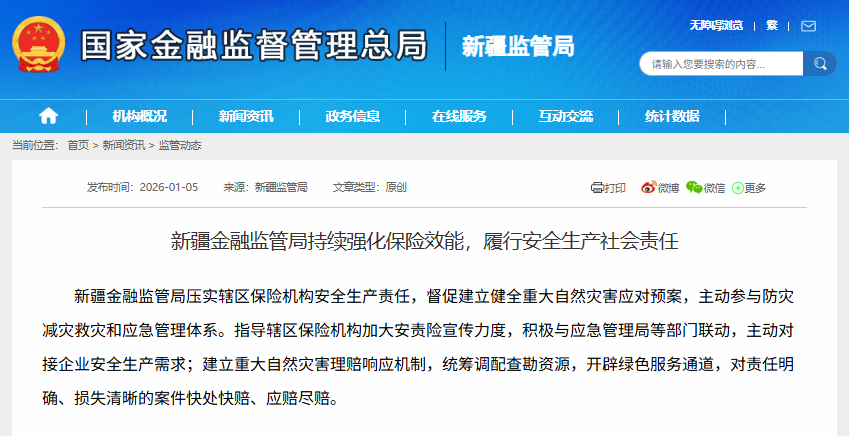
Group 1 - The Xinjiang Financial Regulatory Bureau emphasizes the need for insurance institutions in the region to strengthen their safety production responsibilities and establish comprehensive response plans for major natural disasters [2] - Insurance institutions are encouraged to actively participate in disaster prevention, reduction, and emergency management systems, and to enhance the promotion of safety responsibility insurance [2] - A mechanism for claims response related to major natural disasters will be established, ensuring quick processing and compensation for clearly defined responsibilities and losses [2]

提高保障额度 扩大保障范围 七部门出手升级安责险保障力度
Zhong Guo Zheng Quan Bao· 2025-08-08 07:26
Core Viewpoint - The revised "Implementation Measures for Safety Production Liability Insurance" aims to enhance the insurance coverage, expand the scope of protection, and improve accident prevention services to better safeguard public life and property safety [1][2]. Group 1: Insurance Coverage and Scope - The minimum compensation limit for each death or disability due to production safety accidents has been raised from 300,000 yuan to 400,000 yuan, with some regions setting limits as high as 800,000 yuan [2]. - The insurance must cover all employees of the insured enterprises, including temporary and dispatched workers, ensuring uniform insurance amounts regardless of employment type or job position [2]. Group 2: Regulatory and Service Enhancements - The measures require the establishment of industry standard clauses for safety production liability insurance, which will be developed by the China Insurance Industry Association with input from relevant government departments [2]. - A rapid claims mechanism for major or typical accidents has been introduced, allowing for quick payment of insurance compensation as per legal and contractual agreements [2]. Group 3: Accident Prevention Services - A dedicated chapter on "accident prevention services" has been added, focusing on building a collaborative safety production governance system involving multiple stakeholders [3]. - Responsibilities of production and operation units are clarified, and the role of technical service institutions in accident prevention is emphasized [3].
事前预防、事中监管、事后赔偿,港口安责险试点收效
Di Yi Cai Jing· 2025-05-01 05:21
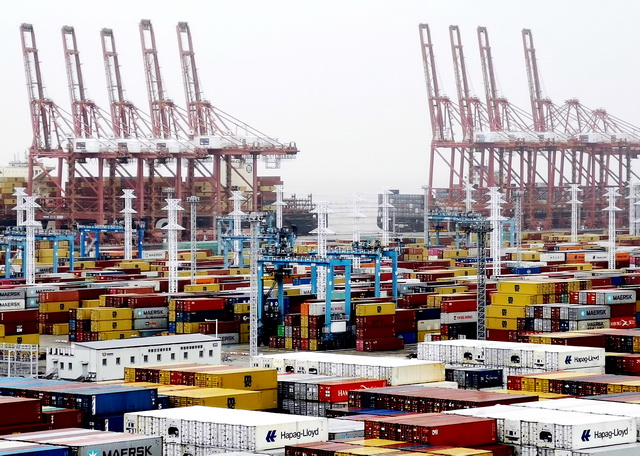
Core Viewpoint - The implementation of port safety production liability insurance (referred to as "safety liability insurance") in China's transportation industry has shown significant improvements in safety assurance and enterprise satisfaction, with innovative results being promoted nationwide [1][2]. Group 1: Industry Background - The transportation industry is classified as one of the eight high-risk industries by the state, making it a key area for the implementation of safety production liability insurance [1]. - The new "Safety Production Law," effective from September 1, 2021, mandates that production and operation units in high-risk industries must purchase safety production liability insurance [2]. Group 2: Implementation and Innovations - The pilot program for port safety production liability insurance has led to the creation of a dedicated insurance product called "Yonggang An," which addresses the specific safety risks of various port enterprises [2][4]. - The insurance product includes features such as third-party liability coverage and a dynamic premium adjustment system based on safety performance and credit ratings, incentivizing companies to enhance safety management [4]. Group 3: Achievements and Impact - As of December 2023, Ningbo successfully issued the first port safety liability insurance policy in the country, with over 70 port enterprises insured and a total premium exceeding 12 million yuan [5][6]. - The pilot program has achieved a 100% closure rate for identified safety hazards, with a high satisfaction rate for the accident prevention technical services provided to enterprises [6]. Group 4: Future Directions - The industry aims to establish a comprehensive safety management framework that combines insurance risk coverage, technical prevention services, and proactive safety management by port enterprises [7].
安责险新规出台:新增事故预防服务专章强化安全治理
2 1 Shi Ji Jing Ji Bao Dao· 2025-04-02 11:24
Core Viewpoint - The implementation of the "Safety Production Liability Insurance Implementation Measures" aims to enhance the safety production responsibility insurance system, addressing issues such as insufficient coverage and ineffective accident prevention services in high-risk industries [2][3][10]. Group 1: Regulatory Framework - The new measures were jointly issued by seven ministries to revise the previous "140 Document" and align with the updated "Safety Production Law" of 2021, which mandates high-risk industries to purchase safety production liability insurance [2][3]. - The revised measures consist of 6 chapters and 48 articles, covering general principles, insurance underwriting, accident prevention services, claims, supervision and management, and supplementary provisions [2][3]. Group 2: Coverage and Responsibilities - The measures specify the industries required to purchase safety production liability insurance, including mining, hazardous chemicals, fireworks, transportation, construction, civil explosives, metal smelting, and fishery production [4]. - The minimum national compensation limit for death or disability due to production safety accidents has been increased from 300,000 yuan to 400,000 yuan, with local governments allowed to set higher limits [4]. Group 3: Accident Prevention Services - A dedicated chapter on "Accident Prevention Services" has been added, emphasizing the responsibility of production units to cooperate with insurance companies in identifying and rectifying safety hazards [7]. - Insurance companies are required to allocate up to 21% of the actual premium collected for accident prevention services, ensuring that funds are effectively utilized for risk reduction [8]. Group 4: Supervision and Coordination - The measures establish a joint working mechanism among emergency management departments, insurance regulatory bodies, and industry supervisors to ensure effective implementation of the insurance system [9]. - An information-sharing mechanism is mandated to facilitate data exchange regarding high-risk industries, safety service providers, and insurance claims, enhancing oversight and coordination [9].