实验考古

Search documents
在瓷都复现泥与火之歌
Ren Min Ri Bao Hai Wai Ban· 2026-01-21 22:45
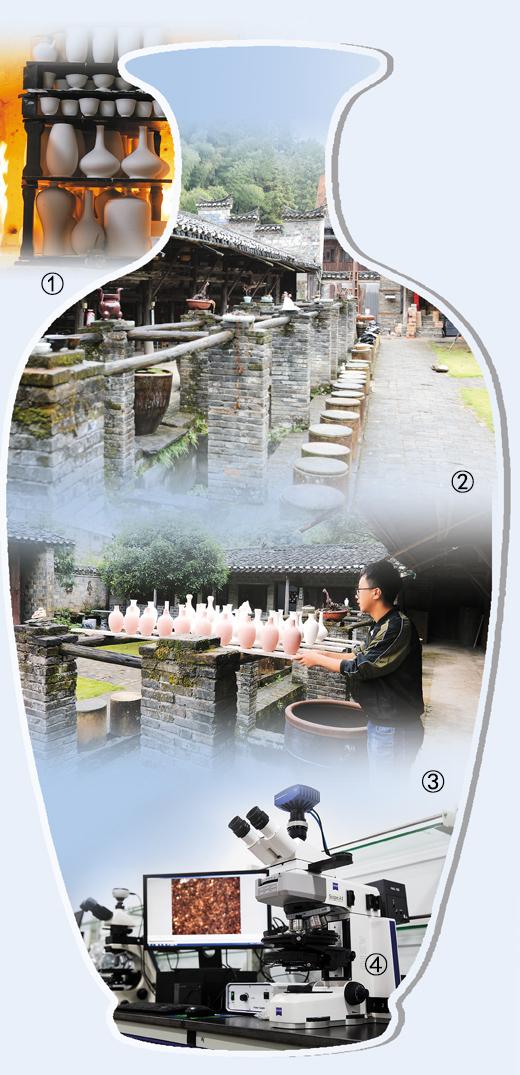
Core Viewpoint - The article highlights the efforts of the Ancient Ceramics Research Institute in Jingdezhen to revive and study traditional ceramic-making techniques, emphasizing the importance of preserving cultural heritage through scientific methods and academic collaboration [4][7][10]. Group 1: Research and Preservation - The Ancient Ceramics Research Institute was established in 2007 to focus on the scientific study and preservation of ancient ceramics, located in a historically significant kiln site [5][6]. - The institute conducts over ten academic forums annually and engages in public science activities, aiming to protect and revitalize ceramic culture [6][7]. - The research team has successfully revived several ancient ceramic techniques, including those from famous kilns like Longquan and Jizhou, using modern scientific methods [9][10]. Group 2: Educational Initiatives - The institute collaborates with local museums to restore ancient ceramics, providing practical training for students and fostering a new generation of restoration experts [12][14]. - Students have participated in significant restoration projects, including the repair of 233 Tang Dynasty ceramics, which serve as valuable educational tools [12][14]. - The emphasis on responsible restoration practices highlights the balance between preserving historical integrity and achieving visual perfection in ceramic restoration [13][14]. Group 3: Technological Integration - The research incorporates modern scientific techniques to analyze the chemical composition and physical properties of ancient ceramics, allowing for a more accurate reproduction of traditional methods [8][9]. - The institute's work includes the development of a systematic study of ancient kiln technologies, contributing to a deeper understanding of ceramic production processes [9][10]. - The integration of experimental archaeology with traditional craftsmanship aims to demystify the ceramic-making process and promote a scientific approach to cultural heritage [8][9].

搭乘实验考古的“时光机”
Ren Min Ri Bao· 2025-05-12 22:21
Core Insights - The article discusses the ongoing research and experimental archaeology related to the Sanxingdui site, emphasizing that discoveries are just the beginning of understanding the site's significance [2][3]. Group 1: Research Developments - The Sanxingdui site, particularly the sacrificial pits, has been a focal point of archaeological mystery, with various hypotheses proposed regarding their significance and the artifacts found within [3]. - A series of experimental archaeology projects have been conducted in collaboration with the Sichuan Provincial Institute of Cultural Relics and Archaeology to reveal human behaviors reflected in the sacrificial pits [4]. Group 2: Experimental Findings - Notably, the experiments focused on the unique characteristics of Pit 6, which contained a carbonized wooden box, prompting investigations into its burning process and the materials inside [4][5]. - Initial experiments revealed that the wooden box remained structurally intact despite internal burning, suggesting unusual ritualistic behaviors, while the red pigment (朱砂) used on the box was likely applied after carbonization [4][5]. - Further experiments explored different burning methods, including external burning with bamboo, which produced significant auditory effects, indicating that sound may also play a role in the sacrificial practices [5]. Group 3: Future Research Directions - The ongoing experimental archaeology aims to provide clearer insights into the past, with plans to investigate various artifacts' functions and craftsmanship, including the musical properties of bronze bells [5][6].