宠物老龄化

Search documents
买猫500、治病5000,年轻人抛弃宠物医院
投中网· 2026-03-24 08:14
Core Insights - The pet medical industry in China is facing significant challenges, with many clinics struggling to remain profitable despite a growing market for pet care [7][10][21] - The average profit margin for 40% of pet hospitals is below 10%, leading to a high closure rate of clinics [7][10] - The industry is experiencing a shift towards specialization and community-based services as a response to financial pressures and changing consumer behavior [41][43] Group 1: Industry Challenges - Many pet hospitals are unable to cover their operational costs, with 55% of institutions reporting monthly revenues below 100,000 yuan [20][21] - The average consultation fee for pets remains below 500 yuan, which is insufficient to sustain the high costs of medical equipment and staff salaries [19][20] - The influx of capital has led to a competitive environment where clinics are forced to invest heavily in advanced medical equipment, often without a clear path to profitability [26][27] Group 2: Changing Consumer Behavior - The demographic of pet owners is shifting, with younger urban workers becoming the primary pet owners, often leading to a more cost-conscious approach to pet care [13][14] - Many pet owners are opting for lower-cost treatment options or even abandoning pets due to high medical costs, leading to increased abandonment rates [15][16] - The perception that pet medical care is more expensive than human healthcare is prevalent, causing dissatisfaction among pet owners [20][21] Group 3: Industry Evolution - The pet medical field is witnessing a trend towards specialization, with clinics focusing on specific areas such as traditional Chinese medicine or rehabilitation services [37][40] - Community-based clinics are emerging as a viable model, providing essential services while reducing operational costs [41][43] - The industry is moving towards a tiered healthcare system, where small community clinics and larger specialized hospitals coexist, allowing for better resource allocation and service delivery [41][45]


瑞派宠物20260318
2026-03-19 02:39
Summary of the Conference Call for Ruipai Pet Hospital Company Overview - Ruipai is the second-largest chain of pet hospitals in China, with nearly 550 operating hospitals as of H1 2025, reflecting a market share of approximately 1.9% in terms of the number of stores and 4.8% in terms of scale [2][3] - The company generated revenue of 940 million yuan and an adjusted net profit of 70 million yuan in H1 2025 [2][3] Industry Dynamics - The pet healthcare industry in China is highly fragmented, with significant disparities in the performance of different types of hospitals [2] - The industry is driven by the aging of pets, but faces structural challenges such as low consultation rates (only half of that in the US and Japan), low per-pet medical spending (less than one-fifth of that in the US), and a severe shortage of veterinary talent [2][12] Hospital Service Structure - Ruipai operates a three-tier hospital system: - **City Center Hospitals**: Highest revenue per store, exceeding 12 million yuan annually, with a profit margin over 20% [4][5] - **Regional Center Hospitals**: Average revenue of approximately 3.55 million yuan per store [5][7] - **Community Hospitals**: Average revenue below 1.5 million yuan, with about 50% operating at a loss [5][7] Expansion Strategy - The company has shifted its expansion strategy from acquisitions to self-built stores, with the proportion of new stores decreasing from 21% in 2022 to 4% in 2024 [2][6] - The closure rate of underperforming community stores has increased to around 10%, leading to a net decrease of 32 stores from early 2023 to H1 2025 [6] Financial Performance and Cost Structure - Employee costs account for nearly 40% of operating revenue, representing a fixed expense [8] - The gross profit margin increased to 25% in H1 2025, driven by higher average transaction values [8][9] - Adjusted net profit margin is approximately 7.7%, with potential for improvement through operational leverage and optimization of underperforming stores [9] Market Potential and Competitive Landscape - The market size for the pet healthcare industry in China is projected to reach around 40 billion yuan by 2025, with an expected double-digit annual growth rate [9][10] - The industry is characterized by low chain penetration, with only 31% of institutions operating more than five stores [10] - The average annual revenue per store in China is about 1.2 million yuan, significantly lower than the approximately 7 million yuan in the US [10] Challenges in the Industry - The industry faces challenges such as low standardization, high management difficulty, and a severe shortage of veterinary professionals [11] - The average salary for independent veterinarians is low, with 80% earning less than 10,000 yuan per month, compared to median annual incomes exceeding 100,000 yuan for veterinarians in the US [11] Overall Profitability and Operational Pressure - The overall profitability environment for the pet healthcare industry in China is under significant pressure, with over 50% of institutions reporting monthly revenues below 100,000 yuan [12] - The average store revenue has declined by 5% year-on-year, with intense competition and price wars contributing to a 3 percentage point drop in overall profit margins [12]
当毛孩子开始老去:3000万老年宠物的照护困境与市场蓝海
3 6 Ke· 2025-12-01 09:24
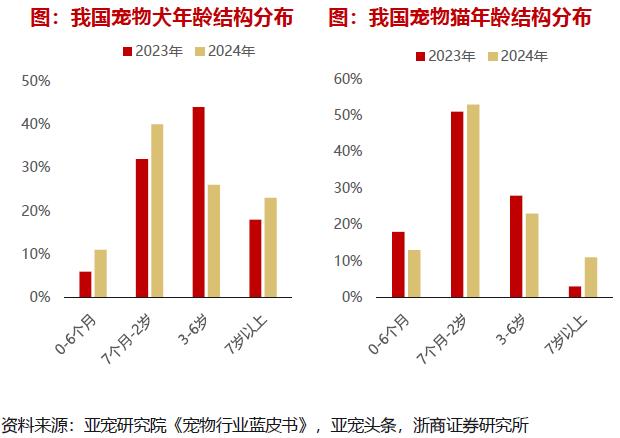
Core Insights - The Chinese pet industry is experiencing a significant shift as pet ownership evolves from functional roles to viewing pets as family members, leading to an increase in pet numbers, particularly cats, which have surpassed dogs in urban households by 2022 [1][2][4] - The aging pet population presents new challenges, with a projected 30 million pets entering their senior years by 2025, indicating a growing market for products and services tailored to older pets [4][10][12] Group 1: Aging Pet Demographics - Pets are considered "senior" after the age of 7, with less than 30% of dogs and 20% of cats in China being over this age as of 2024, indicating a relatively young pet population compared to mature markets [2][4] - By 2025, approximately 30 million pets will be in their senior years, suggesting that one in four pet-owning households will need to address aging-related issues [4][10] - The average lifespan and aging characteristics differ between dog and cat breeds, necessitating tailored care and products for each species [6][8] Group 2: Market Demand and Supply Gap - The current market for senior pet products is underdeveloped, with only 3.2% of the total pet food market in China dedicated to senior pet food, highlighting a significant gap compared to mature markets [13][18] - Pet owners often lack awareness of the specific nutritional needs of aging pets, leading to a reliance on general pet food that may not meet their health requirements [13][18] - There is a notable shortage of specialized products for health monitoring and assistance for aging pets, such as dynamic blood glucose monitors and appropriate care equipment [17][18] Group 3: Consumer Behavior and Spending Trends - Pet owners are increasingly willing to invest in specialized products for their aging pets, with around 70% of senior pet owners purchasing dedicated senior pet food or prescription diets [10][12] - The demand for professional veterinary services for aging pets is rising, with 70% of pet hospitals reporting an increase in senior dog visits [18][20] - The financial burden of caring for aging pets is significant, with high medical costs and a lack of insurance options for pets over 10 years old, prompting a shift towards preventive care [23][25] Group 4: Opportunities for Innovation - The unmet needs of aging pets present opportunities for innovation in product development, focusing on tailored nutrition and health management solutions [25][40] - Brands are beginning to explore advanced product offerings, such as specialized diets for different aging stages and incorporating traditional herbal ingredients into pet care [29][36] - The market for smart care devices is emerging, with potential for technology to assist in monitoring and managing the health of aging pets [39][40]
中金:春山可望——全球宠物医疗启示录
中金点睛· 2025-08-14 23:53
Core Viewpoint - The pet medical industry is characterized by high barriers to entry, high profitability, and potential for expansion, indicating a promising growth trajectory in the pet economy, particularly in China [2][4]. Industry Overview - The global pet medical market has shown resilient growth, transitioning from "volume increase and price stability" to "volume stability and price increase" in mature markets like the US and Japan [2][5]. - The average EBIT margin for leading US pet hospitals like VCA was 17% from 2002 until its privatization, while Japanese counterparts like JARMeC and Wolves Hand reported average EBIT margins of 14% and 17% respectively [2][13]. - In China, the average medical expenditure per pet is significantly lower than in the US and Japan, indicating room for growth [15][46]. Key Characteristics of Pet Medical Industry - **High Barriers**: The industry faces significant entry barriers due to the scarcity of qualified veterinarians and the high costs of medical equipment [9][10]. - **High Profitability**: Leading pet hospitals in the US and Japan demonstrate strong profitability metrics, while Chinese hospitals are still in the process of improving their margins [13][15]. - **Potential for Expansion**: The number of pet hospitals in China is still low compared to the US and Japan, suggesting opportunities for market penetration and growth [15][20]. Trends and Drivers - The aging pet population and evolving pet ownership attitudes are driving both essential and discretionary medical needs [21][24]. - The demand for specialized veterinary services is increasing, supported by advancements in diagnostic technologies and treatment options [4][21]. Competitive Landscape - Leading companies in the US, such as VCA and Banfield, have established comprehensive service models and capitalized on strategic partnerships for rapid expansion [30][33]. - The Japanese market features specialized hospitals like JARMeC, focusing on advanced medical services and referral systems [39][40]. Insights for Future Growth - The pet medical sector is expected to drive the next wave of growth in the pet economy, with key factors including tiered medical services, talent development, capital investment, and laboratory diagnostics [4][42]. - The establishment of a tiered referral system is crucial for enhancing service delivery and patient retention in the pet medical field [48][52]. Talent Development - The cultivation of veterinary talent is essential for sustaining operational efficiency and service quality in pet hospitals [54][56]. - In the US, organizations like VCA have developed comprehensive training programs to ensure a steady supply of qualified veterinarians [54]. - Chinese companies are beginning to establish partnerships with educational institutions to address the talent gap, although they are still in the early stages of development [56][57]. Capital-Driven Expansion - The expansion of pet hospital networks is primarily driven by acquisitions, as seen in the strategies of leading firms like VCA [57]. - The focus on acquisition allows companies to enhance their operational capabilities without the initial challenges of establishing new facilities [57].