
宫廷文化

Search documents
故宫博物院长春宫及体元殿已开放,展示清末后妃生活场景
Xin Lang Cai Jing· 2025-12-28 02:56
Core Viewpoint - The Changchun Palace and Tiyuan Hall in the Forbidden City will reopen to the public on September 30, 2025, after systematic restoration and exhibition design, having received a total of 315,000 visitors in the past three months [2]. Group 1: Historical Significance - Changchun Palace was built during the Ming Dynasty and primarily used by imperial concubines. It was later transformed by Emperor Xianfeng into a political space, connecting it with Tiyuan Hall [2]. - Empress Dowager Cixi moved into Changchun Palace and made significant renovations to accommodate her lifestyle, including the conversion of Tiyuan Hall into a stage for performances [2]. Group 2: Exhibition Highlights - The exhibition focuses on the living scenes of late Qing Dynasty concubines, showcasing ceremonial spaces and daily living areas with various furnishings and decorative items [5][8]. - The main ceremonial space features a throne set, decorative screens, and various ceremonial items, while the living quarters include beds, furniture, and personal items [8][9]. Group 3: Notable Artifacts - The exhibition includes a gold lacquered throne, a nine-child box symbolizing prosperity, and a water clock made in 18th century London, showcasing the craftsmanship of the period [12][20][18]. - Other artifacts include a double-eared lantern vase from the Daoguang period and a black lacquered cosmetic box, reflecting the aesthetic preferences of the Qing court [22][24].

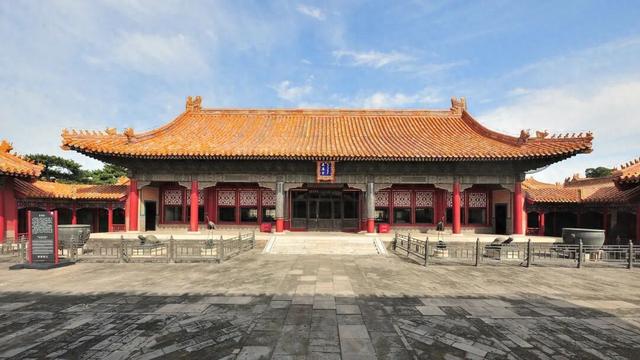
故宫养心殿开放首日人气火爆,外地游客临时改行程来探访
Xin Jing Bao· 2025-12-26 14:33
Core Viewpoint - The Palace Museum's Yangxin Hall has reopened after a decade of research and restoration, attracting significant visitor interest on its first day, with many tourists adjusting their plans to witness the historic site [1][2]. Summary by Sections Restoration and Reopening - Yangxin Hall has been restored and preserved over ten years, with 1,020 artifacts displayed, representing the original conditions from the reigns of Emperors Yongzheng, Qianlong, Tongzhi, and Guangxu [1][4]. - The restoration project began in 2015, during which nearly 500 artifacts and 120 sets of interior decorations were protected and repaired, addressing 4,326 areas of restoration [3][6]. Visitor Experience - Many visitors, including those from outside Beijing, specifically changed their travel plans to visit Yangxin Hall, highlighting its significance and the excitement surrounding its reopening [2][3]. - The hall's interior features historical artifacts, including the "Three Rare Halls" where precious calligraphy works are displayed, enhancing the visitor experience [2][3]. Historical Significance - Yangxin Hall served as the residence for multiple Qing emperors and was a multifunctional space for governance and personal activities, making it a unique historical site [8][10]. - The hall's design and layout reflect the preferences of the emperors, with its intimate scale and functional spaces being conducive to both governance and daily life [10][11]. Artifacts and Exhibits - The restoration included the careful placement of artifacts to reflect their historical context, with some items being replaced with replicas to ensure preservation while maintaining the exhibit's integrity [5][6]. - The hall's original features, such as the wooden beams and decorative elements, have been meticulously restored, showcasing the craftsmanship of the era [4][6]. Technological Integration - Modern technology, including 3D scanning, has been utilized in the restoration process to create digital records of the artifacts and the building's condition, enhancing the precision of the restoration efforts [7].