英雄联盟

Search documents
亚洲内容力量觉醒(中)腾讯游戏业务直逼索尼
日经中文网· 2026-03-14 00:33
Core Viewpoint - Tencent's gaming business revenue has quadrupled over the past decade, positioning it close to Sony's gaming revenue, driven by strategic acquisitions and investments in generative AI technology [2][4]. Group 1: Revenue Growth and Market Position - Tencent's gaming revenue is approximately 4.4 trillion yen for the fiscal year ending 2024, nearing Sony's gaming revenue of 4.67 trillion yen [4]. - The company aims to surpass Sony's gaming business through continuous mergers and acquisitions, as stated by its Chief Strategy Officer James Mitchell [4]. - Tencent's gaming revenue constitutes about 30% of its overall revenue, highlighting its significance within the company's portfolio [4]. Group 2: Investment and Acquisitions - Tencent has invested in around 230 gaming companies, with a total investment amounting to approximately 157.7 billion yuan [5]. - Notable investments include Riot Games, Epic Games, and Supercell, showcasing Tencent's commitment to expanding its global gaming footprint [9]. Group 3: Strategic Support for Invested Companies - Tencent employs a "陪跑" (accompanying) strategy, allowing invested companies to maintain creative independence while benefiting from Tencent's expertise in development and marketing [7]. - The company provides support through funding, overseas expansion assistance, and user testing during the development phase, which is crucial for creating successful games [7][10]. - Generative AI technology developed by Tencent can significantly reduce character design time from months to hours, enhancing efficiency in game development [8]. Group 4: Competitive Landscape and Future Outlook - Despite Tencent's growth, two-thirds of its gaming profits come from the domestic market, prompting a push for overseas acquisitions [10]. - The global gaming market is projected to reach approximately $197 billion by 2025, indicating significant growth potential [9]. - The competition among Chinese gaming companies is intensifying, with emerging firms like miHoYo and Diandian Interactive gaining traction in the market [10].



在县城,谁赢下了春节档?
3 6 Ke· 2026-02-25 03:38
Core Insights - The article discusses the resurgence of internet cafes in China, particularly during the Spring Festival, highlighting their growing popularity among younger demographics [1][8][14] - It emphasizes the significant revenue growth in the internet cafe sector, with projections indicating a revenue scale exceeding 101.68 billion yuan by 2025 [1][8] - The article identifies popular games among internet cafe users, notably "Delta Force" and "League of Legends," and explores the social dynamics of gaming in these venues [6][21][24] Industry Trends - Internet cafes are experiencing a revival, with an expected increase in the number of operating entities to 122,600 by 2025, reflecting a year-on-year growth of 12.68% [1] - The gaming landscape is diversifying, with a variety of genres being played in internet cafes, including shooting, action, and racing games, catering to different player preferences [7][8][21] - Price competition among internet cafes has intensified, especially during peak seasons like the Spring Festival, with promotional offers such as "charge 100 get 200" becoming common [8][10] User Demographics - The primary user base in internet cafes consists of individuals in their twenties, with a notable interest in games like "Delta Force," which has seen a daily active user count surpassing 41 million [2][4] - Different age groups exhibit varying preferences for games, with younger players gravitating towards newer titles while older players often return to classics like "League of Legends" [6][16][20] - The article notes a shift in social gaming dynamics, with younger generations favoring familiar social interactions over collective gaming experiences, indicating a trend towards "familiar social" gaming [27][28] Game Popularity - "League of Legends" remains a dominant title in internet cafes, benefiting from continuous updates and new game modes that attract both old and new players [6][14] - "Delta Force" has emerged as a strong competitor, particularly appealing to college students and younger players, reflecting a generational shift in gaming preferences [4][16][24] - The article highlights the competitive landscape between popular games, with "Delta Force" and "League of Legends" representing different gaming experiences that cater to diverse user needs [21][23]
腾讯电竞成亚奥理事会电竞技术合作伙伴 达成十年期战略合作
Nan Fang Du Shi Bao· 2026-01-22 08:36
Core Insights - The Asian Olympic Council and Tencent Esports have announced a ten-year strategic partnership, marking a shift from event collaboration to systematic co-construction in esports [1] - Tencent Esports' director, Zhang Yati, has been appointed as the esports coordinator for the Asian Olympic Council, indicating a deeper integration of esports within the council's framework [1] - The partnership aims to set a standard for the healthy and sustainable development of esports in Asia, as stated by the Secretary General of the Asian Olympic Council, Hussein Al-Mussallam [1] Group 1 - The collaboration signifies a new phase for Asian esports, transitioning from "project participation" to "systematic co-construction" [1] - Tencent Esports will act as a "technical engine" to support the Asian Olympic Council in meeting the needs of its member regions [1] - The Tencent Esports Competition System (ECS) has been upgraded to provide comprehensive technical support for esports events during the Hangzhou Asian Games [1] Group 2 - Tencent Esports is an independent brand under the Interactive Entertainment Group (IEG), established in December 2016, with a focus on making esports a mainstream sport [2] - The company has top-tier esports IPs such as League of Legends and Honor of Kings, and its business encompasses events, education, technology, and ecosystem development [2]
33小时登顶英雄联盟韩服的,到底是人还是AI?
3 6 Ke· 2026-01-21 01:01
Core Viewpoint - The recent phenomenon of a player nicknamed "택배기사" (Deliveryman) achieving a 93% win rate and reaching the top rank in the Korean server of League of Legends (LoL) within 51 hours has sparked discussions about the potential involvement of AI or advanced gaming techniques [1][2][12]. Group 1: Player Performance - The player completed 56 matches in 51 hours, with a true playtime of approximately 33 hours, achieving a remarkable 93% win rate [8][12]. - In the last 20 matches, the player recorded 16 wins and 2 losses, resulting in an 89% win rate, while renowned player Faker had a win rate of only 47% in his recent matches [4][12]. - The player's diverse hero pool includes champions like Rumble, Ryze, and Syndra, showcasing exceptional skill and strategic gameplay [10][12]. Group 2: AI Speculation - The extraordinary performance led to speculation that the player might be an AI, especially in light of Elon Musk's challenge to create an AI (Grok 5) capable of defeating top LoL teams under specific human-like conditions [14][15][36]. - Observations of the player's gameplay, such as consistent key bindings and playtime patterns, raised doubts about the player's identity, suggesting a possible connection to a professional player [22][23]. - The discussions surrounding the player have ignited interest in the potential for AI to compete in esports, drawing parallels to previous AI successes in games like chess and Dota 2 [27][30]. Group 3: Industry Impact - The incident has generated significant attention within the gaming community, leading to increased discussions about AI's role in competitive gaming and the future of human versus AI matchups [25][37]. - The player’s rise to fame has also brought attention to the BRO esports team, which is set to rebrand in collaboration with a logistics company, further intertwining the realms of gaming and corporate partnerships [23][25].

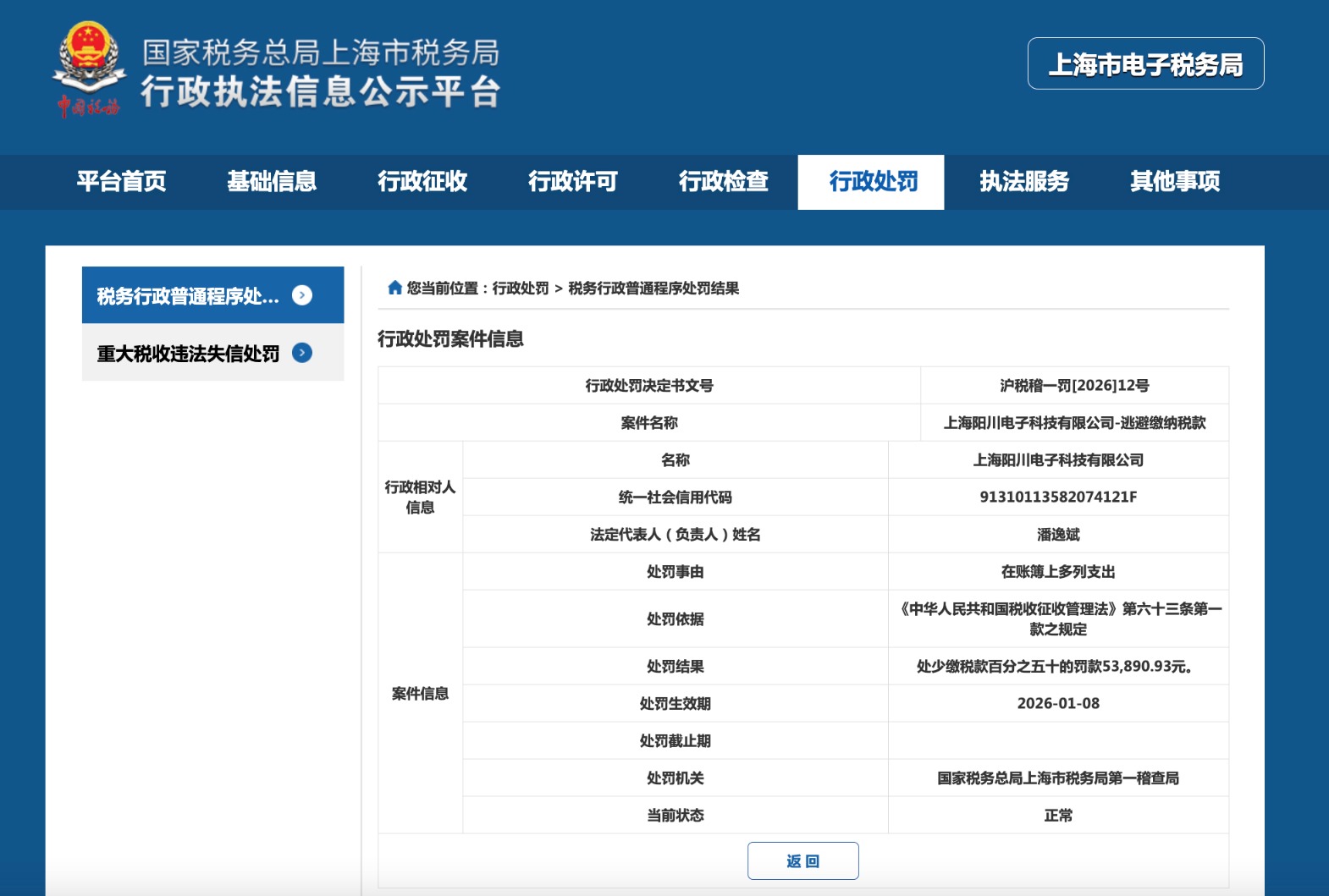
EDG电竞俱乐部关联公司逃避缴纳税款被罚
Zhong Guo Xin Wen Wang· 2026-01-13 14:46
Group 1 - The Shanghai Yangchuan Electronic Technology Co., Ltd., associated with EDG esports club, was penalized for tax evasion, resulting in a fine of 53,890.93 yuan, which is 50% of the underpaid tax amount [1] - Shanghai Yangchuan Electronic Technology Co., Ltd. was established in September 2011 with a registered capital of 2.4 million yuan, and its legal representative is Pan Yibin [3] - EDG esports club, founded in 2013, operates teams in various games including League of Legends, Honor of Kings, Valorant, and Crossfire [3] Group 2 - The company has 44 self-risk entries, 85 surrounding risks, 5 historical risks, and 135 warning alerts listed in the public credit information system [3]
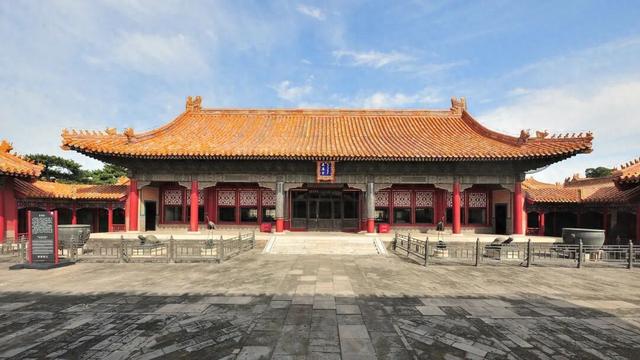
故宫博物院长春宫及体元殿已开放,展示清末后妃生活场景
Xin Lang Cai Jing· 2025-12-28 02:56
Core Viewpoint - The Changchun Palace and Tiyuan Hall in the Forbidden City will reopen to the public on September 30, 2025, after systematic restoration and exhibition design, having received a total of 315,000 visitors in the past three months [2]. Group 1: Historical Significance - Changchun Palace was built during the Ming Dynasty and primarily used by imperial concubines. It was later transformed by Emperor Xianfeng into a political space, connecting it with Tiyuan Hall [2]. - Empress Dowager Cixi moved into Changchun Palace and made significant renovations to accommodate her lifestyle, including the conversion of Tiyuan Hall into a stage for performances [2]. Group 2: Exhibition Highlights - The exhibition focuses on the living scenes of late Qing Dynasty concubines, showcasing ceremonial spaces and daily living areas with various furnishings and decorative items [5][8]. - The main ceremonial space features a throne set, decorative screens, and various ceremonial items, while the living quarters include beds, furniture, and personal items [8][9]. Group 3: Notable Artifacts - The exhibition includes a gold lacquered throne, a nine-child box symbolizing prosperity, and a water clock made in 18th century London, showcasing the craftsmanship of the period [12][20][18]. - Other artifacts include a double-eared lantern vase from the Daoguang period and a black lacquered cosmetic box, reflecting the aesthetic preferences of the Qing court [22][24].
传媒行业快评报告:2025年游戏市场收入与用户规模达新高点,移动端市场仍占主导地位
Wanlian Securities· 2025-12-22 07:12
Investment Rating - The industry investment rating is "stronger than the market," indicating that the industry index is expected to outperform the market by more than 10% in the next six months [8]. Core Insights - The domestic gaming market is projected to reach a record high in both revenue and user scale in 2025, with actual sales revenue of 350.79 billion yuan, a year-on-year increase of 7.68%, and a user base of 683 million, growing by 1.35% [2]. - The mobile gaming sector remains dominant, contributing 257.08 billion yuan in revenue, a 7.92% increase, accounting for 72.39% of the total market size [3]. - The client game market shows significant growth, with revenue reaching 78.16 billion yuan, a substantial increase of 14.97% [3]. - The mini-program gaming market has seen a remarkable growth of 34.39%, with revenue of 53.54 billion yuan, driven by the trend of "APP games miniaturization" [4]. - The self-developed overseas gaming market has consistently exceeded 100 billion yuan in revenue for six consecutive years, with actual sales revenue of 20.45 billion USD, a year-on-year increase of 10.23% [7]. Summary by Sections Market Overview - The gaming market in China is expected to achieve new highs in both revenue and user numbers by 2025, driven by improved mobile game quality, successful long-standing titles, and the growth of mini-program games [2]. Mobile Gaming - The mobile gaming market continues to lead, with significant contributions from both established titles and new releases, resulting in a revenue of 257.08 billion yuan [3]. Client Gaming - The client gaming sector has experienced a notable revenue increase of 14.97%, attributed to the performance of long-standing titles and the success of cross-platform products [3]. Mini-Program Gaming - The mini-program gaming market has shown a robust growth rate of 34.39%, with a revenue breakdown indicating a strong performance from in-app purchases and advertising monetization [4]. Overseas Market - The self-developed overseas gaming market has maintained a strong performance, with revenue surpassing 100 billion yuan for six consecutive years, indicating a healthy growth trajectory [7].
首届濮院电竞节来了
Xin Lang Cai Jing· 2025-12-21 00:07
Core Insights - The first "Jing Wu Jie" Puyuan eSports Festival has commenced, aiming to create a unique eSports utopia by blending traditional culture with modern gaming experiences [1] - The festival features over 20 eSports, gaming, and anime IPs, attracting eSports elites from more than 40 countries and regions, with participation from 30 top global eSports clubs and hundreds of players [1][2] Group 1: Event Overview - The festival will run until the 28th, focusing on "all-domain participation" to break traditional eSports event boundaries and provide a rich cultural experience [1] - Activities include nearly 100 interactive performances across five major segments: competition, exhibition, interaction, performance, and socializing, allowing every participant to take center stage [1] Group 2: Unique Features - The event is held in a historical setting, moving away from conventional sports venues to create a new cyber experience within the ancient town, enhancing the visual appeal through light shows and architectural integration [3][4] - A seasoned team, experienced in organizing the Wuzhen Theatre Festival, is behind the eSports Festival, aiming to merge cultural tourism with modern digital culture [4] Group 3: Industry Integration - The festival emphasizes the importance of players and consumers, with a focus on the burgeoning woolen sweater industry, targeting the youth market by incorporating eSports elements into fashion [4][5] - The event aims to create a dual flow of participants and fans, enhancing the appeal of Puyuan's fashion offerings while establishing a new global eSports IP benchmark [5]
加快建设“五中心五地”,成都明确“十五五”城市发展定位 首提全国文化创意中心和数字文创产业集聚地
Si Chuan Ri Bao· 2025-12-10 07:29
Core Points - The article outlines Chengdu's development goals for the "15th Five-Year Plan" period, aiming to establish a vibrant, innovative, and open city by 2035, with significant improvements in economic strength, technological capability, and comprehensive competitiveness [1][2] - Chengdu's development positioning includes becoming a national economic center, technology innovation center, international communication center, international consumption center, and cultural creativity center, along with being a key area for national strategic technology and advanced manufacturing [1][2][5] Development Strategy - The strategy emphasizes innovation-driven growth, open leadership, integration of technology and industry, and strengthening county-level regions [1][4] - Key tasks include promoting deep reforms and high-level openness, enhancing urban-rural coordination, cultural innovation, high-quality development of public services, green transformation, and modern governance [2][4] Cultural and Creative Industry - Chengdu aims to accelerate the establishment of a national cultural creativity center and a digital cultural industry hub, reflecting the city's commitment to enhancing its cultural soft power and influence [7][8] - The cultural industry has shown an average growth rate of approximately 12.6% over the past three years, with projections indicating that its contribution to GDP will rise to 11.91% by 2024 [8] Implementation Pathways - The article discusses the need for a broad vision and specific actionable steps to transform planning into reality, emphasizing the importance of major projects and a comprehensive management system for planning [9][10] - Different districts are encouraged to leverage their unique advantages and resources to contribute to the overall development goals, with a focus on innovation in both technology and operational strategies [10]

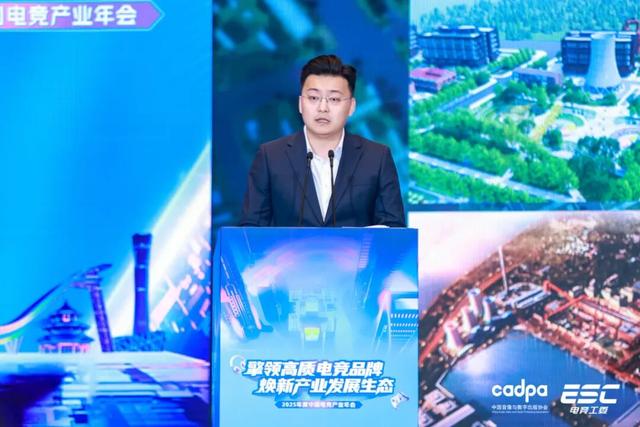
电竞“流量密码”解锁城市经济“增长密码”
Bei Jing Qing Nian Bao· 2025-12-09 15:51
Core Insights - The 2025 China Esports Industry Conference highlighted a robust growth trajectory for the esports sector, projecting revenues to reach 29.331 billion yuan and user numbers to exceed 495 million by 2025 [1][24] - Beijing is emerging as a central hub for esports, marked by significant events and collaborations that enhance its status in the industry [1][4] Industry Growth - The esports industry in Beijing is expanding rapidly, supported by a dense population of approximately 1.3 million university students who are key consumers [2][4] - The establishment of the DRG esports club in Beijing has led to a significant shift in its fan base, with local fans now nearly equal to those from Guangdong [2][4] - By the end of 2025, there will be 165 esports clubs nationwide, with Beijing ranking second in the number of clubs [4][5] Economic Impact - The gaming industry in Shijingshan, a key area in Beijing, is projected to reach 25 billion yuan by 2024, accounting for one-third of the city's total gaming industry [5] - The Chaoyang district is home to over 1,000 related enterprises and is expected to host more than 1,000 events annually, driving significant consumer traffic [5][8] - In the first ten months of 2025, revenue from esports companies in Chaoyang surged by 37%, contributing to a 42% increase in the region's digital economy [5][8] Policy Support - Beijing's support for the esports industry has evolved from direct financial investment to more nuanced, service-oriented policies that facilitate business operations [8][9] - The Shijingshan district has introduced a set of 15 policies aimed at attracting top-tier esports events and providing substantial subsidies for technology development [8][9] Ecosystem Development - The collaboration among various stakeholders in the esports ecosystem is fostering a more integrated approach, moving from isolated efforts to a collective synergy [10][12] - The presence of over 200 companies in fields like AI and sci-fi within Shijingshan is enhancing the technological capabilities of the esports sector [12][13] Talent Development - Beijing is increasingly recognized for its ability to attract and nurture esports talent, supported by a comprehensive training system and favorable living conditions [15][16] - Initiatives such as esports training camps in collaboration with universities are being developed to cultivate future industry leaders [15][16] Future Outlook - The esports landscape in Beijing is set to evolve with innovative event formats that integrate local culture and tourism, enhancing the overall experience [17][19] - The city aims to leverage its historical and cultural assets to create a unique fusion of esports and urban identity, positioning itself as a global esports hub [19][24]