对冲法币贬值交易

Search documents
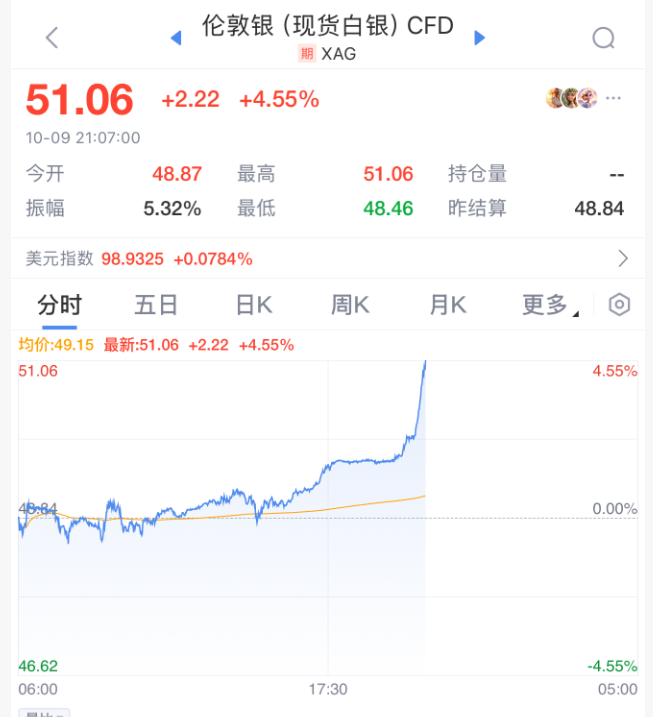
白银也疯了,历史首次突破50美元/盎司
Zhong Guo Ji Jin Bao· 2025-10-09 22:38
Core Viewpoint - The price of silver has reached a historic high, driven by increased demand for safe-haven assets and tightening supply in the London spot market [1][3]. Group 1: Price Movement - On October 9, the spot silver price surged to over $50 per ounce, marking the highest level since the "Hunt Brothers squeeze" in the 1980s [1]. - The price continued to rise, reaching $51.06 per ounce, with a daily increase of 4.5% [1]. - Year-to-date, silver has appreciated over 70%, outperforming gold, which has also reached historical highs [3]. Group 2: Market Dynamics - Concerns regarding U.S. fiscal risks, an overheated stock market, and threats to the independence of the Federal Reserve have led investors to seek safe-haven assets [3]. - A shortage of freely available silver in the London market has supported prices and significantly increased the cost of borrowing silver [3][6]. - The current silver futures price on the New York Mercantile Exchange (Comex) remains below the historical record of $50.35 per ounce set in January 1980 [4]. Group 3: Industrial Demand and Supply Outlook - Silver is widely used in industrial applications, including solar panels and wind turbines, which together account for over half of silver consumption [6]. - The silver market is expected to experience a supply deficit for the fifth consecutive year by 2025 [6]. - The tightness in the London silver market is nearing unprecedented levels, with high borrowing costs for the metal [6]. Group 4: Historical Context and Speculation - The recent surge in silver prices has parallels to past spikes in 2011 and 2020, with the latter seeing a 140% increase in less than five months [7]. - Historical speculation by the Hunt Brothers in 1980 led to a significant price increase, which subsequently collapsed, illustrating the volatility of the silver market [7].

刚刚!白银 也疯了!历史首次突破50美元/盎司
Zhong Guo Ji Jin Bao· 2025-10-09 15:23
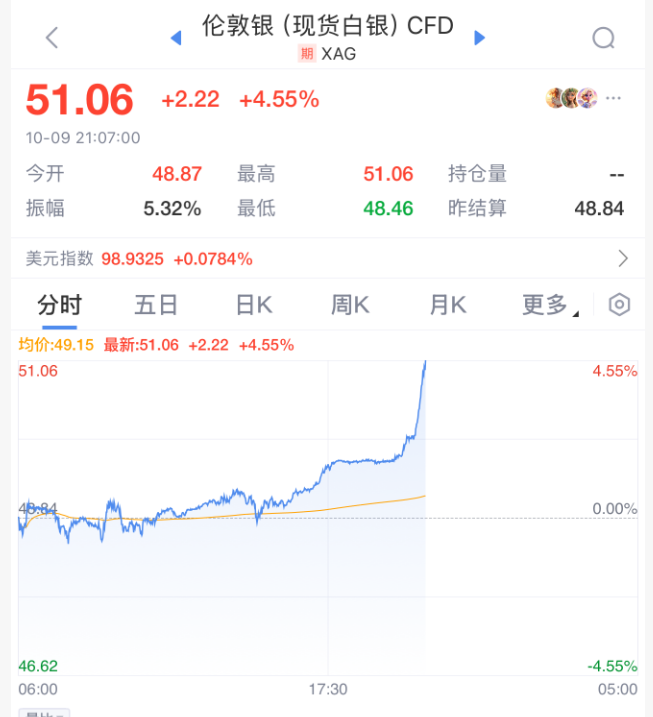
Core Viewpoint - Silver prices have reached a historic high, surpassing $50 per ounce for the first time since the 1980s, driven by increased demand for safe-haven assets and tightening supply in the London spot market [1][3]. Group 1: Price Movement and Historical Context - On October 9, silver prices surged to $51.06 per ounce, marking a 4.5% increase after breaking the $50 barrier [1]. - Year-to-date, silver has risen over 70%, outperforming gold, which has also reached historical highs [3]. - The last time silver prices were above $50 was during the "Hunt Brothers squeeze" in the 1980s, where prices were driven up by speculative buying [7]. Group 2: Market Dynamics and Supply Issues - Concerns over U.S. fiscal risks and stock market overheating have led investors to seek silver as a hedge against inflation and currency devaluation [3][6]. - The London silver market is experiencing significant tightness, with a shortage of freely available silver, leading to increased borrowing costs for the metal [6]. - There is a notable phenomenon of "stockpiling" silver in the U.S. due to fears of potential tariffs, resulting in reduced inventories in London [6]. Group 3: Industrial Demand and Future Outlook - Silver is not only an investment asset but also widely used in industrial applications, including solar panels and wind turbines, which together account for over half of silver consumption [6]. - The market is expected to face a supply deficit for the fifth consecutive year by 2025 [6].
刚刚!白银,也疯了!历史首次突破50美元/盎司
Sou Hu Cai Jing· 2025-10-09 15:23
Core Viewpoint - Silver prices have reached a historic high, surpassing $50 per ounce for the first time since the 1980s, driven by increased demand for safe-haven assets and tightening supply in the London spot market [1][3]. Group 1: Price Movement and Historical Context - On October 9, silver prices surged to $51.06 per ounce, marking a 4.5% increase after breaking the $50 threshold, the highest level since the "Hunt brothers squeeze" in the 1980s [1][3]. - Year-to-date, silver has risen over 70%, outperforming gold, which has also reached historical highs [3]. - The previous record for silver was $50.35 per ounce in January 1980, which remains unbroken in the futures market [3]. Group 2: Market Dynamics and Supply Issues - Concerns over U.S. fiscal risks, an overheated stock market, and threats to the independence of the Federal Reserve have led investors to seek safe-haven assets like silver [3][5]. - The London silver market is experiencing significant tightness, with a shortage of freely available silver, leading to increased borrowing costs for the metal [5]. - There is a notable phenomenon of "hoarding" silver in the U.S. due to fears of potential tariffs, resulting in a depletion of London inventories [5]. Group 3: Broader Economic Implications - The rise in silver prices is also attributed to inflation concerns and unsustainable fiscal deficits, prompting investors to turn to assets like Bitcoin, gold, and silver as hedges against currency devaluation [5]. - Silver's industrial applications, particularly in solar panels and wind turbines, account for over half of its consumption, indicating strong demand in the industrial sector [5]. - The current market dynamics suggest that silver will remain in a supply deficit for the fifth consecutive year by 2025 [5].
刚刚!白银,也疯了!历史首次突破50美元/盎司
中国基金报· 2025-10-09 15:20
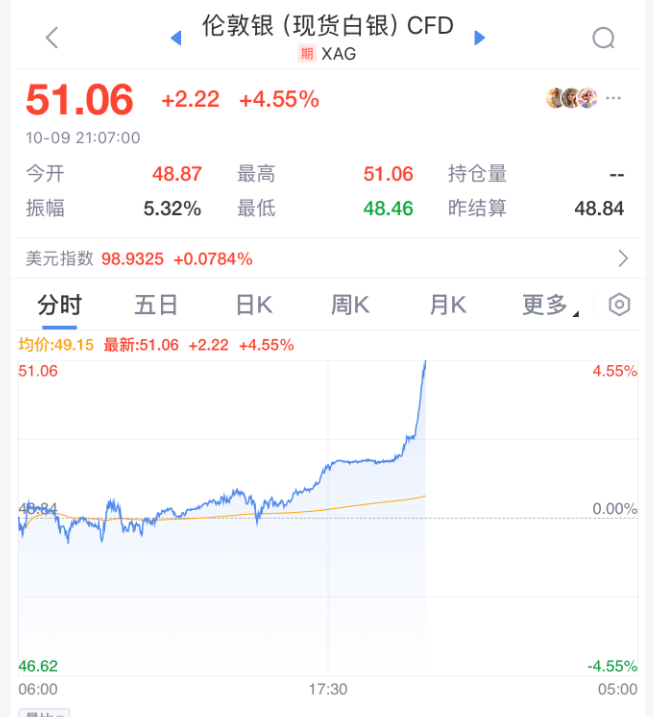
Core Viewpoint - Silver prices have recently reached a historic high, surpassing $50 per ounce, driven by increased demand for safe-haven assets and tightening supply in the London spot market [2][4]. Group 1: Price Movement and Market Dynamics - On October 9, the spot silver price surged to over $50 per ounce, marking the highest level since the "Hunt brothers squeeze" in the 1980s, with a subsequent increase to $51.06 per ounce, reflecting a 4.5% rise [2]. - Year-to-date, silver has appreciated over 70%, outperforming gold, as concerns about U.S. fiscal risks and overheated stock markets prompt investors to seek safe-haven assets [4]. - The shortage of freely available silver in the London market has supported prices and significantly increased the cost of borrowing silver [4][6]. Group 2: Investment Trends and Industrial Demand - The trend of "hedging against fiat currency depreciation" has also contributed to the rise in silver prices, as investors flock to assets like Bitcoin, gold, and silver amid inflation and unsustainable fiscal deficits [6]. - Silver is not only a global investment asset but also widely used in industrial applications, particularly in solar panels and wind turbines, which together account for over half of silver consumption [6]. - The silver market is expected to face a supply shortage for the fifth consecutive year by 2025, with high borrowing costs for the metal and concerns about potential U.S. tariffs leading to a "rush" to transport silver to the U.S. [6]. Group 3: Historical Context and Volatility - Silver typically moves in tandem with gold and shows a significant negative correlation with the U.S. dollar and Federal Reserve interest rates, but it is known for its high volatility [7]. - Historical events, such as the speculative actions of the Hunt brothers in 1980, have led to significant price surges, with silver prices reaching over $50 per ounce before crashing to below $11 [7]. - Currently, the nominal new high for silver is only about a quarter of the inflation-adjusted peak from the 1980s [7].