小雪节气养生

Search documents
注意避寒保暖、通风润燥 小雪养生攻略请收好
Mei Ri Shang Bao· 2025-11-24 01:57
Core Viewpoint - The article emphasizes the importance of health maintenance during the "Small Snow" solar term, highlighting traditional Chinese medicine principles such as "warming and dispelling cold, moisturizing and protecting yin" as essential for adapting to the colder and drier climate [1][2]. Group 1: Health Maintenance Principles - The core of health maintenance during the Small Snow period is to focus on warming the body and protecting against cold, as well as moisturizing to counteract dryness [1]. - It is advised to prioritize warmth in daily life, particularly for the waist and feet, by wearing high-waisted pants and thick socks, and using scarves, gloves, and hats when going outside [1]. - Ventilation and humidity are also important; it is recommended to open windows for 15-20 minutes when temperatures are higher and to use humidifiers or place water and plants indoors to alleviate dryness [1]. Group 2: Dietary Recommendations - The dietary focus should be on warming and nourishing foods, such as lamb, beef, chicken, and dog meat, while also incorporating foods that have moisturizing properties like tremella, lily, pears, honey, black sesame, and walnuts [2]. - Certain foods should be avoided, including cold and raw items like ice cream and sashimi, which can harm the spleen and stomach, leading to bloating and diarrhea [2]. - Spicy and hot foods, such as chili, pepper, ginger, barbecued, and fried foods, should also be limited to prevent exacerbating internal heat and causing throat inflammation and dryness [2].
“小雪”节气到 如何养生、预防疾病、缓解膝盖不适?这份健康指南请收好↓
Yang Shi Wang· 2025-11-22 02:19
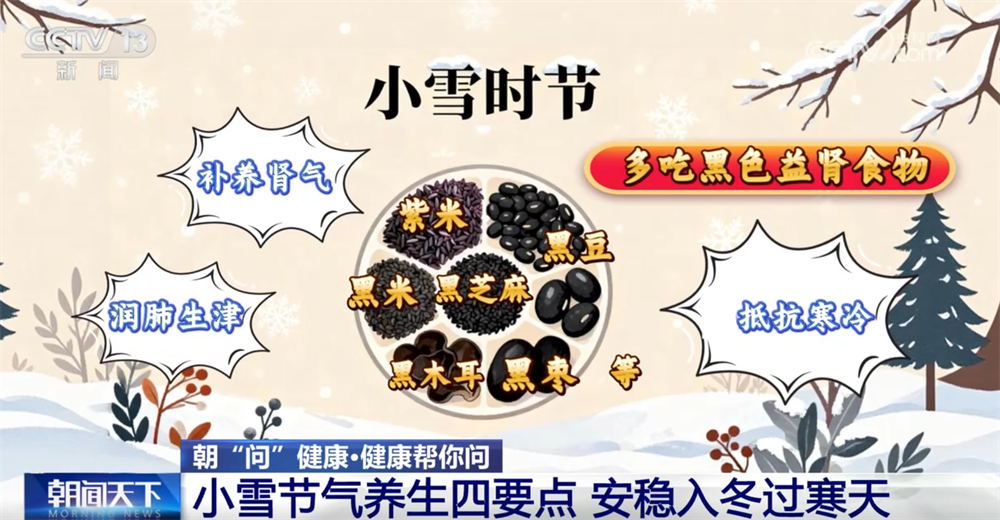
Group 1 - The arrival of the "Minor Snow" solar term indicates colder weather, emphasizing the importance of dietary adjustments to resist cold and nourish the lungs [2] - Recommended foods during this period include black foods such as black rice, purple rice, black beans, black sesame, black fungus, and black dates, which are believed to nourish kidney energy [2] - It is advised to consume warm porridge and soups like wheat porridge, radish porridge, and jujube porridge to benefit the stomach and body [3] Group 2 - The "Minor Snow" period is associated with an increased risk of respiratory infections and cardiovascular diseases due to sudden temperature drops [8] - Symptoms such as dry mouth, oral ulcers, and dry skin are common during this time, and consuming bitter foods can help alleviate these issues [5] - Drinking warm water daily is recommended to promote metabolism and prevent cardiovascular diseases [7] Group 3 - Cold weather can trigger respiratory diseases like pharyngitis, rhinitis, and asthma, necessitating precautions such as avoiding spicy foods and consuming vitamin C-rich fruits and vegetables [9] - Cold exposure can lead to cardiovascular issues, with heightened risks for patients with hypertension, who should monitor their blood pressure regularly [11] - The flu poses additional risks, particularly for those with underlying health conditions, highlighting the importance of personal protection and flu vaccinations [13] Group 4 - The risk of falls and injuries increases during snowy conditions, especially for the elderly, who are advised to limit outdoor activities and seek companionship when necessary [15] - Joint pain, particularly in the knees, can be exacerbated by cold weather, and methods such as hot compresses and massages are suggested for relief [16][18] - Specific massage techniques for knee pain relief are recommended, including circular motions and targeted pressure on sensitive points [20]