
小麦抗旱

Search documents
中国科研团队再获突破!解锁小麦抗旱新机制,为粮食稳产提供新方向
仪器信息网· 2025-10-23 08:06
Core Insights - The article highlights a significant research breakthrough in wheat drought resistance, revealing the role of the "TaBZR2-TaPPR13-TaAOR1/TaSIG5" regulatory module, which provides new theoretical support and breeding targets for addressing drought-related yield constraints in wheat [2][3]. Research Findings - The research utilized Genome-Wide Association Studies (GWAS) to identify the core transcription factor TaBZR2, which is significantly associated with drought resistance in wheat [3]. - TaBZR2 activates the downstream PPR protein gene TaPPR13, which acts as a positive regulator under drought stress, enhancing the plant's antioxidant defense system and regulating gene expression related to ROS scavenging and ABA signaling pathways [3]. - The collaboration between TaPPR13 and TaAOR1 facilitates stomatal closure, reducing water loss while maintaining photosynthetic capacity, thus allowing wheat to sustain yield advantages under drought stress [3]. Application and Implications - The findings fill a gap in the research on the drought resistance function of PPR proteins in wheat, paving the way for the development of new high drought-resistant and high-yield wheat varieties [3][12]. - The article emphasizes the importance of molecular breeding technologies as a core engine driving innovation in the seed industry, particularly in the context of global food security and sustainable agricultural development [5]. Conference Details - A webinar titled "Molecular Breeding and Seed Industry Innovation" is scheduled for October 24, 2025, featuring prominent experts discussing the latest breakthroughs in molecular breeding [5][6]. - The conference will cover various topics, including the molecular mechanisms of drought resistance in wheat and the application of epigenetic methods to improve crop adaptability [11][14].


河南干旱部分农户提前割麦,农业部门:将救灾资金用于灌溉打井
Xin Jing Bao· 2025-05-15 05:18
Core Insights - The wheat production in Henan province, China's largest wheat-producing area, is severely affected by drought conditions, leading to early harvesting and potential yield losses [1][8] Drought Impact on Wheat Production - As of April 19, 40% of counties in Henan experienced severe drought, with rainfall since then only partially alleviating conditions in some areas [1] - Farmers in regions like Luoyang are facing increased irrigation costs, with some spending over 1,000 yuan to irrigate only about 10 acres [3][6] - The average rainfall in Henan since mid-March has been less than 20% of the normal levels, negatively impacting soil moisture and wheat development [4] Farmers' Experiences and Challenges - Farmers in areas like Zhoukou report that wheat crops are stunted and some have not even produced heads due to insufficient irrigation [3][4] - The labor-intensive process of irrigation, including pumping water from rivers, adds to the financial burden on farmers [4][6] - Some farmers are forced to harvest early due to the drought, which may lead to financial losses as the costs of seeds, fertilizers, and machinery are not recouped [3][8] Agricultural Department Responses - Local agricultural departments are prioritizing drought relief efforts, with measures in place to assist farmers in irrigation and water management [6][7] - Zhoukou, a major grain-producing county, has over 1.7 million acres of wheat, with expectations to begin harvesting around May 28 [6] Expert Opinions on Future Production - Experts indicate that the impact of drought on wheat yield will require comprehensive assessment, considering factors like drought area, irrigation status, and future weather [8] - Continuous research in breeding, cultivation, and irrigation methods is essential to improve drought resistance in wheat varieties [8]
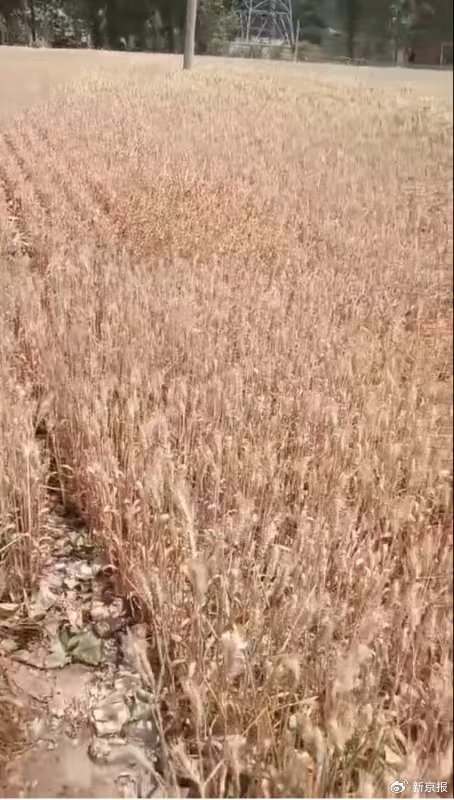
苏州市领导调研小麦抗旱工作
Su Zhou Ri Bao· 2025-05-03 00:22
Core Viewpoint - The article emphasizes the importance of addressing drought conditions affecting wheat production in Suzhou, highlighting the need for coordinated efforts to ensure food security during critical agricultural periods [1][2]. Group 1: Drought Conditions and Responses - Suzhou has experienced below-average rainfall for five months, leading to drought conditions in northern areas like Zhangjiagang and Changshu [1]. - The local government is actively monitoring soil moisture and implementing irrigation strategies to mitigate the impact of drought on wheat crops [2]. Group 2: Agricultural Management and Support - The government stresses the urgency of drought response measures, including enhancing irrigation infrastructure and employing artificial rain and emergency water transfers [2]. - There is a focus on providing technical agricultural support to farmers, ensuring effective water management, and preventing crop diseases and pests [2].