
工业互联网+AI

Search documents
树根科技:展示“工业互联网+AI”双轮驱动赋能两业融合的实践路径 | 省高质量发展大会
Guang Zhou Ri Bao· 2026-02-25 06:14
Group 1 - The Guangdong High-Quality Development Conference highlighted the collaboration between manufacturing and service industries, with Shugen Technology showcasing its innovative applications of industrial intelligence in various scenarios [1] - Shugen Technology's latest product, the Equipment Maintenance Assistant, utilizes intelligent diagnosis, translation, and retrieval engines to address service challenges for Chinese manufacturing companies expanding overseas, achieving a 50% reduction in fault diagnosis time and a 30% increase in maintenance efficiency [1] - The company aims to create a global intelligent service platform, facilitating the transition of Chinese enterprises from manufacturing to global service [1] Group 2 - At the conference's forum on intelligent manufacturing and industrial internet, Shugen Technology emphasized its mission to empower industrial progress through its core capabilities: "Enterprise Brain" for management decision-making and "Robot Brain" for autonomous production [2] - The company has developed large models across 10 vertical fields to shift manufacturing from reliance on human experience to a dual drive of data and intelligence, promoting high-quality, advanced, intelligent, and green industrial development [2] Group 3 - During the forum on industrial integration and policy innovation, Shugen Technology discussed the need for "chain digital transformation" to help small and medium-sized enterprises overcome barriers to transformation [3] - The company plans to leverage its experience in industrial internet and artificial intelligence to create replicable industry benchmarks and reduce application barriers through lightweight, low-cost technology models [3] - Shugen Technology has already integrated over 1,100 industrial protocols and aims to strengthen its role as an enabler of industrial integration in Guangdong [3]
政策连发!“工业互联网+AI”这对CP,要炸出万亿新蓝海
Sou Hu Cai Jing· 2026-01-27 13:52
Group 1 - The core viewpoint of the article emphasizes the ambitious plans for the industrial internet in China, aiming to establish over 450 significant platforms and transform at least 50,000 enterprises by 2028, with a target of reaching a core industry scale of over 1.6 trillion yuan by 2025 [1] - The industrial internet is evolving from mere connectivity to cognitive understanding and intelligent decision-making, enabling factories to optimize operations autonomously, covering 41 industrial categories with 23,000 "5G + industrial internet" projects already implemented [3] - The industrial internet sector is experiencing a surge in new registrations, with a 27.8% increase expected by 2025, indicating a strong interest from various enterprises to participate in this growth [5] Group 2 - For AI to be effectively utilized in industrial applications, the network must evolve to be self-aware and capable of decision-making, focusing initially on production control and equipment collaboration using advanced technologies like 5G and Time-Sensitive Networking (TSN) [7] - Experts suggest a step-by-step approach to development, prioritizing data collection and intelligent systems in key industries such as automotive and steel to ensure high-quality growth [7]

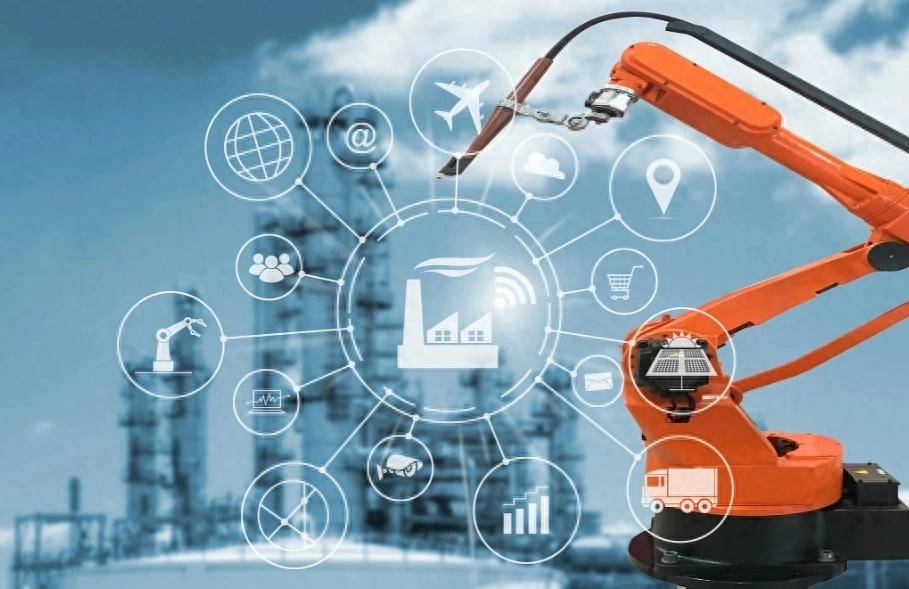
政策密集发力 “工业互联网+AI”融合迈入新阶段
Xin Lang Cai Jing· 2026-01-25 21:22
Group 1 - The integration of AI large models is driving new modes such as platform design, intelligent production, and personalized customization, while open-source AI technologies are lowering the barriers for enterprises to adopt intelligent solutions [1] - For large enterprises, the focus should be on leveraging industrial software to apply AI technologies, while for small and medium-sized enterprises, a "Model as a Service (MaaS)" approach is recommended to reduce the technical challenges of AI adoption [1] - The upgrade of industrial networks is crucial for the deep integration of AI and industry, with a policy goal to promote the transformation of at least 50,000 enterprises by 2028 [1] Group 2 - Future efforts should focus on innovating new industrial networks, building high-quality industrial data sets, and cultivating industrial intelligence, emphasizing real-time, deterministic, and secure network capabilities [2] - The establishment of innovation coalitions in key industries such as automotive and steel is necessary to create valuable industrial data sets and develop a multi-level application system [2] - The development of industrial intelligence should follow a step-by-step approach from device level to enterprise level, enhancing capabilities progressively [2]