机器人大脑

Search documents
树根科技:展示“工业互联网+AI”双轮驱动赋能两业融合的实践路径 | 省高质量发展大会
Guang Zhou Ri Bao· 2026-02-25 06:14
Group 1 - The Guangdong High-Quality Development Conference highlighted the collaboration between manufacturing and service industries, with Shugen Technology showcasing its innovative applications of industrial intelligence in various scenarios [1] - Shugen Technology's latest product, the Equipment Maintenance Assistant, utilizes intelligent diagnosis, translation, and retrieval engines to address service challenges for Chinese manufacturing companies expanding overseas, achieving a 50% reduction in fault diagnosis time and a 30% increase in maintenance efficiency [1] - The company aims to create a global intelligent service platform, facilitating the transition of Chinese enterprises from manufacturing to global service [1] Group 2 - At the conference's forum on intelligent manufacturing and industrial internet, Shugen Technology emphasized its mission to empower industrial progress through its core capabilities: "Enterprise Brain" for management decision-making and "Robot Brain" for autonomous production [2] - The company has developed large models across 10 vertical fields to shift manufacturing from reliance on human experience to a dual drive of data and intelligence, promoting high-quality, advanced, intelligent, and green industrial development [2] Group 3 - During the forum on industrial integration and policy innovation, Shugen Technology discussed the need for "chain digital transformation" to help small and medium-sized enterprises overcome barriers to transformation [3] - The company plans to leverage its experience in industrial internet and artificial intelligence to create replicable industry benchmarks and reduce application barriers through lightweight, low-cost technology models [3] - Shugen Technology has already integrated over 1,100 industrial protocols and aims to strengthen its role as an enabler of industrial integration in Guangdong [3]
大界机器人孟浩:做“软硬一体”的机器人大脑
Shang Hai Zheng Quan Bao· 2026-02-08 17:31
Core Viewpoint - The article highlights the growth and innovation of Dajie Robotics, a company that has developed an industrial software platform to simplify the use of industrial robots, aiming to meet the increasing demand for automation in various industries [3][4]. Group 1: Company Overview - Dajie Robotics was founded by Meng Hao ten years ago, focusing on making industrial robots as user-friendly as computers [3]. - The company has grown to employ 150 people and serves hundreds of leading clients globally, providing intelligent manufacturing systems across industries such as shipbuilding, power, construction, and heavy industry [3][4]. - Dajie's self-developed industrial software platform, RoBIM, enables a collaborative system for complex manufacturing processes [3][5]. Group 2: Market Position and Strategy - Dajie initially focused on industrial software rather than hardware, aiming to create an interactive experience similar to operating systems or mobile apps for frontline workers [4]. - The company targets the general industrial sector, which is characterized by high customization and lower robot penetration, presenting significant growth opportunities [4][6]. - Dajie has recently experienced a harvest period, with the robotics and embodied intelligence sectors becoming hot topics in both primary and secondary markets [4]. Group 3: Product Development and Innovation - Dajie provides end-to-end services in the robotics field, from data recognition and processing to model training and knowledge system construction [5]. - The company has successfully developed a flexible 3D cutting robot for the shipbuilding industry, which has been recognized by clients and is expected to contribute significantly to revenue [7]. - Dajie is exploring collaborations with dual-arm robot companies to enhance industrial applications, while acknowledging the need for improvements in hardware precision and durability [7][8]. Group 4: Financial Performance and Future Outlook - Dajie Robotics has nearly reached an annual revenue of 200 million yuan and has achieved a team size of 150, with over one-third being R&D personnel [8]. - The company has secured investments from notable firms and is projected to achieve breakeven by 2025 [8]. - Looking ahead, Dajie aims to leverage its RoBIM platform to explore new robot configurations, such as wheeled and humanoid robots, to enhance efficiency in manufacturing [8].



豪恩汽电(301488):智能驾驶感知龙头 机器人开启新增长曲线
Xin Lang Cai Jing· 2026-02-04 10:35
Group 1 - The company focuses on expanding from intelligent driving perception to intelligent driving domain control, actively entering the robotics business, with a core competency in automotive intelligent driving perception for over a decade, covering major automakers like Nissan, Volkswagen, and Geely. The main perception products include onboard camera systems, onboard video driving recorders, and ultrasonic radar, with revenue contributions of 55%, 20%, and 25% respectively in 2022 [1] - The company has expanded from the perception layer to the decision layer, achieving mass production of low-computing power domain control products such as APS and AVP, and is gradually breaking through to high-computing power platform development, with domain control revenue expected to increase to 9% by 2024 [1] - The company is simultaneously developing in the robotics field, forming an integrated layout of "perception + decision," which is expected to open a new growth curve [1] Group 2 - The intelligent driving product market is experiencing increased volume and price due to the intelligentization wave, with sufficient orders supporting growth. The Ministry of Industry and Information Technology has announced the first batch of L3 conditional autonomous driving vehicle access permits, marking the transition of L3 testing into commercial application, which accelerates the development of intelligent driving [2] - The penetration rate of intelligent driving is significantly increasing, driving demand for intelligent driving perception products. The company benefits from this trend, with a market share of 27% for its ultrasonic radar products, leading among domestic suppliers. The unit value per vehicle has increased from hundreds to 3000-4000 yuan, and new products like domain control, lidar, and thermal imaging are expected to further enhance the average selling price per vehicle [2] - As of September 2025, the company has approximately 20.9 billion yuan in confirmed orders, indicating strong demand certainty [2] Group 3 - The company is positioning itself within the Nvidia Thor ecosystem and is entering the robotics sector as a perception system supplier, collaborating with Nvidia to develop a robotic brain based on its Jetson platform, forming an integrated layout of "perception + decision" in the robotics field [3] - The company is one of the first partners for Nvidia's Jetson Thor, establishing a critical ecological position and creating technical barriers and product added value at a high level within the industry chain, with expected value amounts ranging from thousands to tens of thousands of yuan [3] - The domain control system equipped with Jetson Thor is expected to be launched subsequently, solidifying the company's competitive advantage in the robotics decision-making field and opening a new growth curve [3] Group 4 - The company's intelligent driving business foundation is solid, and its layout in the robotics sector is expected to initiate a new growth curve. The projected net profits for 2025-2027 are 99 million, 131 million, and 176 million yuan respectively, with year-on-year growth rates of -2%, +32%, and +34%, corresponding to PE ratios of 135, 102, and 76 times [4]
朝闻国盛:关注美元流动性和情绪指标何时修复
GOLDEN SUN SECURITIES· 2026-02-04 01:33
Group 1: Market Overview - The report emphasizes the need to monitor the recovery of US dollar liquidity and sentiment indicators, as recent market conditions have shown excessive liquidity and heightened risk aversion due to hawkish signals from the Federal Reserve [3] - Current US dollar liquidity is in a state of severe tightening, triggering a warning signal at -60%, indicating a significant reduction in net liquidity [3] - Fear sentiment indicators have worsened, amplifying market volatility, with rising uncertainty across global markets [3] Group 2: Fixed Income Insights - The fiscal outlook for 2026 remains challenging, necessitating larger fiscal expansions to ensure effective policy implementation, as 2025 saw insufficient internal growth in fiscal revenue [4] - Despite a budget deficit rate of 4% and an increase in government debt by 2.9 trillion yuan, actual spending fell short of initial budget expectations, indicating structural pressures on fiscal spending [4] - The report suggests that stronger fiscal measures will be required in 2026 to achieve effective expansion, with projections for special government bonds and a decrease in overall fiscal space [4] Group 3: Company-Specific Analysis - Haon Electric (301488.SZ) is positioned as a leader in intelligent driving perception, with a strategic partnership with NVIDIA to develop robotic brain technology, enhancing its competitive edge in the robotics sector [7] - The company is expected to see significant growth in net profit from 2025 to 2027, with projections of 0.99 billion yuan in 2025, 1.31 billion yuan in 2026, and 1.76 billion yuan in 2027, reflecting a robust expansion in its business model [8] - Cambricon Technologies (688256.SH) anticipates a substantial revenue increase in 2025, projecting revenues between 6 billion to 7 billion yuan, with a net profit turnaround expected to be between 1.85 billion to 2.15 billion yuan [10]


给机器人装上“智慧脑”
Ren Min Ri Bao· 2026-01-22 19:16
Core Insights - The company, Shandong Xingjie Innovation Robot Co., Ltd., focuses on the research, production, and application of quadruped robots, driving industry transformation through technological innovation [1] - The "robot brain" consists of a GPU module and a development board module, enabling autonomous decision-making, path planning, and data processing [1] - The advanced autonomous decision-making system allows the robot to handle 70% of routine data analysis independently, significantly reducing the need for human intervention [1] Technology and Applications - The robots can adapt to various complex environments, such as stairs, wetlands, and sandy terrains, by autonomously switching between walking and running gaits [2] - A recent breakthrough in SLAM laser radar navigation technology allows the robots to create high-precision 3D maps, enhancing their navigation capabilities in challenging conditions [2] - The latest service robot, "Xiao Xing," can automatically plan optimal paths and avoid obstacles upon receiving voice commands, successfully completing tasks like inspections and guidance [2] Market Expansion - The company has secured orders from regions such as Inner Mongolia and Chengdu, with projected revenue of 7 million yuan expected in the first quarter of 2026 [3]
山西80后,又融资数亿
3 6 Ke· 2026-01-21 12:57
Core Insights - The article discusses the advancements and market potential of embodied intelligence in robotics, particularly focusing on the company Kuawei Intelligent, which has secured significant contracts with major manufacturers [2][3][6]. Group 1: Company Overview - Kuawei Intelligent was founded in 2021 and has achieved annual revenues exceeding 100 million yuan by providing robotic brains and humanoid robots to manufacturing clients [3][4]. - The company has successfully addressed the challenge of data scarcity in the physical world by creating a virtual environment for data generation, allowing for efficient training of robots [3][16]. Group 2: Market Potential and Trends - The company has identified service robots as the next major application area, predicting that costs will decrease to a level where customers can achieve a return on investment within 18 to 36 months, with significant growth expected starting in 2027 [7][19]. - By 2026, the industry is anticipated to see a surge in three-dimensional physical world modeling and data collection devices that closely mimic human actions [8][23]. Group 3: Technological Innovations - Kuawei Intelligent's approach involves using a virtual world called GS-World to generate unlimited training data, which enhances the robots' capabilities in various tasks [17][18]. - The company plans to release the DexForce W1 humanoid robot in 2024, designed for versatile tasks such as coffee making and guiding, with mass production expected to exceed 100 units by 2025 [19][20]. Group 4: Investment and Financing - Kuawei Intelligent has successfully completed multiple rounds of financing, including nearly $10 million in angel funding shortly after its inception and several hundred million yuan in Series A1 and A2 funding in mid-2025 [4][5]. Group 5: Competitive Landscape - The company aims to democratize data access in the industry by open-sourcing its core technology, allowing others to generate data and train models, thus fostering a collaborative environment for growth [20][22].

具身智能走到分水岭:机器人大脑,应该卖“整机”还是“能力”?
机器人大讲堂· 2025-12-23 07:04
Core Insights - The core viewpoint of the article emphasizes that the next stage of competition in robotics will not be about the physical appearance of robots but rather about whether the robotic brain can operate independently, universally, and be adaptable [1][9][10] Group 1: Industry Trends - The mainstream business model in the robotics industry has traditionally been "whole machine driven," but as application scenarios expand rapidly, the limitations of this model are becoming apparent [2] - There is a shift from "selling robots" to "selling brains," indicating a change in industry logic where intelligent capabilities are deeply integrated with hardware [2][5] Group 2: Technological Evolution - The robotics industry may evolve towards a layered structure similar to that of autonomous driving and cloud computing, where the brain is no longer an "accessory module" but a foundational infrastructure with independent product attributes [3] - The concept of "brain in a jar" proposed by Qianjue Technology signifies a new industrial-level intelligent organization method, allowing the brain to be integrated with various manufacturers and robot forms without starting from scratch [3][5] Group 3: Decoupling and Learning - The design of robotic systems aims to decouple the brain from specific task logic, enabling continuous learning and iteration in real-world scenarios [6][8] - The decision-making process does not rely on frequent human prompts, creating a closed loop between perception and decision-making [7] Group 4: Market Feedback and Ecosystem - There is a notable trend where more robotics manufacturers are beginning to procure "intelligent capabilities" as independent entities rather than developing them in-house, indicating a division of labor in the industry [8] - The launch of the "Chaoyang District Intelligent Robot Ecosystem Partner Construction Plan" during the Robo Summit highlights the importance of ecosystem development over short-term project collaborations, which is crucial for the establishment of the independent robotic brain route [9]

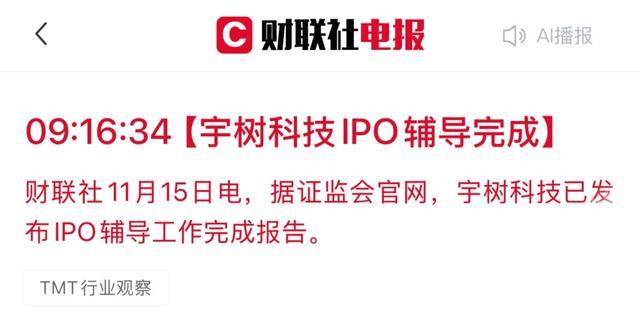
宇树科技IPO,相关受益公司名单
Sou Hu Cai Jing· 2025-11-15 08:12
Core Viewpoint - Yushu Technology Co., Ltd. plans to submit its IPO application in Q4 2025, marking a significant milestone as the first profitable humanoid robot company globally, which is expected to attract attention to the entire humanoid robot industry chain [1] Shareholding/Investment - Juxing Technology holds shares in Yushu Technology through its subsidiary, ensuring clear equity investment and direct asset appreciation [3] - Jing Shan Light Machine participated in Yushu's early investment through an industrial investment fund, though specific shareholding ratios are not disclosed [3] - Shoukai Co., Ltd. indirectly holds approximately 0.85% of shares through the Jinshi Growth Fund, indicating a relatively high indirect shareholding among A-share listed companies [3] - Jinfat Technology holds 4.77% indirectly through the Jinshi Growth Fund and is a leading chemical materials company with over 60% market share in robot shell materials, reporting a 35.5% revenue growth in H1 2025 [3] - Wolong Electric Drive holds 0.1525% indirectly and has seen a 36.76% net profit increase in H1 2025, with a gross margin of 28% [3] - Other companies like Jingxing Paper and Rongsheng Environmental Protection hold minor indirect stakes, primarily for financial investment [3][4] Core Suppliers - Zhongdali De is the core supplier of planetary reducers, with orders locked at 3.2 billion yuan for 2025, accounting for 36% of Yushu's costs [6] - Changsheng Bearings exclusively supplies self-lubricating bearings with over 80% penetration, expecting 8% of its revenue from robot business in 2025 [6] - Aobi Zhongguang is the sole supplier of 3D vision modules, with a supply ratio of 72% and a doubling of revenue in H1 2025 [6] - Lide Technology provides flexible tactile sensors, breaking the monopoly of Korean companies [6] - Weilan Lithium Core is the core supplier of lithium batteries for Yushu, with an expected 60% supply ratio in 2024 [6] Technical Cooperation Partners - iFLYTEK collaborates on developing the "robot brain," with a leading position in voice recognition and a planned R&D investment of 2.392 billion yuan in 2025 [8] - Lingyun Optical is jointly developing the FZMotion motion capture system, achieving high precision and expected stock price growth of over 200% in 2025 [8] - Zhongke Chuangda provides motion control algorithms and holds 1.86% of shares, with strong adaptability in edge computing modules [8] - Other partners include Shuanglin Co., Ltd. and Shengtong Co., Ltd., focusing on various components and educational collaborations in robotics [8][9]





机器人大脑产业跟踪
2025-11-10 03:34
Summary of Key Points from the Conference Call on Robotics Industry Industry Overview - The robotics industry is shifting focus from traditional industrial robots to humanoid and specialized product forms, with a strong emphasis on full-chain automation control [2][16] - The development of humanoid robots is closely linked to advancements in automotive intelligence and electrification, with many robotics developers originating from the automotive sector [2][3] Core Challenges - The development of robotic brains faces dual challenges: the real-time performance of operating systems and the uncertainty of AI algorithms, particularly in precision control scenarios [4][10] - The phenomenon of "hallucination" in large language models complicates the training of models for specific applications [4] - Data variability in different environments, such as home care, adds complexity to model training [5][12] Industrial vs. Domestic Applications - Robotic brains are more easily implemented in industrial settings due to higher project budgets that allow for extensive data collection and training, unlike home care scenarios which have budget constraints [6][13] - The need for tailored solutions in specific environments is emphasized, suggesting a gradual approach starting with narrow applications [13][24] Technological Development - The concept of world models is gaining traction, with the potential to enhance robotic brains by reconstructing scene data, although data volume and computational power remain significant challenges [8][9] - Current robotic systems are more akin to specialized control systems rather than general-purpose brains, necessitating real-time operating systems and sufficient observational computing power [10][11] Market Dynamics - If China's robotics supply chain is established, it could lead to significantly lower costs compared to the U.S., with a strong foundation for manufacturing [14] - The lack of skilled product managers in China is identified as a barrier to defining and designing effective robotics products [22] Future Outlook - The robotics industry is still in its infancy, with no clear leaders emerging due to the incomplete integration of technology stacks [16] - Short-term investment risks are highlighted, as significant breakthroughs in robotics and AI are not expected imminently [20][24] - The potential for humanoid robots in various applications is acknowledged, but their current utility in many scenarios remains limited [17] Conclusion - The robotics industry is at a critical juncture, with the potential for growth if initial application scenarios are clearly defined and marketable solutions are developed [24][25] - Investors are advised to manage expectations and balance technological advancements with practical commercialization strategies [25]
“今年最火的20家机器人,我只投中5家”
投中网· 2025-10-23 06:30
Core Insights - The article discusses the investment strategies and reflections of Wang Sheng, a partner at Inno Angel Fund, particularly in the context of the AI and robotics sectors, highlighting the importance of early investment and the need to adapt to changing market dynamics [2][4][14]. Investment Strategy - Wang Sheng emphasizes the significance of identifying potential winners in the robotics industry, noting that he invested in five out of the top 20 most valuable robotics companies in China, achieving returns ranging from tens to hundreds of times [2][4]. - The investment logic varies among companies, with some being tactical responses to market trends while others are based on strategic foresight regarding the future of intelligent development [2][4]. - There is a reflection on the missed opportunities in investing in multiple promising companies rather than betting on a single champion, suggesting a shift in investment philosophy towards a more inclusive approach [14][16]. Personal Journey - Wang Sheng's background includes a long career in internet and entrepreneurship, transitioning to early-stage investment as he recognized the potential in the mobile internet and entertainment sectors [3][4][5]. - His experiences highlight the importance of personal interest and passion in investment decisions, as he found success in areas he was genuinely interested in, such as entertainment and AI, rather than forcing himself into less appealing sectors [4][62]. Industry Trends - The article notes the rapid evolution of the AI and robotics sectors, with a particular focus on embodied intelligence and the need for a deeper understanding of the technology behind it [24][26]. - Wang Sheng discusses the misconceptions surrounding embodied intelligence, clarifying that it is more about human cognitive processes and learning through interaction rather than merely endowing machines with intelligence [26][27]. - The investment landscape is characterized by a cautious yet proactive approach, with a focus on companies that demonstrate both long-term growth potential and immediate revenue generation [35][36]. Reflections on Investment Philosophy - There is a critical examination of past investment choices, with an acknowledgment that overconfidence in market predictions may have led to missed opportunities [16][19]. - The current investment strategy has shifted to place greater trust in founders and their visions, even when they diverge from the fund's initial assessments [20][21]. - Wang Sheng emphasizes the importance of understanding the people behind the projects, suggesting that strong teams can adapt and thrive even if their initial direction differs from established trends [20][22].