工具赋能

Search documents
如何赋能中层管理者,让其成为组织的“中坚力量”?
3 6 Ke· 2026-01-12 09:01
Core Insights - Middle managers play a crucial role in organizations, acting as translators of high-level strategies into actionable plans, guiding teams, and ensuring efficient operations [1] - The challenges faced by middle managers stem from four core contradictions that hinder their effectiveness [2] Group 1: Nature of Middle Management Challenges - The first contradiction is the duality of roles, where middle managers must act as executors of strategies, leaders of teams, and individual contributors, leading to a fragmented focus and potential burnout [2] - The second contradiction involves a breakdown in strategic communication, where high-level strategies are often abstract and lack clear directives for middle managers, resulting in ineffective execution at the grassroots level [3] - The third contradiction highlights the imbalance between administrative tasks and value creation, with middle managers spending 30%-40% of their time on non-value-added administrative work, which diminishes their sense of purpose [4] - The fourth contradiction is the lack of personalized support for middle managers, as traditional training often fails to address their diverse backgrounds and needs, leading to stagnation in their development [5][6] Group 2: Strategies for Empowering Middle Managers - Empowering middle managers can be achieved through four core strategies focusing on strategic alignment, environmental support, tool empowerment, and pressure management [7] - The first strategy emphasizes the importance of strategic alignment, ensuring that middle managers understand organizational goals and their roles in achieving them, thus transforming them from passive executors to active drivers of strategy [8] - The second strategy involves setting common goals across all levels to enhance collaboration and agility, allowing teams to adapt quickly to changing market conditions [10] - The third strategy focuses on creating a supportive environment that reduces administrative burdens and fosters collaboration among middle managers, enabling them to concentrate on core value-adding activities [11] - The fourth strategy addresses pressure management by providing middle managers with the authority to say no to non-essential tasks and fostering a culture of psychological safety [16][17][18] Group 3: Conclusion - Strengthening middle management is essential for enhancing organizational execution, cohesion, and innovation, as their state directly influences overall performance [19]
蓝海暗流涌动:446款APP,用户渗透率不足10%,短剧出海又有新模式?
3 6 Ke· 2025-09-25 03:50
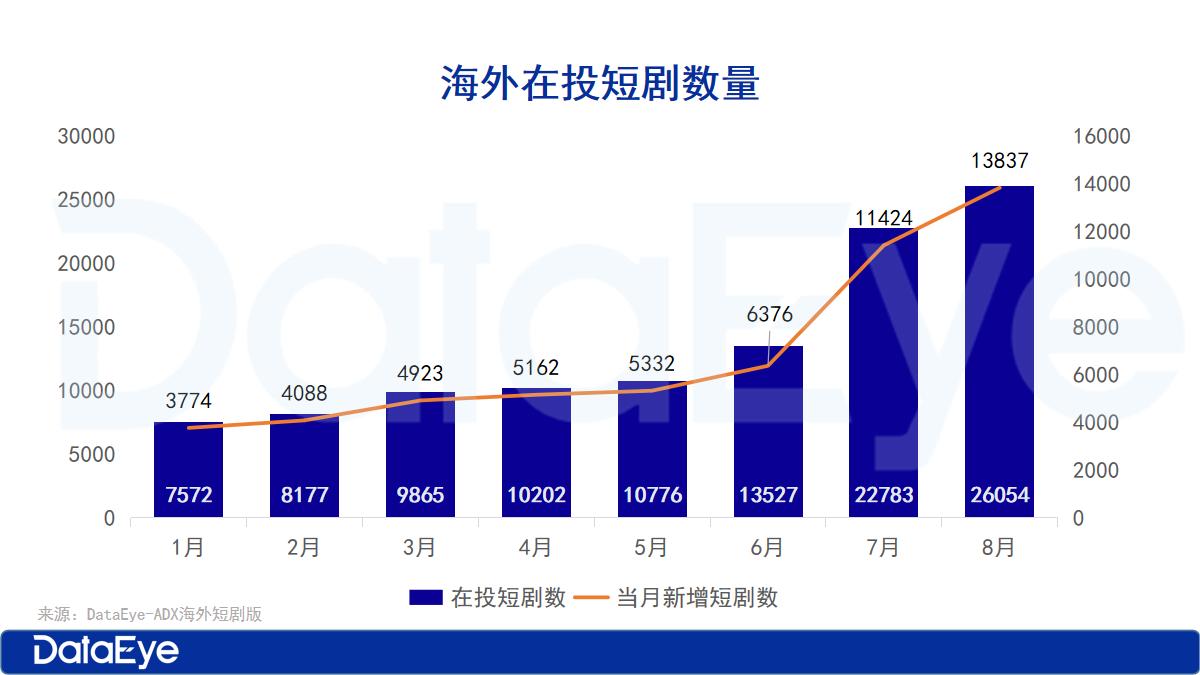
Core Insights - The overseas micro-drama app market is rapidly expanding, with 446 apps projected by August 2025 and a monthly increase of 18.57% in new app launches [1] - Micro-drama applications dominate the revenue rankings for non-gaming apps from China, with nine out of the top twenty spots [1] - The rise of native platforms like TikTok and YouTube is prompting micro-drama producers to replicate domestic strategies abroad [1][3] Group 1: Market Dynamics - The domestic micro-drama market is characterized by a "one strong, many strong" scenario, with leading firms dominating while mid-tier and new entrants focus on overseas expansion [1] - The number of overseas micro-dramas has surged from under 10,000 at the beginning of the year to over 26,000 [1] - TikTok for Business reported a threefold increase in micro-drama ad impressions, indicating significant user conversion improvements [3] Group 2: Content Preferences - There is a notable regional differentiation in content preferences, with emotional, urban, and revenge themes being the most popular, accounting for 70% of the overseas micro-drama market in the first half of 2025 [6] - Different regions exhibit distinct preferences for themes, such as North America favoring CEO and werewolf narratives, while Southeast Asia leans towards themes like "fake rich girl" and "restart life" [6][10] Group 3: Target Audience Segmentation - The demand for content is increasingly segmented by age, with younger audiences in North America gravitating towards campus love stories, while older viewers prefer family-oriented narratives [13] - The analysis of 6,524 revenge-themed micro-dramas shows significant variations in audience preferences across regions, necessitating tailored content strategies [10][12] Group 4: Distribution Strategies - The traditional reliance on single-app distribution is evolving towards a multi-channel approach, allowing for broader audience reach [16] - The "social media acquisition - app retention" model is prevalent, leveraging platforms like TikTok and Facebook to attract users before directing them to dedicated apps [18] - Direct engagement within social media platforms is becoming a viable strategy, as seen with the Japanese team "ごっこ倶楽部," which has achieved over 5 billion views on TikTok [19] Group 5: Quality Over Quantity - The focus is shifting from rapid growth to high-quality content, with an emphasis on global distribution strategies that leverage data tools for market identification and localization [22] - Successful cases like "好一个乖乖女" demonstrate the effectiveness of pre-planning for multilingual adaptations and synchronized releases across markets [25] - The future of micro-drama exports lies in building international platforms and nurturing local creators to foster global IP collaboration [28]