压力管理

Search documents
想缓解生活压力,看这篇《国是夜读》就够了!
Xin Lang Cai Jing· 2026-01-12 14:51
Core Insights - The article discusses effective methods for managing stress in daily life, emphasizing the importance of healthy coping mechanisms to combat fatigue and anxiety. Group 1: Emotional Release - Immediate emotional release is crucial for stress management, suggesting activities like talking to someone, recording thoughts, or writing them down [3][6] - Engaging in creative activities such as doodling can also help express emotions [3] Group 2: Daily Rhythm Adjustment - Allocating "white space" in daily schedules for relaxation activities like drawing or walking can enhance focus and relaxation [3][6] - Transition rituals, such as changing clothes after work, can help in mentally separating work stress from personal life [3] Group 3: Perspective Shift - Viewing stress as energy rather than a threat can transform it into focus and motivation [6] - Cognitive reframing of physical stress responses can alter one's mindset towards challenges [6] Group 4: Nature Therapy - Spending time in nature, such as practicing "forest bathing," can significantly lower stress hormone levels [6][8] Group 5: Comfort Objects - Having a soft object to hold can provide immediate relief from psychological stress by redirecting focus [8] Group 6: Goal Breakdown - Breaking down large goals into smaller, manageable tasks can alleviate overwhelming pressure [8][11] Group 7: Exercise Habits - Regular physical activity is one of the best methods to relieve daily stress, improving mood and sleep [11] Group 8: Gratitude Practice - Keeping a gratitude journal can enhance mental health and reduce stress by shifting focus from problems to positive aspects of life [15] Group 9: Long-term Perspective - Taking a long-term view on stress can diminish its immediate impact, allowing for better coping strategies [15][18] Conclusion - Stress is a natural part of life that can be managed effectively through various strategies, leading to personal growth and resilience [18]


如何赋能中层管理者,让其成为组织的“中坚力量”?
3 6 Ke· 2026-01-12 09:01
Core Insights - Middle managers play a crucial role in organizations, acting as translators of high-level strategies into actionable plans, guiding teams, and ensuring efficient operations [1] - The challenges faced by middle managers stem from four core contradictions that hinder their effectiveness [2] Group 1: Nature of Middle Management Challenges - The first contradiction is the duality of roles, where middle managers must act as executors of strategies, leaders of teams, and individual contributors, leading to a fragmented focus and potential burnout [2] - The second contradiction involves a breakdown in strategic communication, where high-level strategies are often abstract and lack clear directives for middle managers, resulting in ineffective execution at the grassroots level [3] - The third contradiction highlights the imbalance between administrative tasks and value creation, with middle managers spending 30%-40% of their time on non-value-added administrative work, which diminishes their sense of purpose [4] - The fourth contradiction is the lack of personalized support for middle managers, as traditional training often fails to address their diverse backgrounds and needs, leading to stagnation in their development [5][6] Group 2: Strategies for Empowering Middle Managers - Empowering middle managers can be achieved through four core strategies focusing on strategic alignment, environmental support, tool empowerment, and pressure management [7] - The first strategy emphasizes the importance of strategic alignment, ensuring that middle managers understand organizational goals and their roles in achieving them, thus transforming them from passive executors to active drivers of strategy [8] - The second strategy involves setting common goals across all levels to enhance collaboration and agility, allowing teams to adapt quickly to changing market conditions [10] - The third strategy focuses on creating a supportive environment that reduces administrative burdens and fosters collaboration among middle managers, enabling them to concentrate on core value-adding activities [11] - The fourth strategy addresses pressure management by providing middle managers with the authority to say no to non-essential tasks and fostering a culture of psychological safety [16][17][18] Group 3: Conclusion - Strengthening middle management is essential for enhancing organizational execution, cohesion, and innovation, as their state directly influences overall performance [19]
员工的那些隐性崩溃,别等到他们离职才发现
3 6 Ke· 2026-01-07 00:42
Core Insights - The article emphasizes the importance of recognizing the critical point when capable employees are overwhelmed by stress, which can lead to a decline in productivity, trust, and mental health if not addressed promptly [1][4]. Group 1: Employee Stress and Overload - High-performing employees often conceal their stress, maintaining a calm exterior while internally struggling, which can lead to significant issues when stress becomes evident [1][4]. - A study involving 94 workplace individuals revealed that nearly 90% experienced a state of feeling overwhelmed in the past month, characterized by a loss of control and confidence in their abilities [3][4]. Group 2: Symptoms of Overload - Common symptoms of stress overload include scattered attention, decreased performance, and a loss of motivation and confidence, often masked by a facade of calmness [5][7]. - Participants reported a mix of alertness and exhaustion, rigid thinking, and a calm exterior hiding inner turmoil, making it difficult to identify stress overload [5][6]. Group 3: Causes of Stress Overload - Approximately 60% of stress overload cases stem from the work environment, with major contributors being excessive workload, role conflict, lack of autonomy, and direct pressure from management [7][8]. - The loss of a sense of control, imbalance in work standards and expectations, and lack of resources are identified as critical factors leading to stress overload [8][9]. Group 4: Management Strategies - Effective management of stress overload involves understanding, managing, and preventing it rather than forcing individuals to cope [9][10]. - Managers play a dual role as both potential triggers of stress and key figures in alleviating it, with strategies including recognizing early signs of stress, providing predictability, recalibrating standards, and fostering a psychologically safe environment [10][11]. Group 5: Work Design and Recovery - Incorporating regular breaks, mental relaxation, and a balanced work rhythm into performance support systems can help mitigate stress overload [11][12]. - The article advocates for a shift from crisis management to prevention and resilience-building in workplace culture, emphasizing the need for systematic measures to create a healthier work environment [12].

智能手表监测压力靠谱吗
Ke Ji Ri Bao· 2025-11-14 00:43
Core Insights - The popularity of smartwatches during the recent "Double Eleven" shopping festival is attributed to their upgraded health monitoring features, particularly stress testing, which has become a major selling point [1] - However, there are concerns regarding the accuracy of these stress monitoring capabilities, as users report discrepancies between their actual stress levels and the readings provided by the devices [1] Smartwatch Monitoring - Most consumer-grade smartwatches assess stress primarily through heart rate variability (HRV), which reflects the autonomic nervous system's regulation [2] - HRV decreases under stress due to sympathetic nervous system activation and increases during relaxation due to parasympathetic dominance [2] - Smartwatches collect heart rate data and analyze it through algorithms to estimate the user's stress level, presenting it as a stress score [2] Discrepancies in User Experience - Factors such as physical conditions and lifestyle choices can lead to significant fluctuations in HRV, causing misinterpretations of stress levels by smartwatches [3] - Common scenarios include stable HRV readings after late-night activities leading to a false sense of well-being, or decreased HRV due to physical exertion or caffeine intake resulting in incorrect stress overload alerts [3] - The use of a one-size-fits-all model in these devices fails to account for individual differences in HRV baselines, leading to inaccurate assessments [3] Professional Medical Testing - Professional stress assessments utilize a multi-dimensional approach rather than relying on a single indicator, incorporating various physiological metrics [4] - The recognized physiological indicators for stress include autonomic nervous system metrics (like HRV), endocrine indicators (such as cortisol), immune indicators, and neurotransmitter levels [5] - Standardized testing protocols are essential, adhering to guidelines from organizations like the World Health Organization (WHO) to ensure accurate assessments [5] Stress Management Guidelines - Long-term exposure to stress can negatively impact health, making self-awareness of stress levels crucial for management [6] - Individuals can monitor their stress through physical symptoms, emotional states, and cognitive behaviors, seeking professional help if symptoms persist [6] - Effective stress relief strategies include simple, sustainable practices like light exercise, deep breathing, and engaging in hobbies to alleviate stress [7]
杰夫·贝佐斯:压力并非来自努力工作,而是由于回避这类问题
财富FORTUNE· 2025-10-14 13:07
Core Insights - Jeff Bezos suggests that workplace stress arises not from hard work itself but from avoiding issues that need resolution [2][3] - He emphasizes that taking small actions, like making a phone call or sending an email, can significantly reduce stress levels [2] - Bezos argues against the common misconception that stress is a byproduct of hard work, stating that one can work hard and still enjoy it [2] Stress Management Strategies - Bezos extends his logic to job searching, indicating that proactive measures, such as attending interviews, lead to lower stress compared to inaction [3] - Research supports Bezos's view, showing that problem-focused coping strategies are more effective in alleviating stress than emotion-focused strategies [3] - Experts recommend techniques like identifying specific stressors and breaking down complex problems into actionable steps to manage workplace stress [3]


你的压力是可控的:了解大脑对皮质醇的反应
3 6 Ke· 2025-06-03 03:22
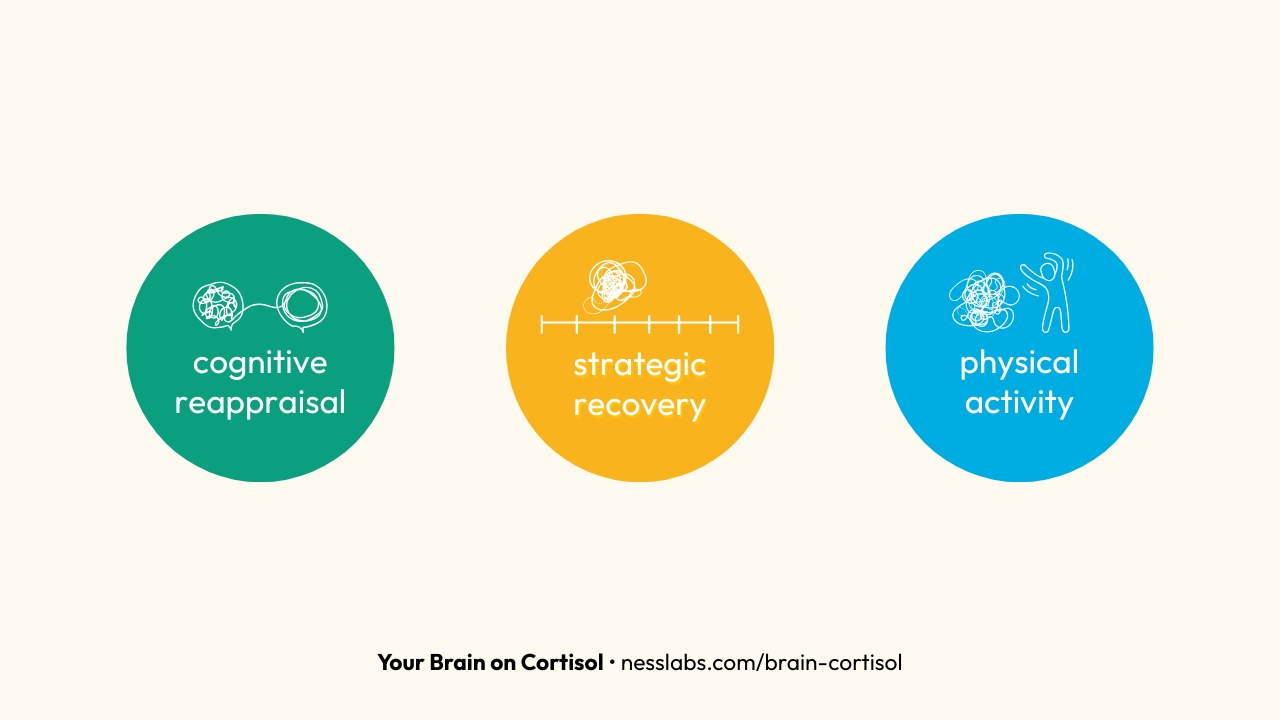
Core Insights - The article discusses the impact of cortisol on human health, emphasizing that while cortisol is essential for survival, its prolonged elevation due to modern stressors can lead to significant health issues [2][4]. Group 1: Understanding Cortisol - Cortisol is a complex chemical messenger that helps humans respond to threats, but its long-term elevation is linked to memory impairment, immune suppression, and various metabolic issues [2][4]. - The body's response to stress involves a precise neurobiological pathway, where the hypothalamus activates the hypothalamic-pituitary-adrenal axis, leading to cortisol release [3][4]. Group 2: Effects of Chronic Stress - Chronic elevation of cortisol can result in serious biological consequences, including decreased memory and executive function, changes in neuron structure, and widespread metabolic problems [4]. - The physiological structure of humans is not designed to cope with the long-term stress prevalent in modern life, which includes toxic productivity and information overload [4]. Group 3: Managing Cortisol Levels - Strategies to manage cortisol levels include cognitive reappraisal, strategic recovery, and regular exercise, which can help the body handle stress more effectively [5][8]. - Cognitive reappraisal involves changing the perception of stress, which can positively affect cardiovascular responses [8]. - Engaging in focused work followed by short breaks can help align with the body's natural cortisol rhythms, while moderate exercise is beneficial for cortisol regulation [8].